The Masai

20130204-185546.jpg

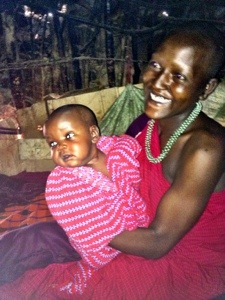
During our two-day safari tour we got the chance to spend some time in a traditional Masai village for part of the afternoon. The Masai people are cow herders and nomads; they migrate with their flock and live in small huts as a community.
When a Masai tribe moves to a new location they send ahead about 20 women to build the village. They work, one home at a time, for close to a month to set up enough huts for everyone in the tribe. The huts are made from cow dung, mud and sticks. They are small. Very small. Inside, there is just enough room for two makeshift sleeping areas, a stool and a small fire hearth. Traditionally, the hut is for a man, his wife, and any children under the age of ten. There are also male and female huts for unmarried children over 10.
When we got the chance to go sit in one of the huts, it was like walking into a fly infested furnace. The heat was insane. I would have thought that the mud huts would have been a welcome afternoon escape from the scorching sun outside; unfortunately, the fire inside kept the hut as hot as hell both inside and out. A young man sat inside the hut and talked to us about the Masai ways. Sweat poured off my face and back while thousands of flies flew into my eyes and ears. Concentrating on the conversation was difficult to say the least.
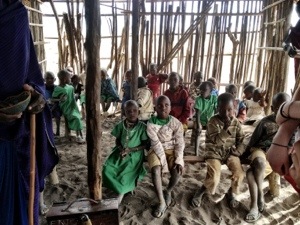
The village that we spend time in consisted of about 20 or 30 small huts. They were enclosed in a fence made of bundled sticks that closed in the community. Just outside the fenced area stood a small, wooden hut. This was the village’s elementary school. 50 children attend this school every day: 25 in the morning and 25 in the afternoon, both male and female alike. When the children have passed all their classes, some will move on to a nearby town to attend secondary school. The others will herd cows or build huts with the rest of the community.
When our small group arrived at the village we were greeted by a traditional Masai welcoming dance. The men chanted and grunted in a line, then paraded around with small hopping movements and shaking sticks like batons in the air. We were herded into the dance with no preparation and looked like fools trying to figure out the steps without smashing into the person in front. When the dance had finished the men performed the “warrior dance”. All the men stood in a semi circle, yipping and hollering as two men step forward and try to out jumped each other. An old woman grabbed me by the hand and had me stand with the other women who were also chanting and lightly hopping as they watched the men. Then before I knew it, I was thrust a long stick and shoved into the warrior circle to out jump the men in the village. I thought I held my own against the first guy, who eventually stepped back and was replaced by a second jumping man. He kicked my ass. There’s no other way to put it. His feet were practically at my waist when he jumped. There was no keeping up if my life depended on it.
Overall it was pretty neat to see the traditional Masai way of life. The only complaint I would have is how the Masai have capitalized on tourism over the years. Even though it is required to pay $15 a person as an entrance fee to the village, before the tour was over, people were already bombarding us to buy trinkets and jewelry. I felt overly pressured to spend at least a couple bucks on a souvenir before the tour would continue. That was the only off-putting factor to the afternoon. Otherwise, it was an eye-opening peek into the nomadic world of the Masai culture.
20130204-185632.jpg20130204-185652.jpg

20130204-185837.jpg

20130204-185939.jpg

20130204-190009.jpg

20130204-190033.jpg

20130204-190112.jpg

20130204-190134.jpg

20130204-185618.jpg

Ngorongoro Crater and the Serengeti

20130203-120052.jpg

We pulled up to the entrance of the Ngorongoro crater just as the sun was rising. Ngorongoro is the largest crater on earth, at 310 square kilometers and a depth of 760 meters. It also hosts one of the greatest biodiversity of wildlife in the world. Here you can spot tens of thousands of different species, and all of Africa’s big 5.
Africa’s “Big 5” are the 5 most difficult animals to hunt on foot, they are also among the most dangerous to humans. This is new to me…until recently, I had ignorantly just assumed they were the five largest animals unique to Africa (much hilarity ensued when I had suggested that giraffes were among the most dangerous big 5). So, for those of you as unlearned as myself, the big five consists of lions, leopards, the cape buffalo, the African elephant and the rhinoceros.
Our jeep absolutely lucked out the day we went! We managed to see ALL of the big five in a single day. Apparently this is incredibly rare. Not only that, but we came upon four prides of lions during our two day stay. Two of them, right next to our jeep, and one large pride with cubs ripping apart a water buffalo… The National Geographic gore you hope to see while on a safari tour!
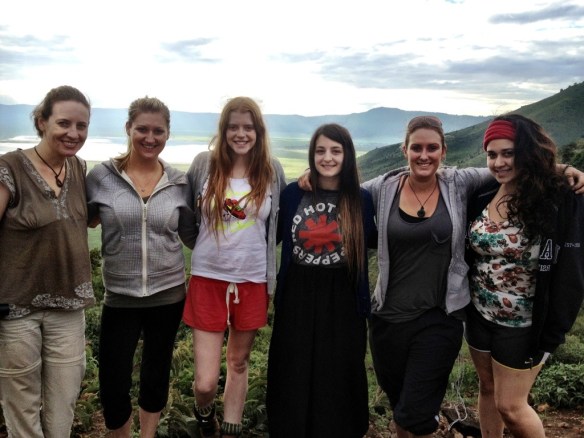
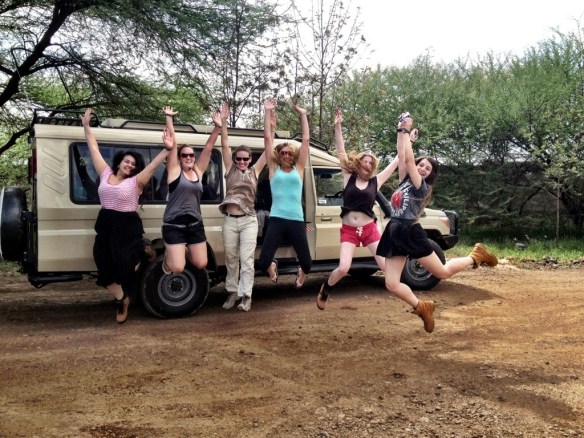
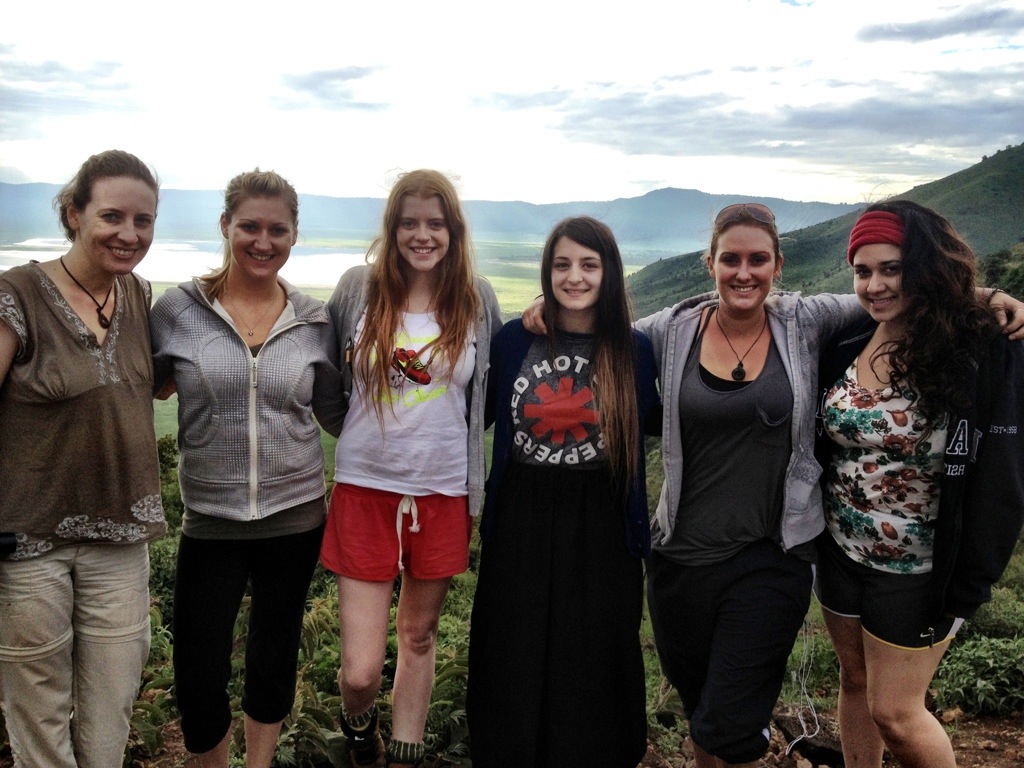
Our little jeep held 6 of us: Kelsi and I, our token “woo girls” Mel, Cara and Sarah, and our friend til the end, Mallory! All of us were ecstatic about entering the conservation area. As we drove through the entrance we sang along to the Lion King’s “Circle of Life” and within seconds we ran across a herd of buffalo. First of the big five, check! The buffalo are apparently extremely aggressive animals and are the second most dangerous to humans (next to the hippopotamus). We snapped some shots of the small herd from within the truck and moved along to the crater rim.
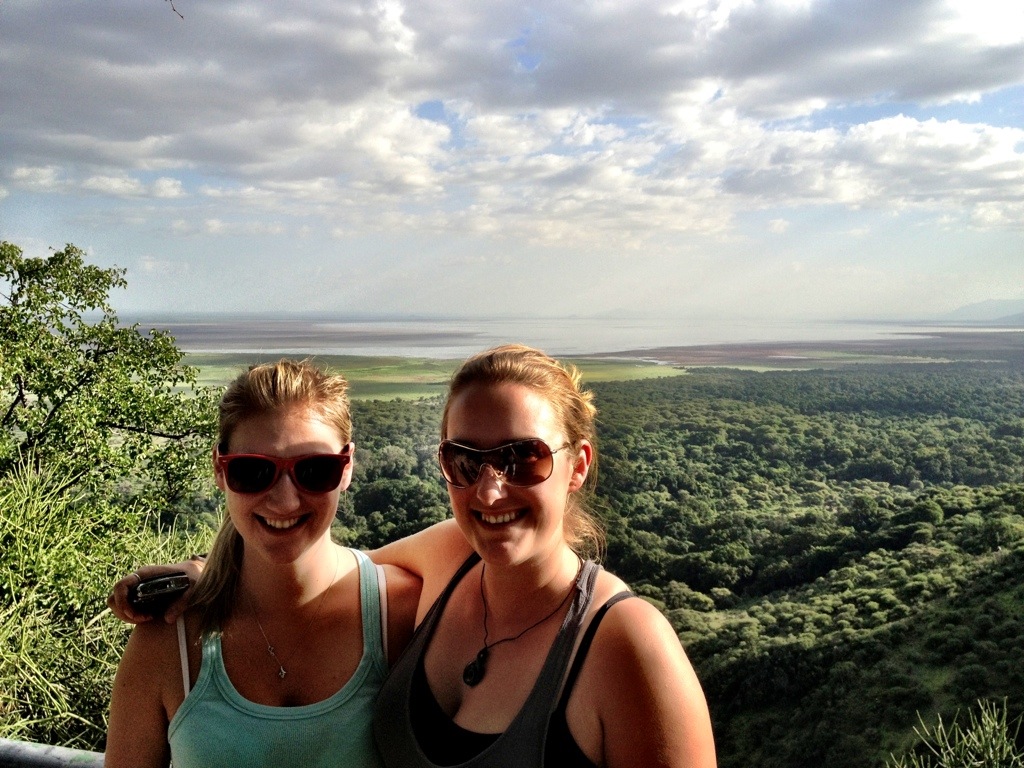
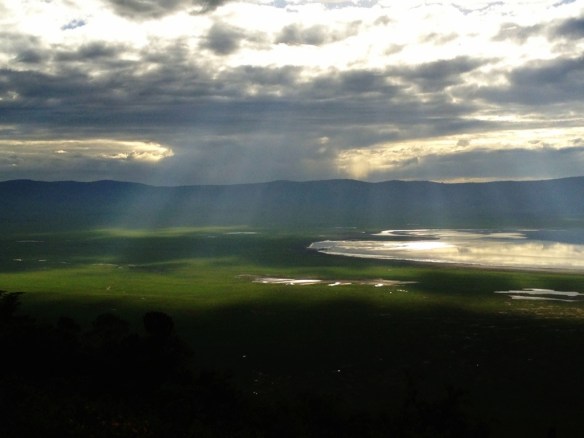
The first glimpse of the crater literally gave me goosebumps. It was early morning light, slightly overcast with sunbeams shining down onto the sparkling lake below. Shadowed mountains framed the green grasslands below and dark coloured specks were signs of abundant wildlife. The scene was breathtaking!
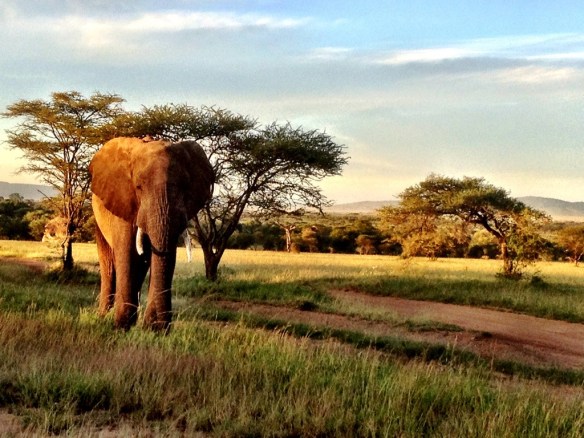
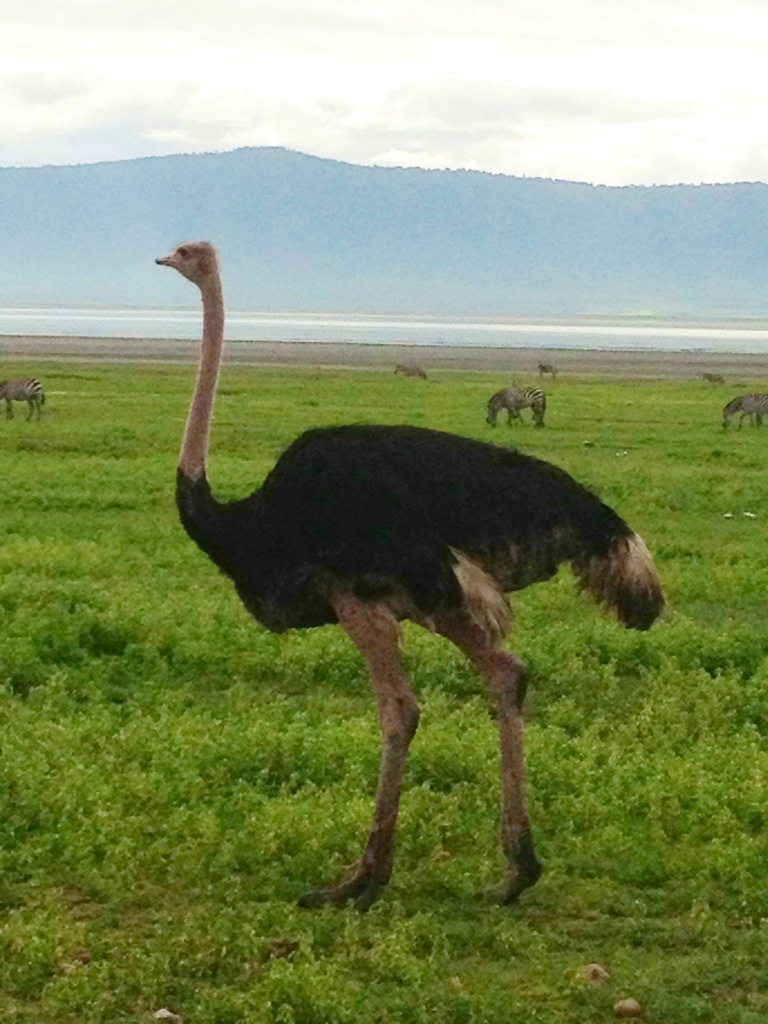
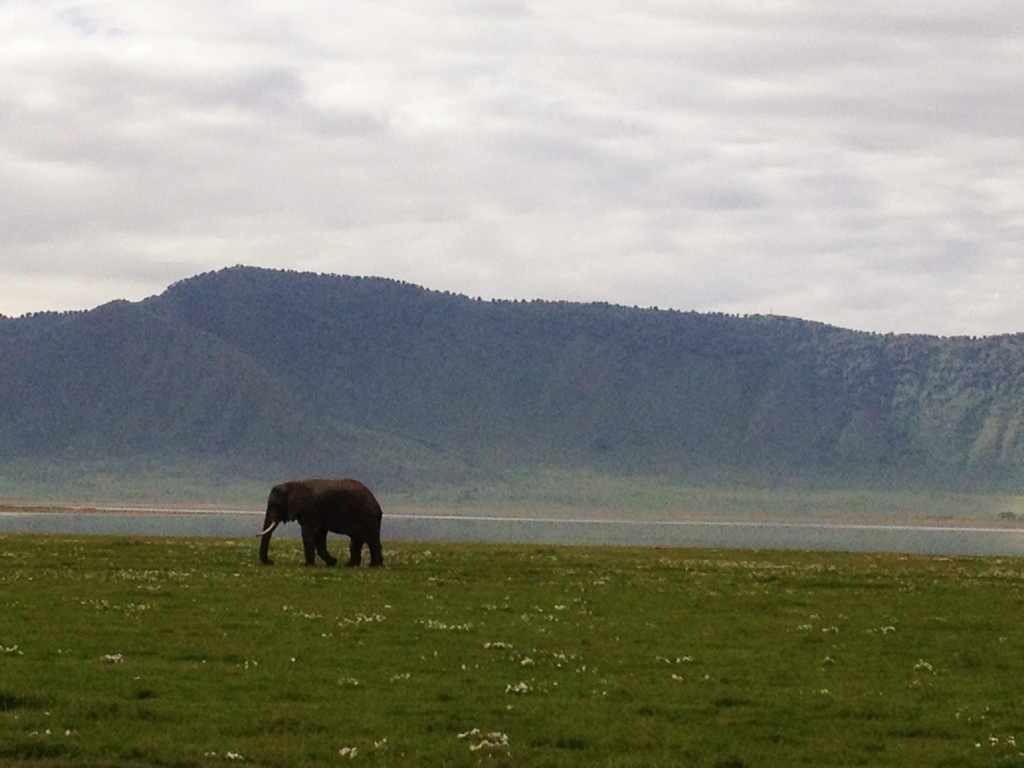
The decsent into the crater took about an hour in the jeep and even before hitting the bottom, we were seeing all sorts of animals: weaver birds, jackals, zebras, wildebeest, gazelles, ostriches, and foxes, among many others. It wasn’t before long that we came across a couple large elephants cruising across the plains and away from the lake. The six of us were overly enthusiastic about each and every animal! Hyenas, hippos and warthogs were each met with an excited gasp and an occasional “woo!” from the jeep.
Before long, we came across our first pride of lions. A group of lionesses and one male all bathing in the morning sunlight after an early kill. Lions all hunt very early in the morning and only need to do so once every three or four days. Although we were so excited to see lions (especially up so close) I must admit, there’s only so many photos one can take of sleeping animals. Our guide told us this may be our only chance to see lions, and so, we stuck around for a while, just watching the sleeping beasts.
Amazingly, however, about two minutes down the road we ran into ANOTHER pride. These ones were slightly more alive, and they were actually lying on the road! Can’t get much closer than that.
By lunch that afternoon we had seen four of the big five. The rhinoceros was the only disappointment. There are only black rhinos in the Ngorongoro Crater, and they are very rare. In fact, there are only 20 of them in the whole area. We were fortunate enough to see three out of the 20, but they were so far away it was pointless trying to catch them on my sub par camera.
Lunch was a pre-packed meal that we ate by a small lake in the crater. We were warned by our driver to eat our meals inside the car. “There are many birds around that will eat your food! They will bite off your fingers if they get a chance” he said. But it was too nice of a day to sit inside the car, so Kelsi and I found a rock nearby to sit on and enjoy the sunshine. Before long everyone had joined us and I figured we would find safety in numbers and the circling scavengers above would ignore us.
We were still exploring the full contents of our little lunch box when the first bird struck. Poor Robbo was peacefully nibbling on a chicken thigh when a falcon swooped across the top of us, snatched the entire piece of chicken from his hands and caught a talon in the side of his nose. The damage was minimal; only a small mark and a single spot of blood was left on Robbo’s face… The chicken was never seen again. We all nearly choked on our meals we were laughing so hard. It happened so fast we weren’t quite sure what had gone wrong. But when the laughter died, we looked up to see a few dozen birds above us, just waiting for a similar chance… We ate the rest of lunch in the jeeps.
By that afternoon it was time to leave the crater and head to the Serengeti. Serengeti National Park is 14763 square kilometers of flat grassland. Moments into the park we got a flat tire. A very minor inconvenience when compared to other stories we’ve heard (a man we met in Zanzibar said his jeep did a full roll and he fell out the top). All we had to do was sit in the scorching heat for a quarter of an hour. A wonderful welcoming into the park.
The Serengeti hosts another array of animals to see. This is where we came across our first tower of giraffes (and yes, I learned that “tower” is the proper collective noun for a group of giraffes). The giraffes were one of my personal highlights of the day. It was so strange to see these tree-like beasts trekking across the plains like moving trunks. Their heads sway up and down as they move and it’s almost humorous watching them move along in a line of head bobbing beasts. Fun fact about
the giraffe: they are the only animal that doesn’t make a sound. Apparently all of their communication is done by body language.
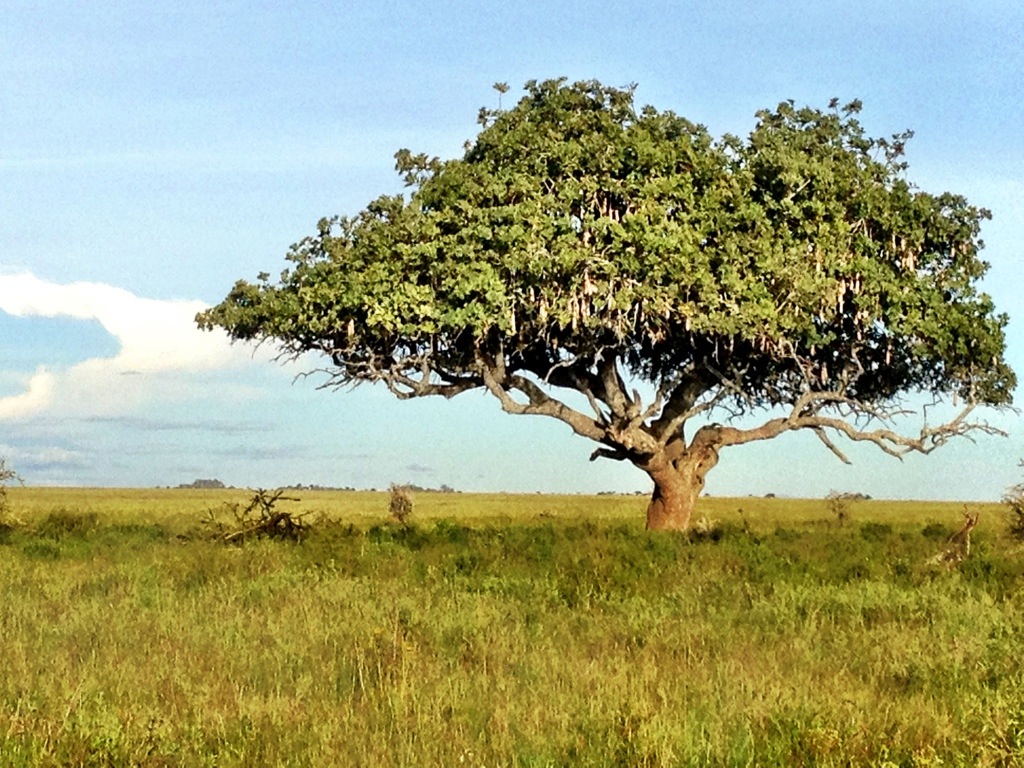
Just before sunset, we came across a grove of sausage trees. Sausage trees (which have strange fruit that look just like hanging sausages) are a preferred relaxing place for leopards, and before we knew it, someone had spotted one in the trees. There was a mother leopard and a cub chilling out in one of the lower hanging branches. They had made a kill and were taking turns chewing away pieces of the animal in the crook of a tree branch. Once again, my 8megapixel iPhone fell short on the zoom. But we got out some small binoculars and spent a good half hour watching the two animals. The last of our big five!! I couldn’t believe we’d seen them all in a single day. What a feat!
As the sun set we headed to camp. We were spending the night out in the wilderness, with all sorts of animals just roaming around the area. Rules for that night were very strict. Don’t go to the bathroom at night unless it’s with 3 or 4 people. No flashlights in the tent, no sounds, no snoring, definitely no food, and good luck making it through the night alive! If you see an elephant, run the other direction, if you see a lion, walk calmly in the other direction… So many things to remember! So we all went to bed that evening thinking of wild animals. During the night a hyena scavenged around the tents, and strange sounds could be heard, but everyone was alive and well by our 5am wake up call (just in time for lions to start their morning hunt… Fantastic).
We did a final game drive that morning, had lunch, and then worked our way back to Snake Park for dinner time. Pretty amazing couple days if I say so myself!

20130203-120114.jpg

20130203-120145.jpg

20130203-120125.jpg

20130203-120134.jpg

20130203-120156.jpg

20130203-120227.jpg

20130203-120205.jpg

20130203-120213.jpg

20130203-121846.jpg

20130203-121855.jpg

20130203-121903.jpg

20130203-121912.jpg

20130203-121929.jpg

20130203-121921.jpg

The Snake Village

20130203-115644.jpg

After a few hours of driving, we had reached the Tanzanian border. Already a new currency to figure out (and I still hadn’t figured out the Kenyan conversion yet). We were swarmed at the border by hoards of women selling beaded jewelry. They wore traditional dress, with long colourful capes, shaved heads and a plethora of piercings in their ears and nose. They followed us from Kenya to Tanzania trying desperately to get a dollar from us Mzungus. Other than that, the border was quick and painless and we hopped back in the truck.
Tanzania apparently has 117 different tribes within its borders. As you drive by the small villages and camps it’s amazing to see the women all decked out in Masai outfits, children slung in a blanket on their back and a 10 litre pail of water balancing on their heads. It seems like all the women carry things this way: bundles of sticks, buckets, or piles of goods wrapped in blankets. And yet their stroll is graceful and effortless… I have no idea how. And yet, city life in Tanzania seems to be an interesting mix between traditional and western culture; while one person herds goats along in a brightly-woven, caped outfit, the next person bikes along wearing jeans and a t-shirt.
Before long, we arrived at the Meserani Snake Park. This was to be our campsite for the evening. We struggled to set up our tent (which we have now mastered only a few short days later) unpacked our sleeping mats, and trucked off to the snake park.
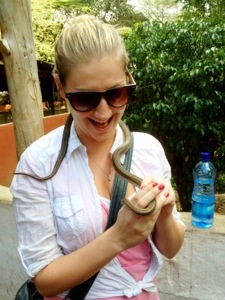
The snake park was like a small zoo for snakes and crocs and turtles. Kelsi and I had an awesome time checking out the cobras and the scaly alligators for a good 45 minutes or so. We were only slightly put off when we saw a bunch of fuzzy baby ducklings huddled in the corner of one snake cage just waiting to be eaten. Ahh the sad facts of life! At the end of it all we got to hold a little snake of some sort and then we celebrated our bravery with a beer at the bar (which was conveniently attached to the park).
It was an early night for us after dinner as we had to be up early the next morning to make it to Karatu: our final campsite before our 3-day Ngorongoro Crater excursion.
In the morning, we set out to a nearby city to grab all the necessities for the Serengeti trek. Money, last minute snacks and an Internet cafe to book our accommodation for Zanzibar. We had an hour and a half to explore the place… I got nothing accomplished. After searching the streets for an ATM that was in service, we finally found a working bank and tried our luck. The MasterCard system is rare here in Africa, where most of the banks work through Visa (keep that in mind if you find yourself over here). Everything seemed to be going well at this ATM that we had found, until my card refused to pop out. I tried with some tweezers to grab it, when all of a sudden the machine shut off and sucked in my card. Great. So into the bank I went.
The bank was full of people lined up here and there. There wasn’t a line in the place shorter than 15 people. After asking some staff, and being placed in a number of lineups, I was finally moved to the end of a long queue at the back of the bank that moved slower than a glacier. Kelsi came to find me 45 minutes later where I had moved up a measly THREE people. No one was very helpful, and no one seemed particularly concerned with moving people along quickly. But a long story short, a little over an hour I was sent on my way with my bank card, no money, and told to use another bank’s ATM. The other ATM’s in the city believed I had already reached my daily withdrawal limit, and so, I was stuck borrowing the last bit of Kelsi’s cash to make it through the following three days.
After lunch back at the camp, we packed up and drove the two and a half hours to our new campsite in Karatu.
Karatu is only a short 20 minutes to the crater. We all had another early night so we could be up before dawn to start the day!

20130203-115704.jpg

20130203-115723.jpg

20130203-115735.jpg