An Oasis in the Sand


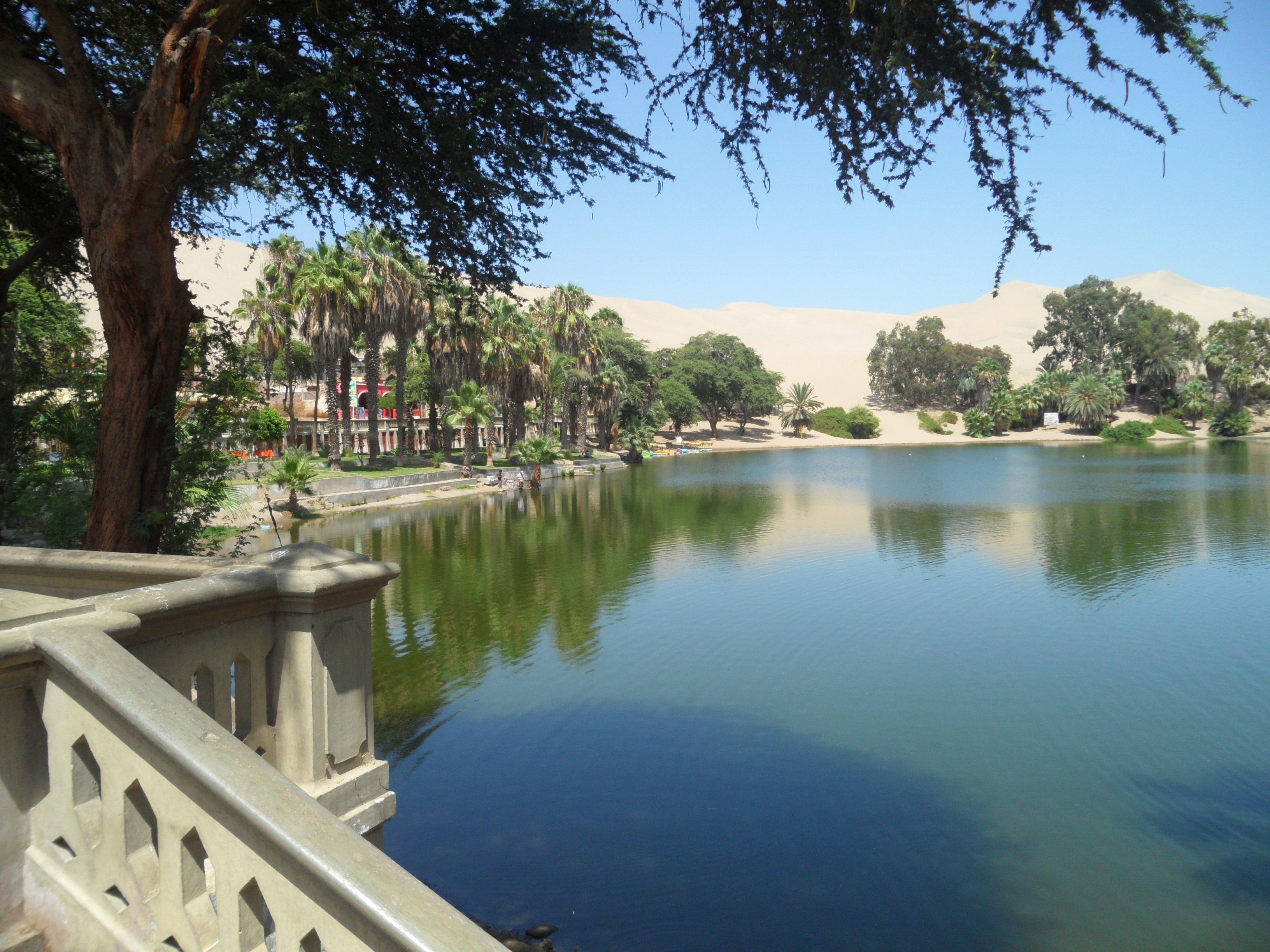
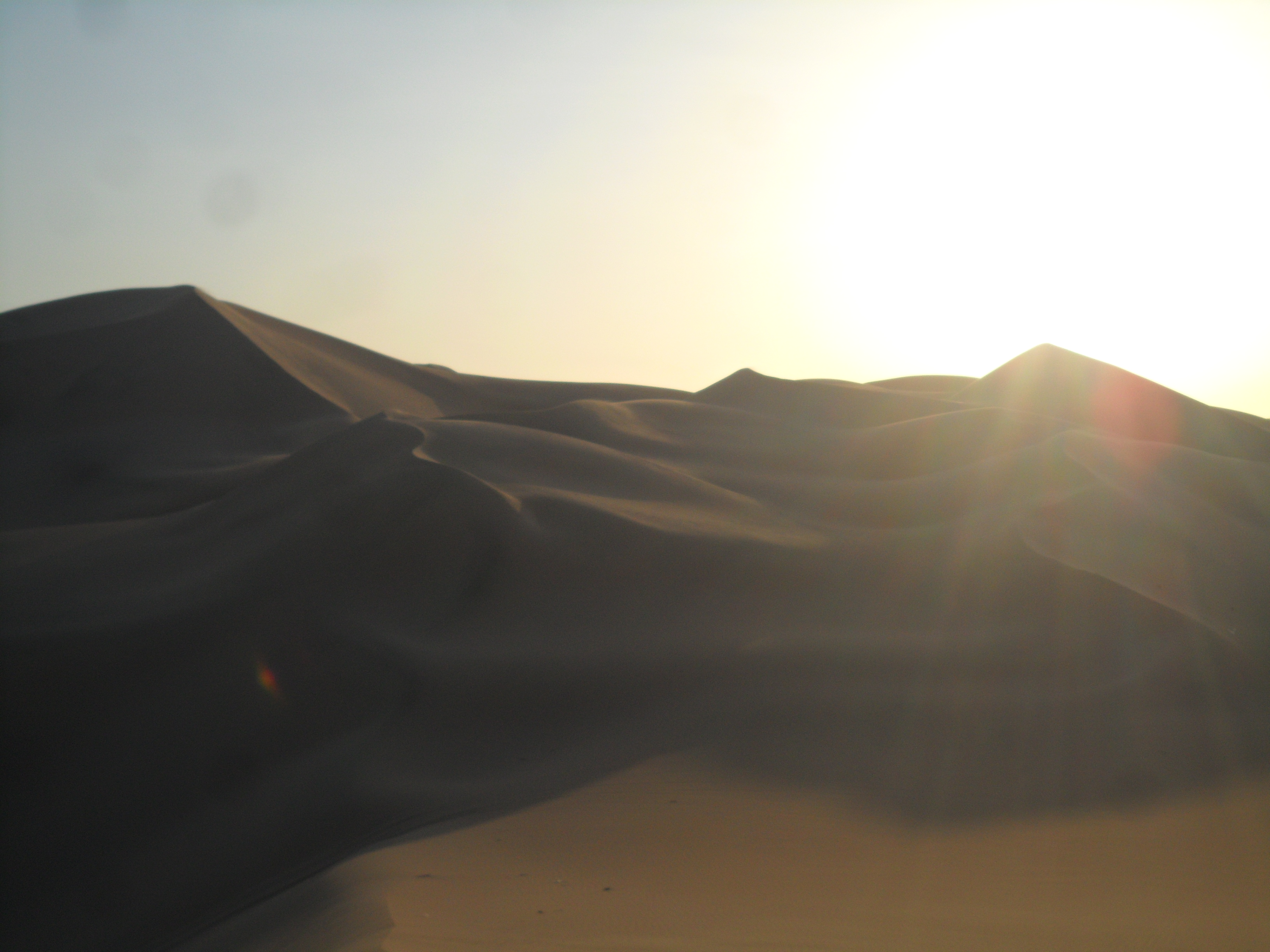
Huacachina is an oasis: literally. In 1999 only 115 people lived in the town, and I can’t imagine many more live there today. Only a couple city blocks long and wide, the town surrounds a small lagoon in the middle of miles and miles of sand dunes. The city is lush and green, with palm trees sucking the water from the single water source. One step out of town, there is only sand! The dunes create high cliffs of sand that tower over the city. While eating out on the patio, I often found myself wondering why the sky behind the palm trees was brown; it was always strange to have to horizon so far above eye level! At sunset, lots of couples and groups of young friends climb the dunes to watch the city in it’s final minutes of light. Huacachina is stunning! I had no idea that oases really existed, but this town is living proof.
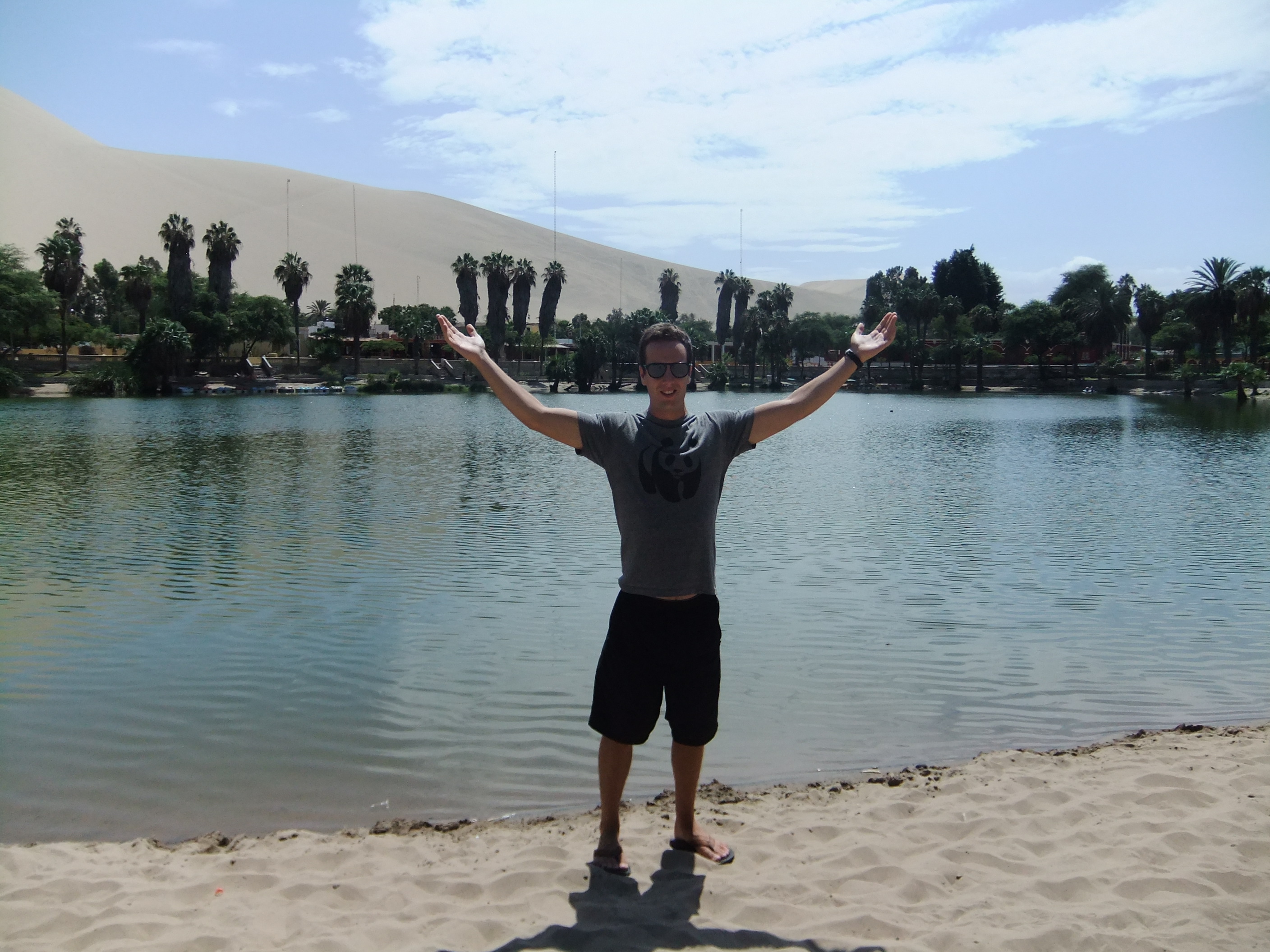
I suppose I should let Adam write about the first day there, because I spent almost every second of it in bed with terrible stomach pains. I lost my appetite, but managed to drag my sorry ass to the table to share a dinner. I slept for 10 hours that night, drank litre after litre of water, popped all the drugs I brought and still felt like crap in the morning. So we had a slow afternoon. I managed to walk around the entire town before collapsing with exhaustion – which isn’t a huge feat in a town that has only 3 blocks. But the place was beautiful; it had grassy areas to sit down by the water where you could rent paddleboats or swim in the lagoon. A couple restaurants set up their tables and chairs right near the water for a fantastic view of the place. There was one luxury hotel right at the end of the water, and a bunch of lower budget hostels, each with their own restaurant and happy hour specials.
By the afternoon the pain had stopped and all I felt was lightheaded, woozy and restless. I was tired of sitting around sick and was determined not to let my illness get in the way of our timeline or adventures… So we signed up for extreme sports.

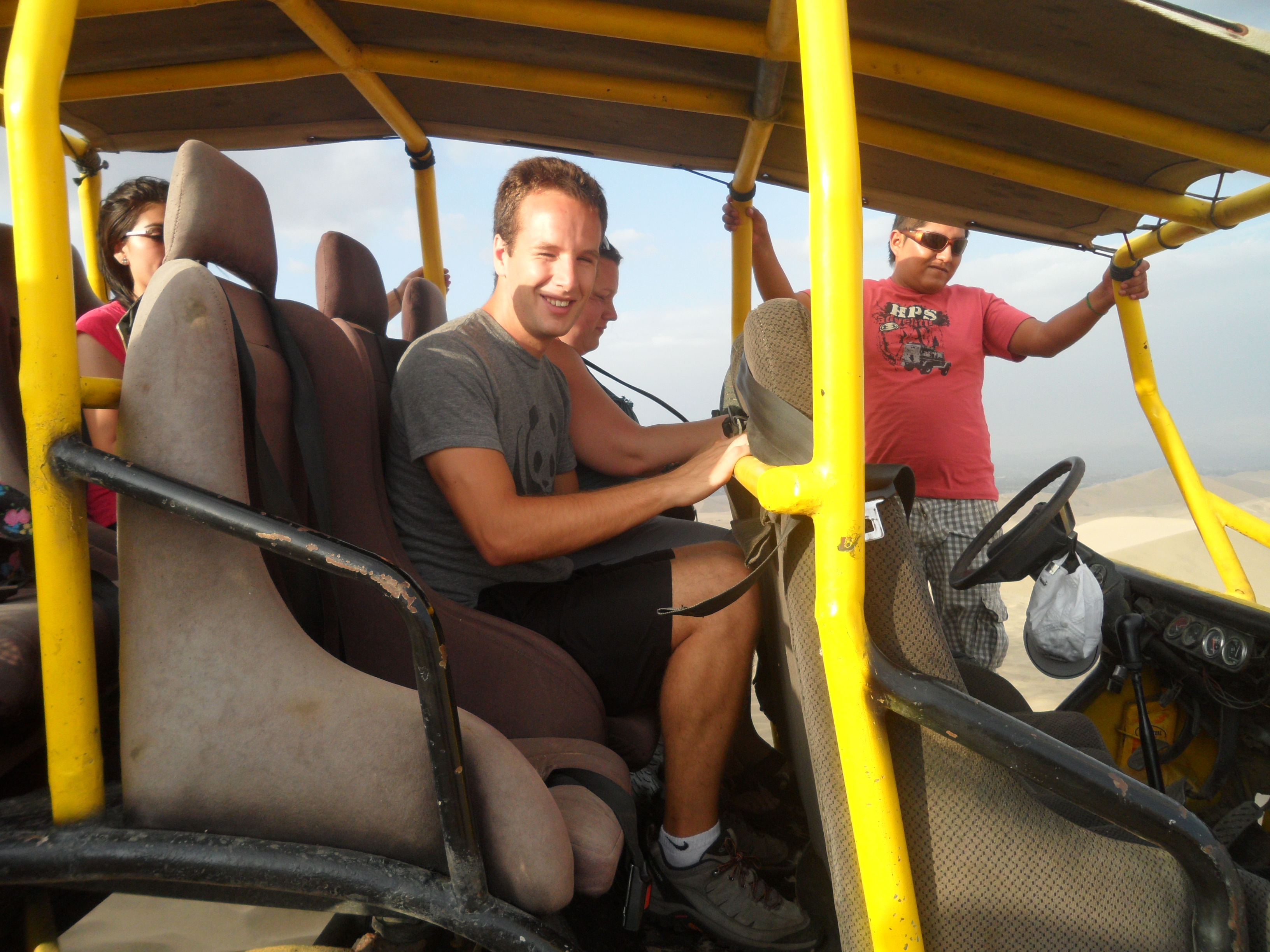
Sandboarding is a sport you can only do in very specific places in the world: Huacachina is one of those. It is exactly what it sounds like. Sandboarding is just like snowboarding, except A. The boards are shorter B. the bindings are simple and wrap around your shoes C. It is much more difficult to control yourself and D. It’s on sand dunes. So we left on our tour at 4:30 and drove off in a big, 7 person sand buggy. Our guide ripped up and down the dunes, scaring the living hell out of the two French Canadian girls next to us. You never knew when the sand was going to descend gently down, or cut off in a nearly vertical cliff: it made for quite the ride and the giggling screams of terror from Marianne beside me were so infectious we laughed most of the way there.
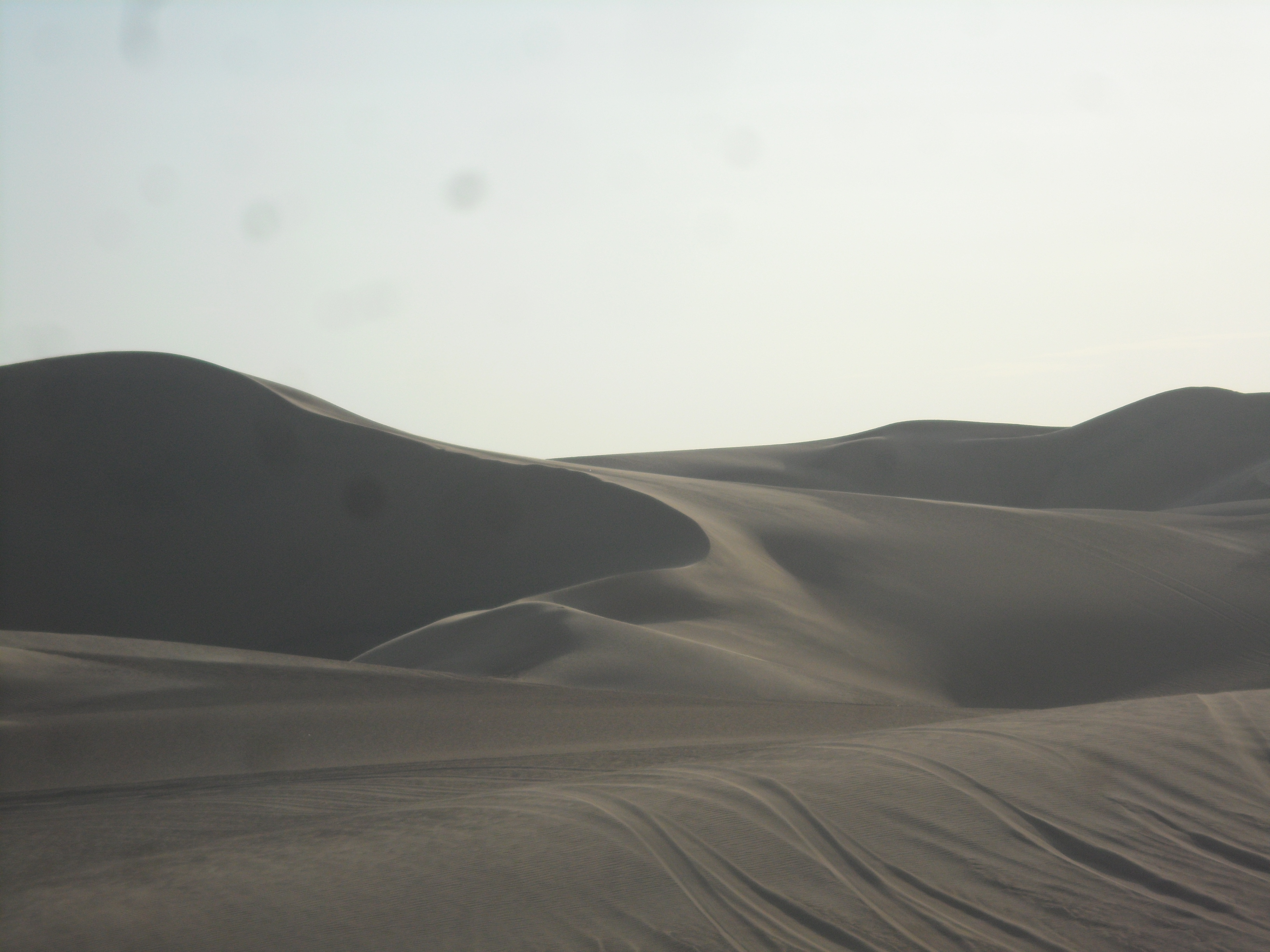
The dunes were unbelievable. They stretched out forever, climbing and falling in perfect slopes where the wind left them. The late afternoon sun left gorgeous shadows of contrasting light and dark brown against the blue sky. It was like looking over a brown ocean with huge waves crashing in on each other. 
After a half hour or so, after our eyes, ears and mouth were well covered in fine sand, we stopped at the top of a huge cliff of sand. “This is where you go sand boarding!” said our guide with a huge smile. Other groups had pulled up to the same spot and had pulled their boards out to the edge of the cliff. We looked over the edge, and straight down about 80m in a nearly vertical drop. NOPE, NO WAY, NOT A CHANCE IN HELL; there’s no way a person can go down that and survive! I turned to Adam and said “you’re on your own”. He looked down at the cliff with a little boy’s enthusiasm and grabbed a board. “You’re CRAZY” I said.

Now for those of you who know how awesome I am at Snowboarding, you should be surprised that I didn’t immediately go down the hill! Hahaha no, actually, my experience with flying down hills at huge speeds only occurs in nightmares. I would prefer to be sipping on a cold beverage at the bottom and wait, with a first aid kit, for Adam to show up. BUT, I also have a bit of an ego when it comes to being “too scared to do something” and Adam knows that about me; It didn’t take him long to convince me to do it. 
Standing on the board would have instantly been the death of me. I saw too many people get whipped around and flipped on their heads to try it. Adam obviously sand boarded down perfectly as if he’d secretly been practicing for six months behind my back! Showoff! So our guide showed me an alternate way of going down.
 Put your board down on the edge of the cliff, lie stomach down on top of the board, face first down the hill, gripping the bindings with your hands and feet flailing out the back. This seemed even crazier, but was my preferred option, so I lay down, and let the guide push me off the edge towards my impending doom.
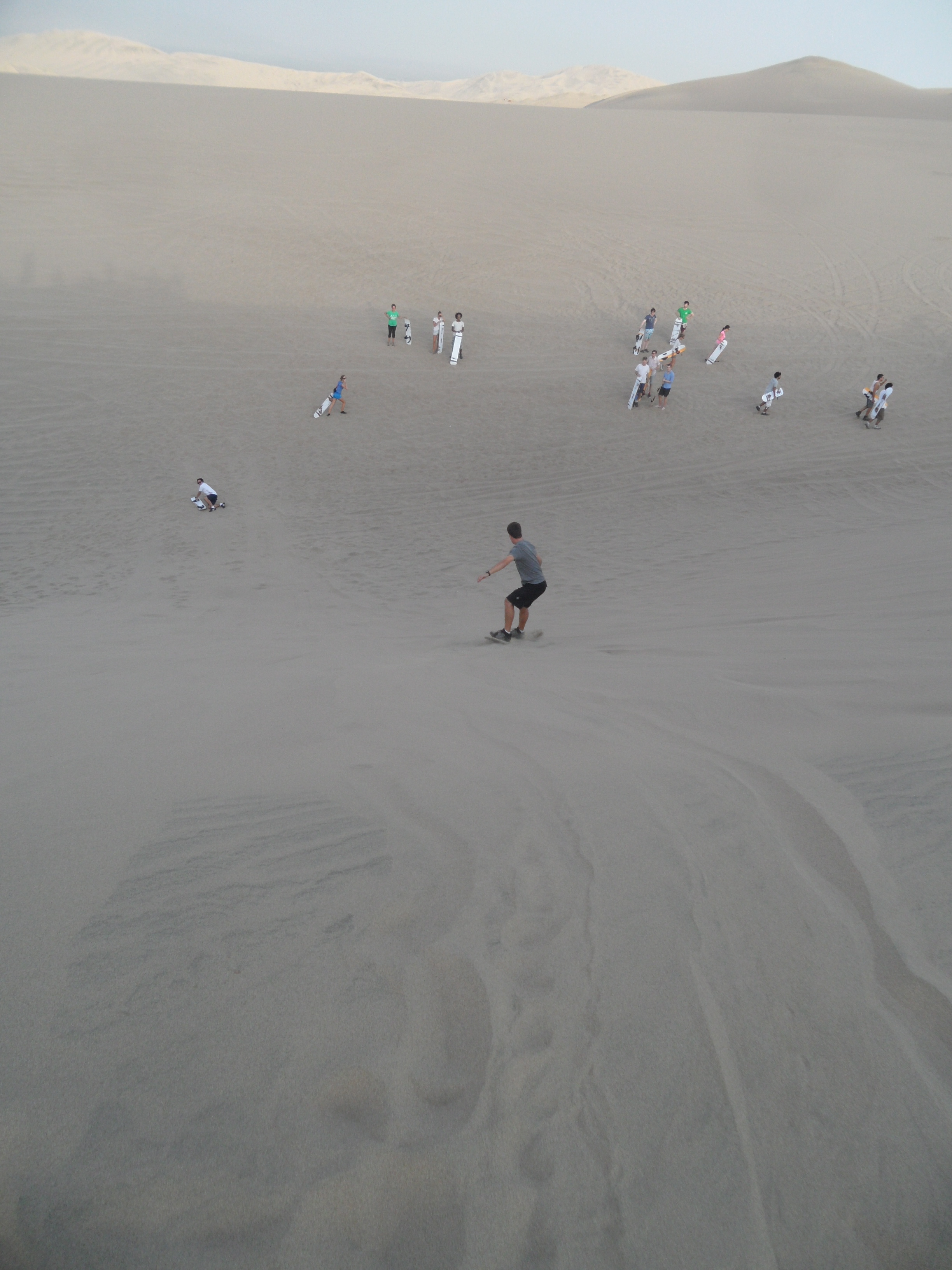
Once over the edge I absolutely FLEW down; with sand whipping up into my face, I think I screamed the entire way to the bottom where I came flying up at Adam’s feet. I can’t believe he convinced me to do this on a day I was nearly puking my guts out only hours earlier!! But it was surprisingly fun!! I didn’t crash and I came out unscathed (unlike my wakeboarding experience in the Ilhabela that I still have scars from). We had to hike up through the sand to the next dune, which was much shorter than the first, and then finally a third before our guide picked us up.
 We then trekked over the hills in our sand buggy for a couple minutes before pulling up to another large dune. “Want to try again?” he pulled out the boards again as we walked to the edge of the dune to look over. I got instant butterflies. This was one on the biggest sand dunes I’d EVER seen. It was more vertical than the first and at least one and a half times as high. I was terrified! Perhaps I’d skip out on this one. The first guy to go down nearly came to a dangerous barrel roll finish as his board spun sideways at the bottom. His girlfriend flew down at record speed and came within inches of crashing into him. This did not look safe. Adam obviously grabbed a board, hiked up the hill to add another 10 ft in height and slid down the hill on his stomach, a trail of sand dust shooting out from behind him as he went down. I could barely hear him as he yelled what I can only assume were bragging taunts at me from the bottom. I hesitated a couple more minutes before the other Canadian girls (who chickened out themselves) convinced me I could do it. So once again, I came screaming down the hill towards the rest of my group! It was exhilarating and a little terrifying, but all in all I loved it! Successful afternoon on the slopes!

We trucked down to an area to watch the sunset over the sand and the whole place looked like a painting. It didn’t seem real to be sitting there watching the shadows change as the light disappeared. Then just like that, we all got back in the buggy and went back to our little oasis.
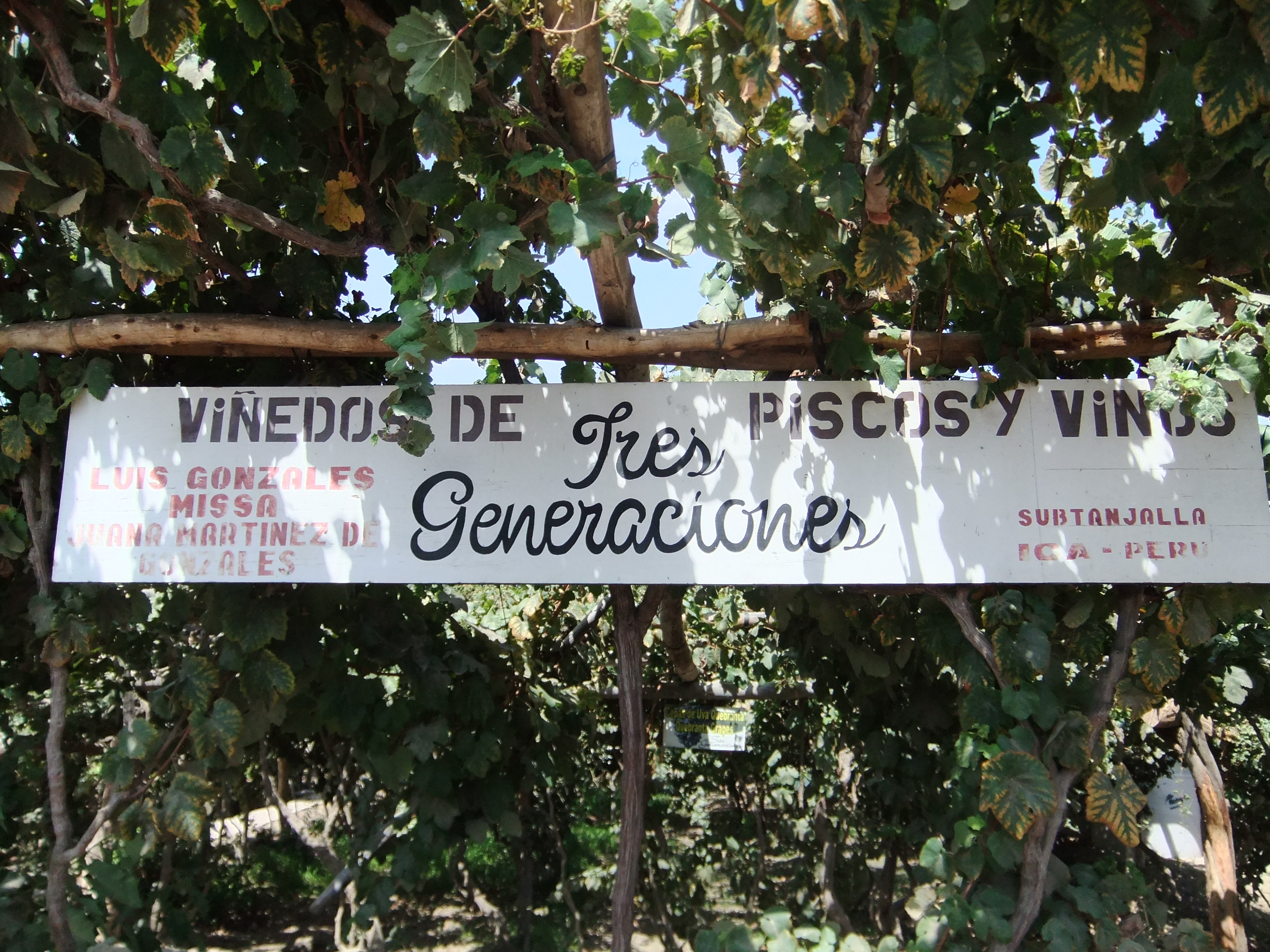
The next morning we had organized a winery tour with the two French Canadians from our dune buggy tour. Their driver picked us up at 11:30 and we set out to our first winery. Our guide, Jesus, spoke wonderful English and was a wealth of information about the brewery. The first winery was a family owned industrial winery. The family name, Picasso, is one I remember from home, but most of which were too expensive for me to afford in Canada. We walked around the grounds, learning all the techniques to make their world famous Picasso tempranillo wine and Pisco, the popular 42% liquor that is so common here in Peru. When we’d finished, we sat down to taste them all. We tried a red, white, rose and the Pisco. The wine was tasty, and the red tempranillo which had earned itself a gold medal in Peru and a silver in South America, was probably the best. However, I have to admit, Peruvian wine is not one of my favorites. All the wines we tried over the day had a certain similar taste to them that I am at a loss of how to describe. I suppose each country has this, and that’s how sommeliers can determine which country a wine comes from, but personally, Peru is not my favourite. We ended up buying a winning bottle of Pinot blanc from the winery that came highly recommended and was a great price. But that too left me disappointed: looks like those wine courses have made a wine snob of me after all!

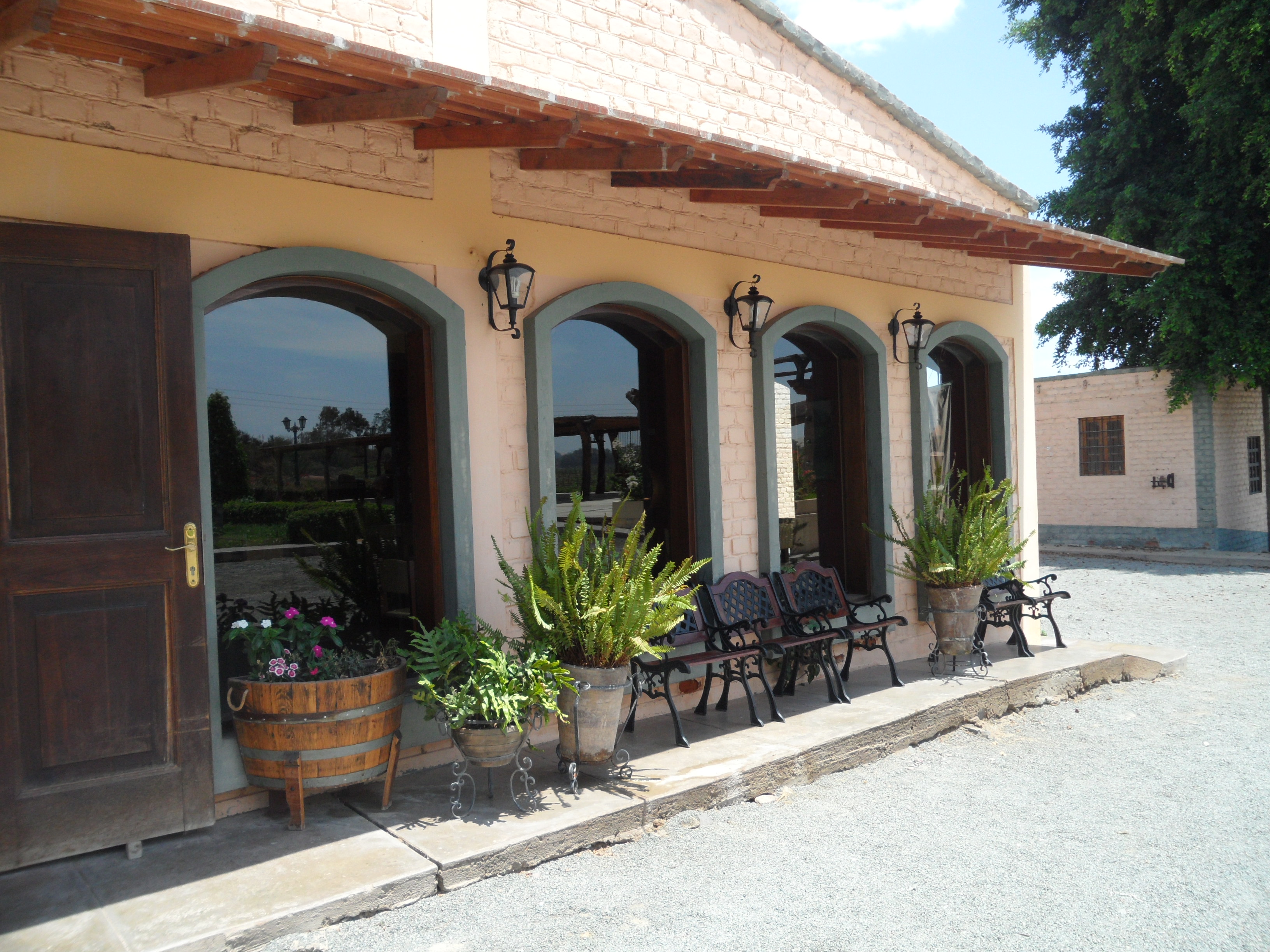
The second place we went to was a family owned traditional winery. It was quaint, beautiful and everything was made by hand – or foot. They had huge concrete pits where people still stomp on the grapes to extract all the juices. Apparently once a year, on the March solstice, they have a big festival where people come to drink and dance over the grapes for the entire night to help make wine. We sadly missed this by only a couple days. Once the grapes are properly crushed, they are moved into clay pots and covered for fermentation. This winery only makes wine and Pisco once a year, not very sustainable that’s for sure. So it’s lucky that they also have a large field of various fruit trees, which also produce chutneys and pecan chocolate that is to die for! We got a tasting of several types of pisco, some dessert wines, a few types of chutney and the chocolate. It was a great way to end the tour.
 When we arrived back at our hostel we only had to kill a couple hours before catching our bus and moving onwards toward Nazca!
Entering Peru: The Ultimate Bus Ride from Hell

The bus ride from Machala to Lima is 24 hours; and that’s without layovers or border crossing times. We decided to fly. There is no way I want to spend a full day of my life on a bus, especially with our limited time to get to Cusco. Flights just over the border were only $99 instead of the $60 buses. Well worth the cost I think!! It also allowed for another day in Ecuador if we wanted, to recover from Patty’s day hangovers and spend some more time in the city. So before we went out to the Zona Rosa to party, we went to book our flight….
In 24 hours the flights had doubled! It was now over $200 to fly, AND the bus prices went down. This meant A: We were going to bus, and B: We had to leave in 12 hours… Great!


We had it all timed perfectly (which is dangerous in South America because nothing is on time) the trip to Tumbes, the Peruvian town just over the border, takes about 2hrs20min. It’s a dead border crossing, but we allotted for an hour and forty minutes to cross it. And it’s a good thing we did!! 
After two, painfully slow, border crossings the 2 working staff members processed our bus of 40 people. The whole thing took an hour and a half, and probably could have been a third of the time if they’d told everyone to fill out a form BEFORE the front of the line, and if one guy hadn’t been playing MAJONG on his computer screen!  This left us 10 minutes to get into the terminal, buy tickets for the next bus and get moving… No time for food I guess!


The problem we realized upon arrival in Tumbes, was that there is no central bus terminal in the town (Something that seems to be common here in Peru). Instead, each individual bus company has it’s own terminal, located somewhere around the city. We were traveling with Cruz Del Sol and had no idea where it was. 
Luckily a tuk tuk driver (tuk tuks are EVERYWHERE here) came up to us and said he would take us there for 5 soles. We figured this was a little pricey, but couldn’t work out the conversion rate right away and knew it couldn’t be more than a couple dollars. Because we didn’t have any money exchanged, he even offered to take us to a bank first. We had 10 minutes, so there was no arguing: we jumped in. 
Now as a rule, I’m going to say, never trust a man who has a sparkling, gold, front tooth and who’s first question to you is about your marital status and includes a wink (creepy). After our stop at the bank machine he asked double the price to take us to the bus station (which was one block away, but we didn’t know it). He knew we had no time to argue, were over exhausted and were still unsure of the new money… I glared him down before we handed over the cash and he flashed a shiny grin. Great first impression you’re making on your country buddy!


Turns out it didn’t matter. The bus was sold out, and the next one wasn’t for another 5 hours. We tried to get VIP seats on the night bus, but to no avail. Regular seats it was… 
But when we boarded it wasn’t bad! We knew the buses in Peru were second to none and they were going to serve us breakfast, lunch and dinner during the trip. Although their wifi didn’t work, they DID show movies with English subtitles, and the food was quite tasty. I even remember turning to Adam and saying “Hey, I kinda like this bus!” oh how quickly I would regret those words…


When I opened my eyes after a night of not so awful bus sleep, I was looking straight out the window to the Peruvian countryside. It was absolutely unlike anything I would have expected. We were in a giant desert with massive black and white, wind-swept sand dunes all around us. There was almost no vegetation in parts at all. Just open expanses of sand, beautifully set in a monochromatic tableau from the morning sun. In the distance were larger mountains in similar tones fading off into the grey sky. I couldn’t believe it! I imagined Peru to be jungle infested, Machu Picchu style, Amazon rainforest-esque! But apparently the northern coast is quite different. After a bit we even drove right along the water. The sand turned browner, and more rigid, and there were long expanses of completely deserted beaches. It was beautiful and surreal.

A couple hours after breakfast, I started to feel sick. That achy, headache feeling that comes about just before a cold or the flu. I didn’t think much of it at the time, and drank some more water in hopes it would go away. About an hour after that, our bus hit a long lineup of other cars, buses, semis and the such. An announcement on the speakers came on, I didn’t catch what was said, and we pulled over on the side of the road. Pulling over and stopping for unknown reasons is so normal in South America I thought nothing of it. We watched a full movie, and had lunch before I realized we had been sitting there for over 2 hours. Then the bus turned off, air conditioning and all, and we sat in the scorching heat of the desert. It was a little after 2 at this point, and my ill feeling had yet to go away. The heat of the bus wasn’t helping, nor were the kids sitting behind us. 
Apparently Adam and I got placed in the “ball pit” section of the bus, where the two kids behind us staked out their territory. One was probably 4 years old, and the other not even a year yet. Note to all mothers out there: please don’t bring your new born child, who is prone to screaming, on a 24 hour BUS journey! It’s not fun for them, it’s not fun for you and it sure as hell isn’t fun for the rest of us!


The 4-year-old girl made it her mission to kick the back of my seat AS often as possible.  I was now in full-fledged sick mode, where anything that touched me sent painful shivers through my body. Hot, cold, movement at all, didn’t matter, it hurt! Every kick of my seat made me want to cry, every 15 seconds or so I would jump forward in pain as her tiny foot jammed into the headrest of my chair… Her baby sister was probably worse! She had this cry that was the most horrific noise I’ve EVER heard in my life (Adam can back me on this). It started out as this guttural coughing noise that sounded like she was choking on her own phlegm. Then just as you’re about to be concerned for her health, she erupts into a piercing screech only babies can achieve. A wailing sound of distress that is absolutely deafening! A baby siren of distress!! This went on NON STOP!! All day, all night, all the time…I finally got off the bus.


Outside wasn’t much better. It was dusty and hot; everyone huddled in the shade on the side of the bus, there was nowhere to sit down except in the dirt… I was in rough shape. I now had a fever and could hardly stand upright. No amount of water was helping. 
We finally asked what was going on. Turns out there was a strike going on. The Peruvian miners were protesting, and had set up a picket line about 15km up the road. The police were fighting with them, but they weren’t budging. Any vehicle that tried to pass was met with resistance, and rocks were thrown through the windows. It had been going on for 14 hours at this point, and they didn’t know when it would end… Fabulous.

Soon cars and buses that had been waiting there for hours longer than us started turning around. There was a small town 2 hours back that people were going to for the night. Hotels were probably full, but at least they had restaurants and decent bathroom facilities! Our bus was not turning around…
So I braved my seat again, hoping the devil children were taking an afternoon nap. Not the case. I had the chills, and was covered up in a thick blanket in the 38 degree bus. I had to lie across two seats in the foetal position just to keep from being sick. In this heat, with no moving air at all, is when the mother decided to change the baby’s diaper… A foot and a half from my face. I thought I was going to die on the bus.  We had now been stopped for several hours and I desperately wanted to be horizontal and straight at the same time! The seats were beginning to be as uncomfortable as day four in a hammock, and I was less than enthused.


By dinnertime, the whole bus was cranky. We hadn’t eaten in hours, but the bus had no more food or water. They weren’t expecting the delay (although turns out they had known about it since it started 12 hours earlier) and so hadn’t brought any more food for people. We were in the middle of the desert, with no amenities, and the driver couldn’t turn around unless told to do so by the head office. A few other Cruz Del Sol buses went back, but ours just sat there… For hours!.  The false alarms were the worst. We all were told to sit down, the engine started, we moved forward a foot, then found out it was a rumour that the picketing ended. This happened too often to be funny.


Finally, after 12 hours of being stuck there, we tried to go to sleep. Not much else we could do without any lights or food or power.
  During our sleep, the bus was finally given the go ahead to continue on.  We had been stopped for a total of 15 hours.  My back was killing me, I couldn’t sleep a wink in the night, my fever had broken sometime during the early morning, but my headache and body pains were still very much an issue.  As were the relentless, screaming children, lest you had forgotten!


It was 9:00am when we arrived in Lima, only 46 hours after we left two days earlier. We hadn’t eaten food in 20 hours, and we were all in rough shape. This was our third day in the country and had yet to get a hotel room. The joke was, Lima wasn’t our final destination!!! We were going to Huacachina, a small town 5 hours South of Lima just outside of the city Ica. So we immediately booked a ticket South, grabbed a quick bite to eat, and got BACK on the bus… 
I took several trips to the bathroom thinking I was going to puke. Luckily I didn’t. I couldn’t describe the scenery, and I couldn’t tell you much about the second bus trip. Except that I’m surprised I made it. We spent 53 hours getting to our final destination. That is over TWO DAYS on the bus… 
As for the miners, they are still picketing (which is why we are currently stuck in Huacachina with no buses leaving anywhere). The fights that had broken out at the picket line we were delayed at, left 3 people dead and over 60 injured. Now it turns out there’s several more lines to the south of here. What chaos!
  At least from now on, any  bus ride that seems horrible, I can safely say “I’ve had worse”.

St Patty’s in Machala


Our final day in Ecuador, and our last day traveling with Diane, happened to be St. Patrick’s Day! Not that we’ve needed a reason to party on this trip, but if we did, this was as good an excuse as ever! 
We ended up in Machala on the recommendation of a local Ecuadorean girl we hung out with in Quito. She said the islands just off the coast were her favourite part of Ecuador. At this time of year they have excellent ceviche and giant prawns caught fresh daily that are to die for. On top of that, there are apparently giant sea turtles swimming around the area (which we sadly didn’t see).


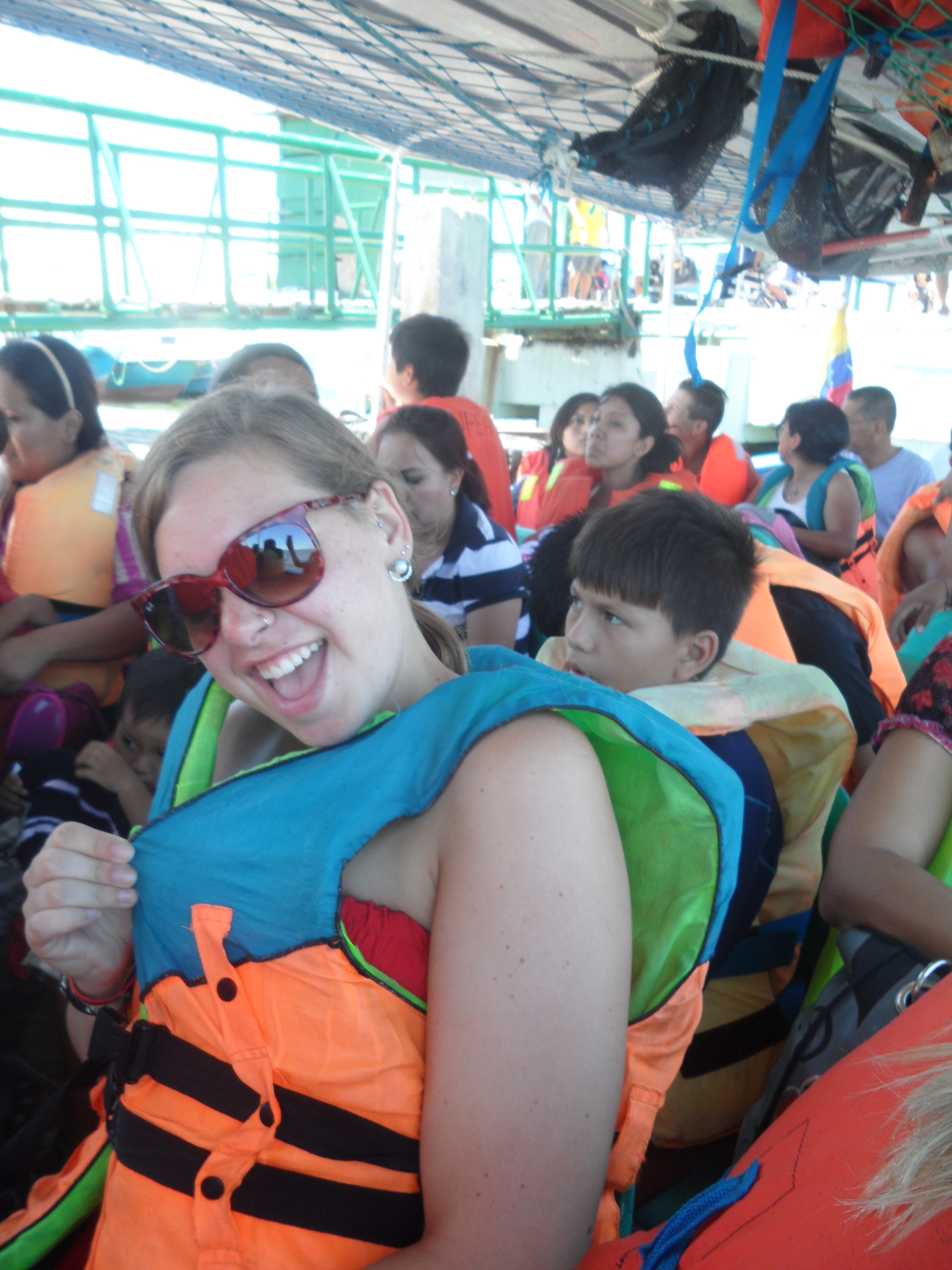
So we set out in the morning to Puerto Bolivar to catch a boat over to Jambeli beach on an island 20 minutes off the coast. Jambeli is a favourite beach for locals in the summertime, and the day we went was cloudless and gorgeous.
  On our boat ride over, we met a Canadian guy named Steven. He was in Machala for a couple of days by himself; he had been traveling with his wife around Ecuador for a couple months and she was still inland while he visited some friends on the coast. He seemed like a really nice guy, and we invited him to have a drink and join us on the beach. When he’d spoken to us for a bit, the story came out why his wife hadn’t joined him to Machala. She was in the hospital recovering from some injuries. Apparently, 8 days earlier, the two of them had been hiking through one of the mountains inland. During the hike, three men attacked them and captured Steven’s wife. They took her hostage, and told him he had 2 hours to get them $3000 or they would kill her. So he ran back to the town they were staying at to get some money, he contacted the police, but they said even if he gave the men the money they wanted, the ending wouldn’t be pleasant. Either way, they came along to help him out. Meanwhile, his wife dealt with the three men in the mountains. Apparently, after one of the men tried to molest her, she fought back against them. They repeatedly punched her in the face until she grabbed their machete and started slashing them. When that didn’t stop them, she decided she’d rather die than be captured by them. So she hurled herself off a 50m cliff and fractured her skull and broke her pelvis in a few places: that’s where the police found her. Luckily, she is doing okay. She won’t be able to walk for a month, but she is in good spirits! The Ecuadorean government is helping as much as they can. They have paid for every medical expense, flown in her family, and have promised a free trip to the Galapagos for them when she recovers. They are also supposed to have lunch with the president in the next little while. It’s amazing the people you meet while you’re traveling isn’t it? I’m sure the government wants to keep this hush hush, but star magazine already has already released articles written about it in Toronto and Vancouver, on top of the several web articles and the news channels here in Ecuador.


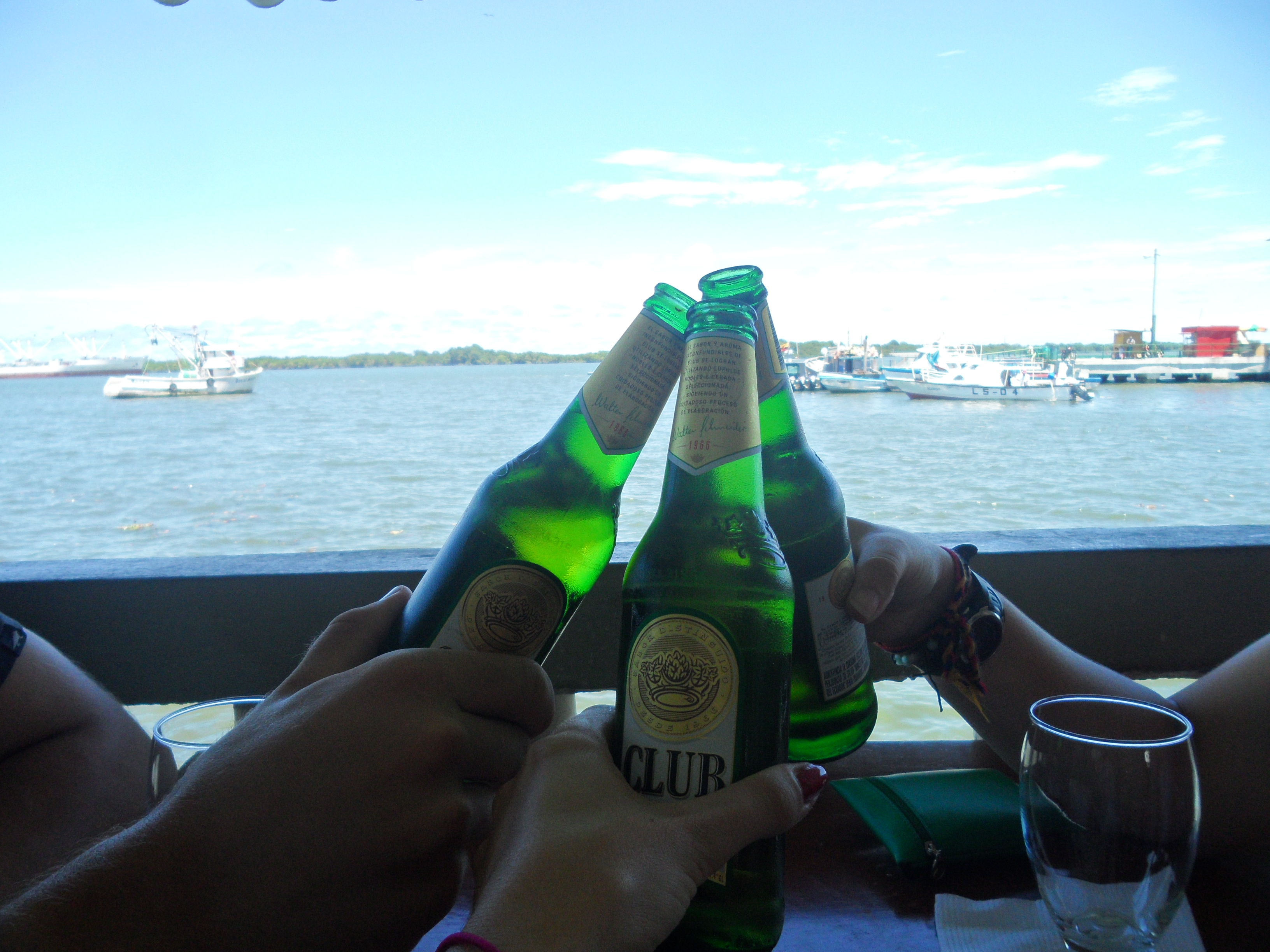
So the four of us spent the afternoon drinking beers on the beach. The beach was lined with little restaurants selling food and drinks. Lawn chairs and umbrellas and tents (to change in) were set up all along the surf. The water was bath temperature and incredibly refreshing on such a hot day. Even I, who am usually such a wimp with ocean water, walked in without hesitation. We shared some seafood for lunch, which was unreal, and had a pretty incredible afternoon! Can’t say I’ve done any of these things on St Patricks day before!

We headed back on the evening boat, then grabbed some more drinks before we headed out on the town that night. 
Apparently Machala has a pretty fun nightlife, and the zona rosa district is the place to be on a Saturday night. What the Internet failed to inform us was that Machala is not touristy, and eeeeeveryone partying in the zona rosa is a local. The first busy place we walked into was a small pub full of locals. We got less than accommodating glares from the people inside and immediately felt unwelcome. Some guy threw a drink at us, and everyone else just stared. Needless to say, we left after one drink. We found a quieter bar/hookah joint a couple places down that was a little quieter. We ended up spending the rest of the night there, watching some couple dance salsa, chatting with the bartenders and enjoying cheap pitchers. It was a great way of spending our last night with Diane.

The Devil’s Nose


Riobomba is a small and fairly uneventful town, smack in the middle of Ecuador.  It is, however, an absolute haven for trekking. Every second shop is a mountaineering store for all the equipment needed to survive Ecuador’s terrain! One of the most popular excursions is to a nearby volcano that reaches up to 5000m in altitude. Unfortunately for us, we have very limited time to get to Cusco for the Inca Trail hike and so, a three day hike in Riobomba is not on our itinerary.

We chose Riobomba because of its supposedly amazing train ride down to Aluasi! The most beautiful scenery in Ecuador is just South of Alausi on a stretch called “La Nariz del Diablo” (The Devil’s Nose). So we spent the evening in Riobomba hanging out in our hotel room (that’s right, hotel, moving up in the world from 24 person dorms!) and having a couple bottles of wine with some tunes. The three of us were pretty stoked to have a place to ourselves to kick back in, and as an added bonus there was even a very random fireworks display that went on right outside our window. Lovely evening!


The next morning we went to check out the train to Alausi. Turns out they’ve changed their policy since Lonely planet was there last, and the train ONLY does a round trip route from Riobomba to Alausi and back and skips the Devil’s nose stretch entirely. If we wanted to see the Devil’s nose, we had to bus the two hours south and catch the train from there. Oh well…

So we explored Riobomba first: that took a total of 45 minutes and all we saw were a couple churches and a giant cooked pig. Riobomba is not a very interesting city as far as tourist sites go.


So we hopped in a bus and set of for Alausi.
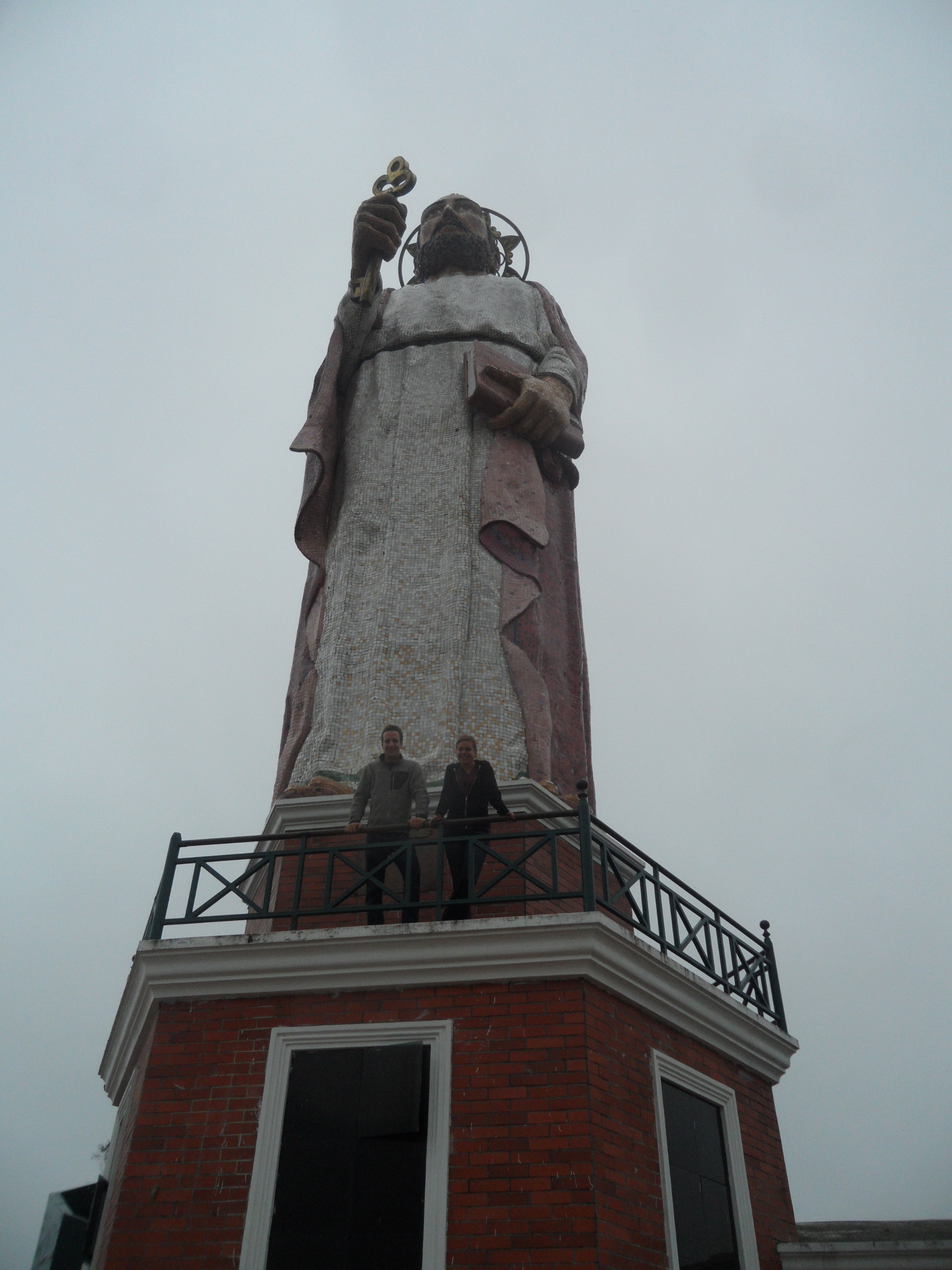
  Alausi is even smaller than Riobomba. The town has a mere 8000 residents, and is only a couple city blocks long. The town sits in a deep valley, which made for a beautiful drive in. As we descended the mountain towards Alausi, we were above the clouds. The mountaintops were like steep islands floating in the air, and the clouds below like waves. But once you made it far enough down the valley, the city was veiled in a low hanging fog that I kept saying felt “magical”. There was a giant statue of San Pedro that loomed above the town on a small hill, and the thing looked eerie and mystical covered in the clouds’ mist. I am almost always a fan of small towns over big cities when I travel, but it does mean there’s not much activity going on in the evening. So we spent the night telling stories and playing cards and had a great time! We tried out some strange Ecuadorean liquor that was peach flavored, and it was quite tasty, even though the bottle looked 50 years old and was covered in dust when we picked it up from the corner store.

For dinner we ate our favorite: street food! A lady was selling fresh made French fries with fried chicken in a bag. It was laid on a thin layer of shredded lettuce and topped with mayo, ketchup and a liquid mix of tomatoes, red onion, cilantro and light vinegar. Say what you will about eating food on the side of the street, but the bags were a $1.25 a piece, delicious, and filled us up for the evening!

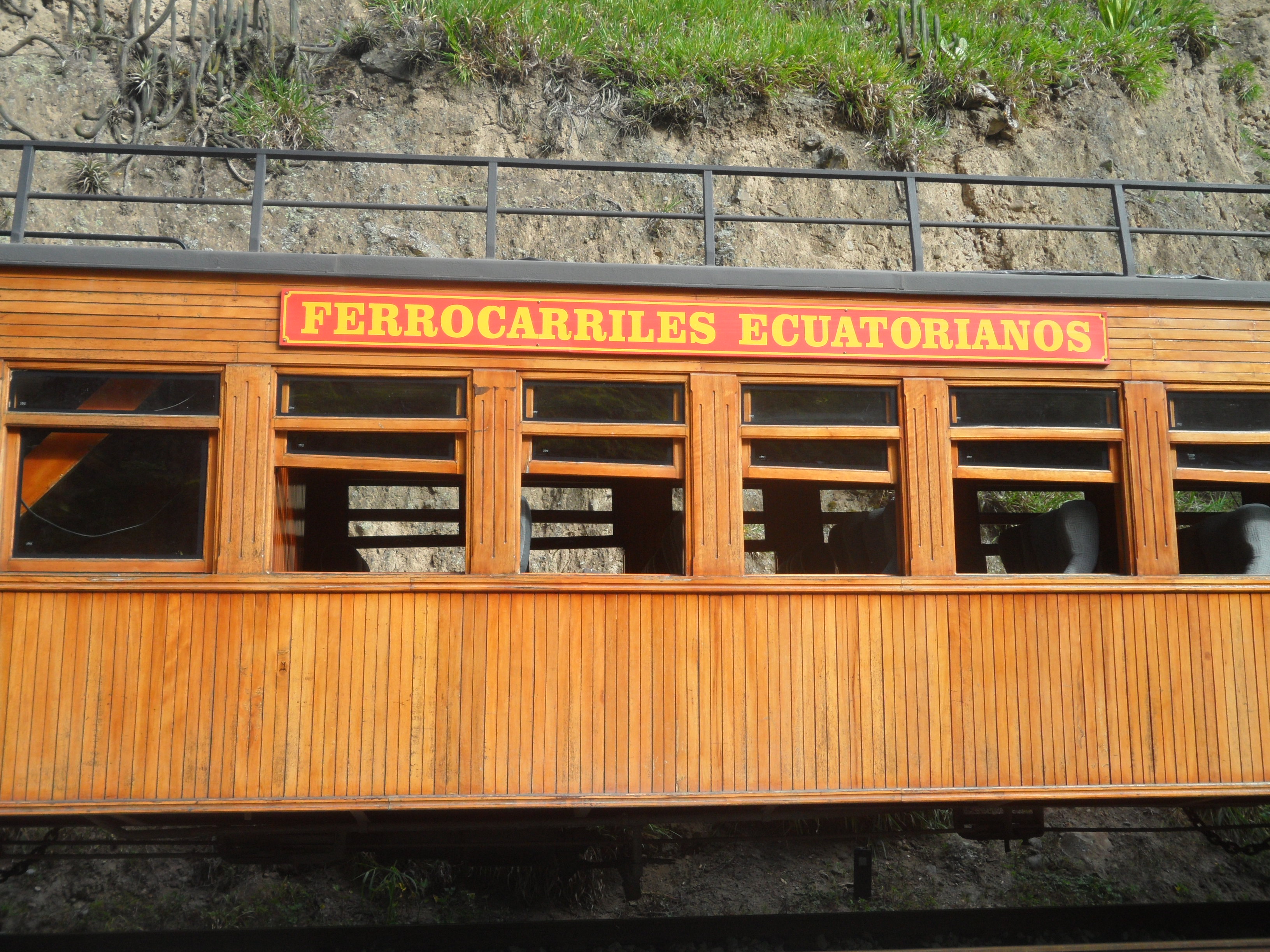
At 6:45 in the morning, the alarm went off. Time to head out on our train ride! We bought tickets and grabbed a snack from the bakery then headed out. The train was one of those “old school choo choo trains” (as we described it). It slowly trucked along the tracks between 12 and 15km/hour and into the countryside. Diane and I had seats on the left side of the train, and not 2 minutes into our trip the announcer said, “to let you know, 95% of the scenery will be seen from the right side of the train…” Fabulous. Good thing Adam is the better photographer and took hundreds of shots of the scenery.

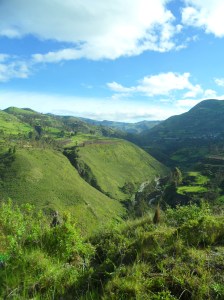
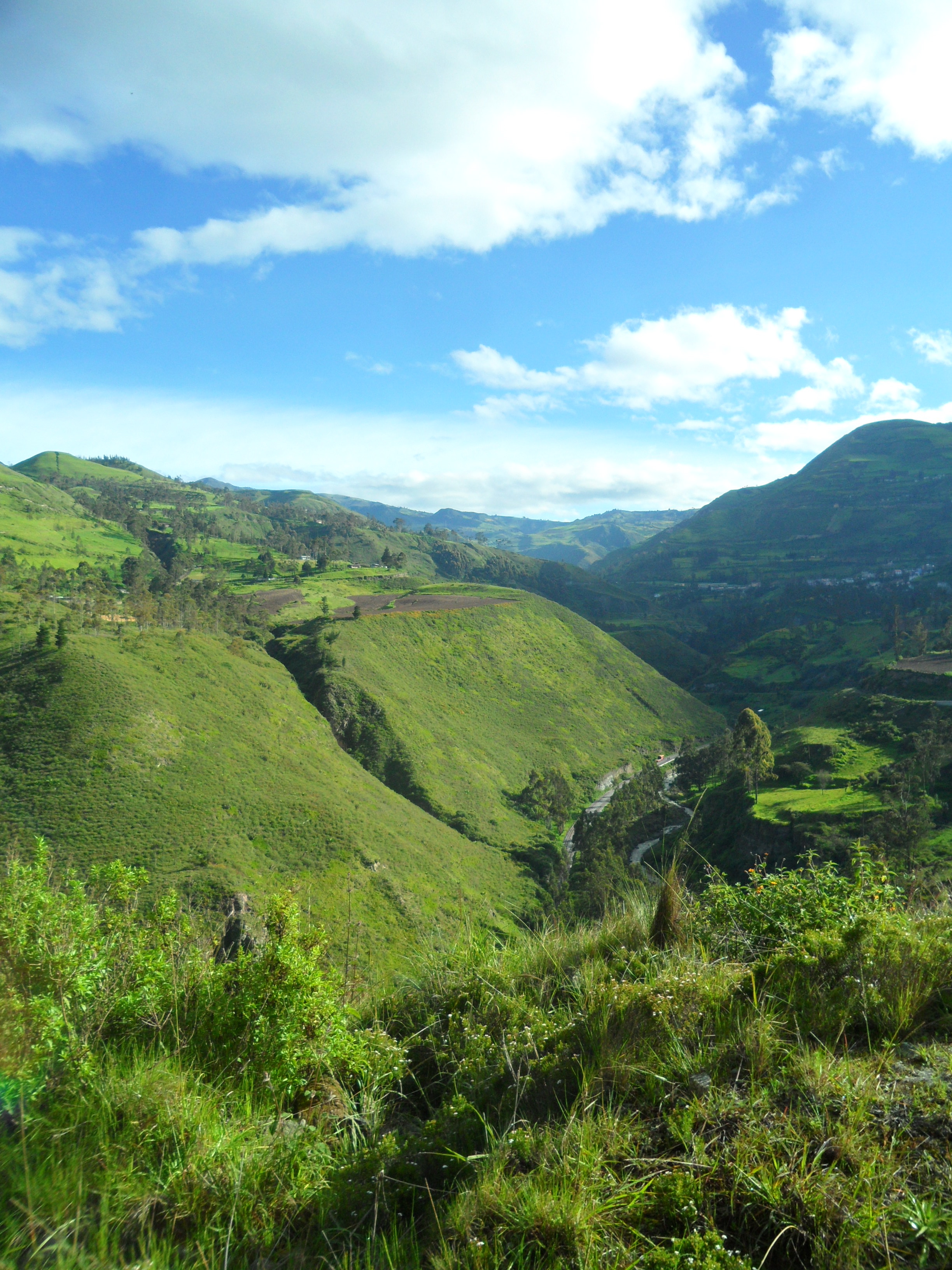
The place was beautiful though! I can see why it’s so popular. The morning sky was nothing like the previous nights’ and was cloudless and blue! This region of Ecuador is much more mountainous, and this area in particular had steep mountainsides and deep valley’s that ended with the small Alausi river winding through the bottom. I instantly decided that I love valleys. They are beautiful to look at, great to take photos of and fun to train through! I have no better reason than that.

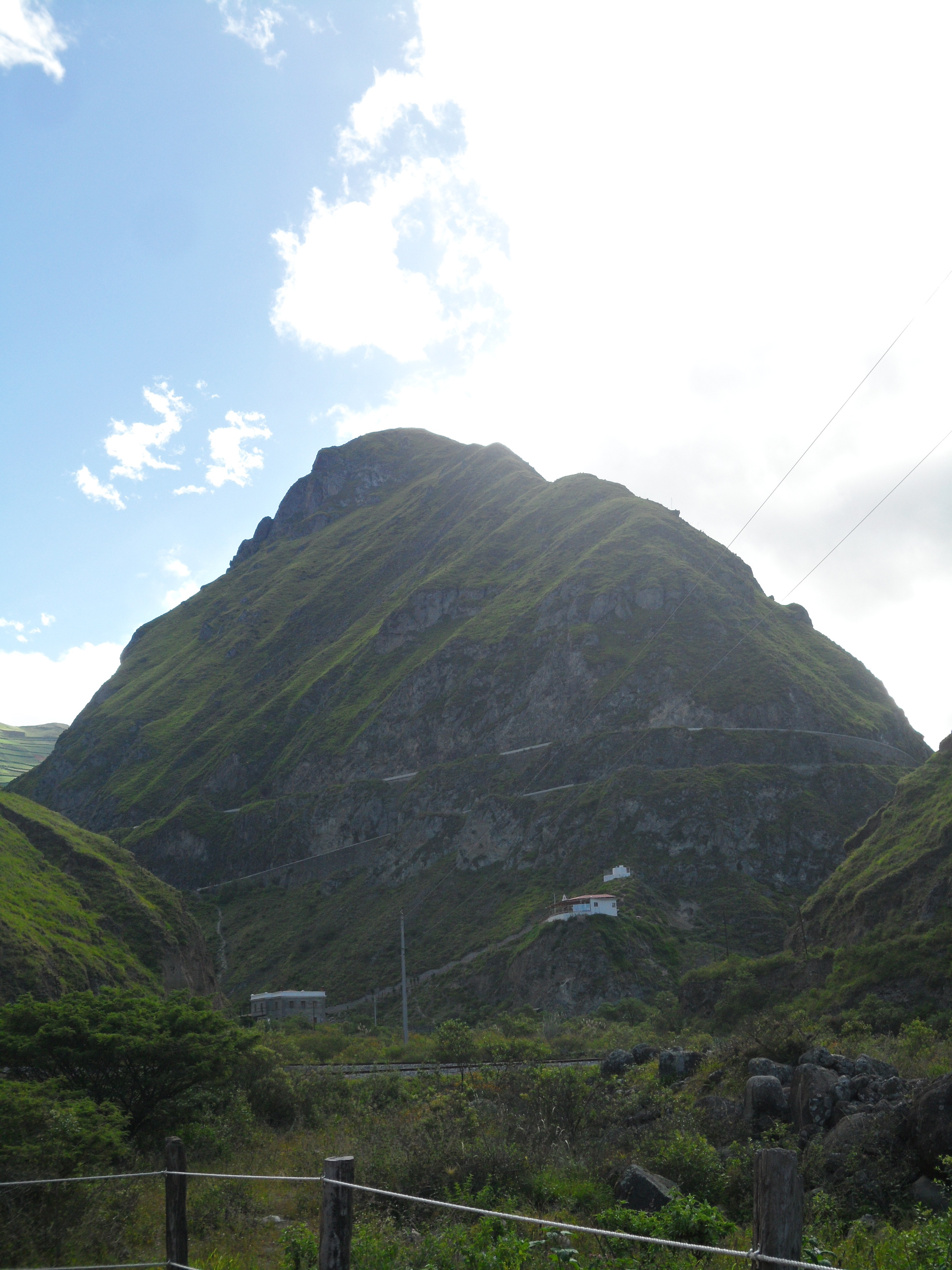
The devil’s nose mountain really does look like a giant nose. From an aerial photograph we saw in the museum later, the whole mountain looks like a crocodile, with two eyes, a long snout and the train tracks act as a mouth. It is named the Devil’s nose after all the local folklore that surrounds the area. It was believed that satanic spirits haunted the mountain.  The spirits did not want a railway track built there. Locals claim that goats blocking the tracks turned into devilish imps to chase away the workers. Others claim to have seen a man standing at the end of the nose with a red cape and glowing red eyes. During the making of the track, there was a collapse in part of the mountain that killed thousands of migrant workers from Jamaica: another bad omen. But whatever the case, the mountain is STUNNING!! Our whole tour was just a short couple hours, with an hour break to check out the museum and have a sandwich for breakfast.

Once we got back to Alausi, we immediately booked a ticket to Machala, a town on the south-west border of Ecuador. 
 The two buses we took were less than appealing to say the least. The first bus was 4 hours of sickening curves and stomach-turning lurches. I had to take a gravol within the first half hour or I wouldn’t have made it without vomiting (did I mention Ecuadorian buses don’t have bathrooms?). We had to switch buses in Guayaquil, which was way out of our way. Diane and I kept trying to find a faster way to get there, by jumping off in a small town and waving down a bus going the other direction. Our bus attendant must have hated us, because even though he explained to us several times that this was the only route to Machala, we kept coming up to him with the map to ask about other possibilities. Anything to not have 5 hours of backtracking!!

We ended up in Guayaquil after all… 
The bus station was massive and we were tired and lost. One thing we did figured out though, is that if you stand still in a bus station anywhere in South America long enough, looking like a dumb gringo and staring around with a dazed expression, someone will help you. Almost immediately a guy came up to us, asked where we were going, showed us to the proper desk and then took us right to the bus (and it’s a good thing he did, because our bus left in 3 minutes).

Our second bus took twice as long as it should have. It was hot, muggy, crowded and 6 hours long. Once all the seats were full, the bus driver started loading up the isle full of people. We were seated in the back of the bus and there was a mom and three children standing in the isle next to us. I was so exhausted, but felt so bad for the kids who after a half hour standing looked tired. I offered my lap for one of the little girls to sit on, then Diane did the same. For the next couple hours it was smoldering heat, way overcrowded, both our legs went numb with the kids sitting on them and the roads were old and neglected. At one point we were stuck in an hour-long traffic jam in a small town that happened to have a parade route going down the center of it. I think the three of us were delighted when we finally arrived in rainy Machala and checked into our room.

The Middle of The World

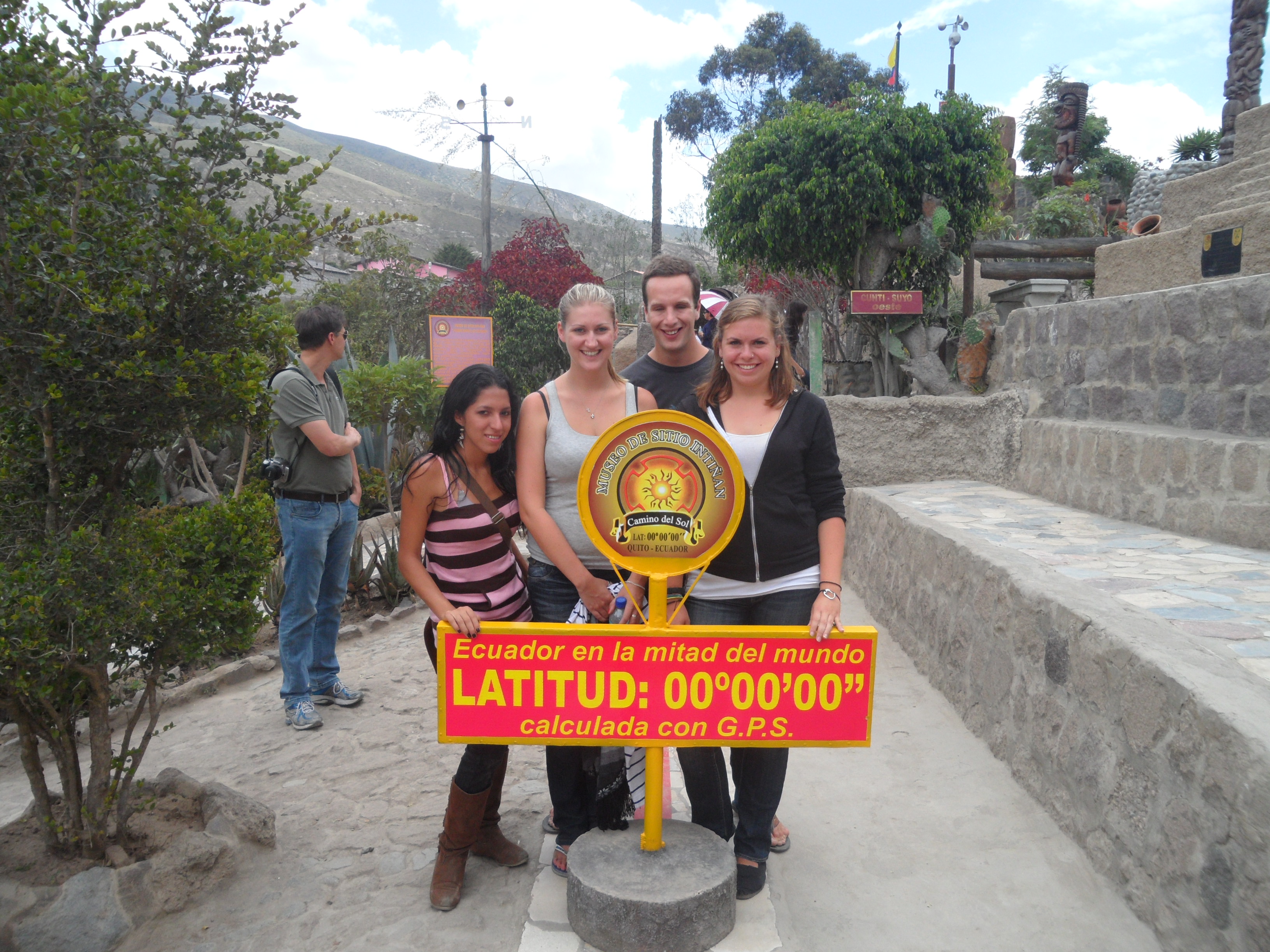
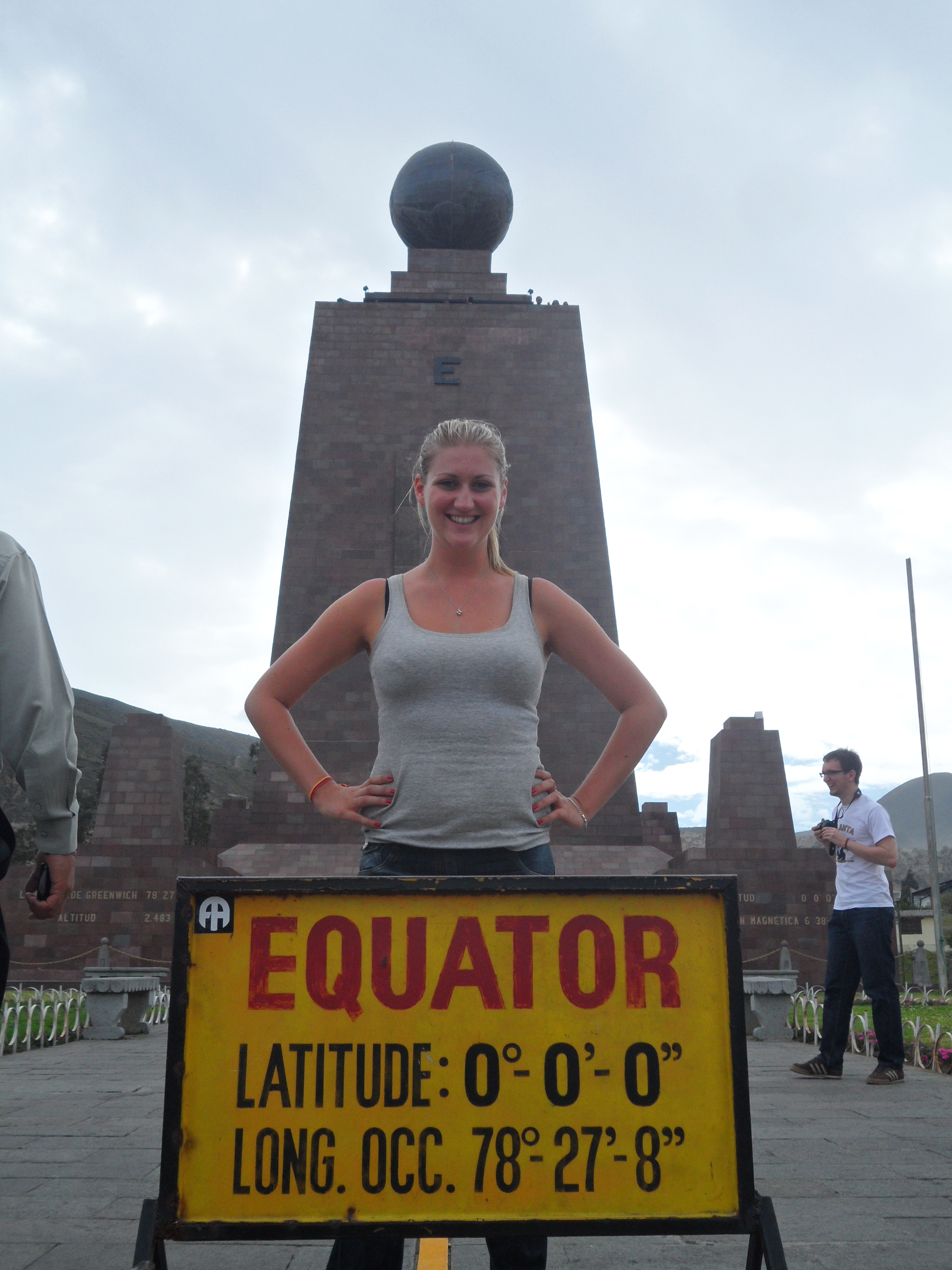
On our next day in Quito we decided to visit the Mitad del Mundo (The Middle of the World) just a quick 50 minute bus ride outside of Quito. Christian, the guy who worked at our hostel, agreed to take us out to see the equatorial monument and show us the area as our “personal tour guide”. This was VERY kind of him, considering he gave up his entire day to tour us around the city for free. In total there were 5 of us and we were all very excited!


There are actually two places to see the equator; and if you are a good tourist, one man explained to us, you should see both! The first is the GPS located line; the true center discovered only a short 15 years ago. The second, is only 200 meters away, where the French estimated where the equatorial line SHOULD be a couple hundred years ago. Pretty amazing feat to get it so close if I do say so myself!

We started with the GPS located line, and got a tour of the surrounding museum which was wonderful.
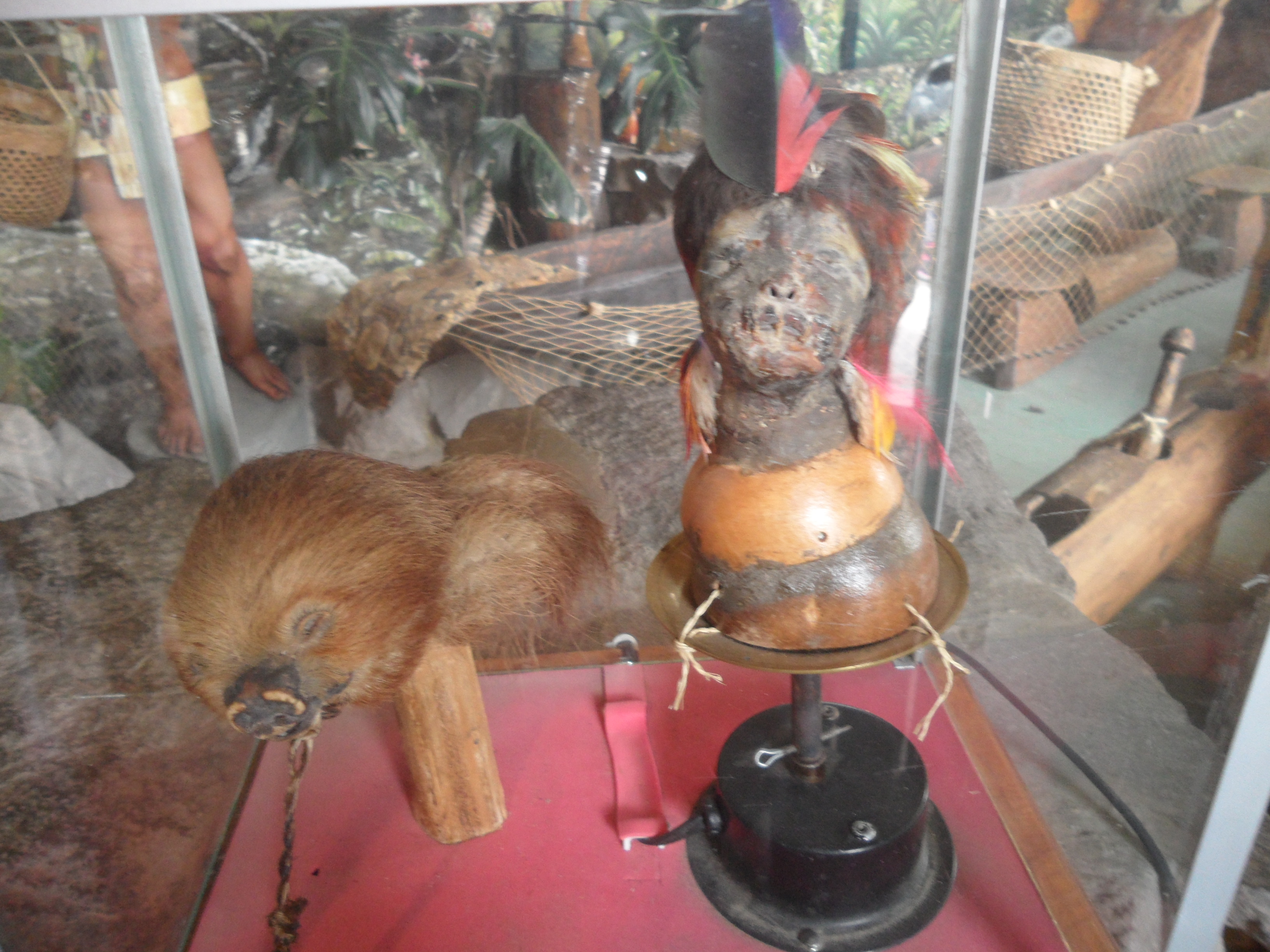
  The museum was laid out as if it was a traditional native village. Little bamboo huts, grave sites, and dirt paths were all set up to explore. Some of the huts sold hand-made trinkets and woven Ecuadorean blankets, while other huts were more educational. We went into the first and saw all sorts of preserved animals. A giant, 40 ft anaconda skin hung on the wall, tarantulas larger than my spread out hand were in glass boxes, and two massive boa constrictors sat in a tank below. In another display case there was an actual, real life, shrunken head! Apparently only tribes from Ecuador truly practice the shrunken head technique, and they managed to have one on display. It was the head of a child who had died in a tragic accident, the head was smaller than my fist, and all it’s orifices were sewn shut. It was apparently a little over 150 years old, and, to be honest, it was super creepy! It is a tradition with native tribes of Ecuador to shrink the heads of captured enemies, or of people who should be revered in the village. Beside the head, we found a a detailed 12 step process to head shrinking, which I won’t go into, but believe me, it’s gruesome! And if you put your own hand into a fist, that is the size your own head would be if it was shrunk!

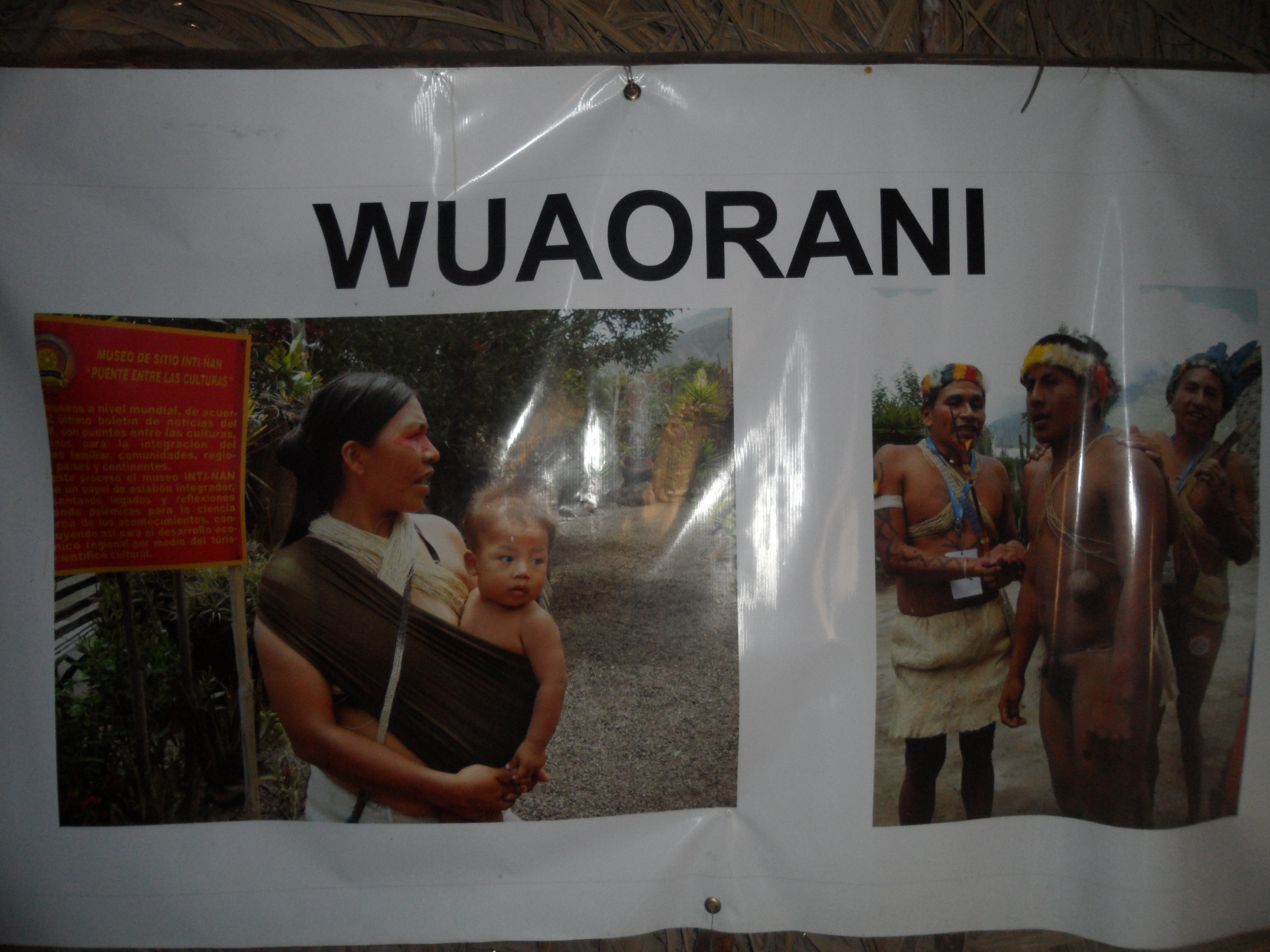
We learned several fun facts about the Wuaorani tribe during the tour.  We heard of their traditional hunting techniques (poison dart blowers and double ended spears) and customary dress code (nothing at all). Their burial ceremonies were the most interesting I thought. When a man died, it was expected for him to be buried with all his worldly possessions, that way, he was prepared for the afterlife. However, a man’s wife was also considered his possession; and so, when a man died, his wife was buried alive next to him (that’s love). When a CHIEF died, his wife, his servants, and all his children (apart from the eldest son who would carry on the chiefdom) were buried with him. The bodies were folded up and placed in giant pots to be buried in. In this sense, it is as if a person is being brought both in and out of the mortal world in a dark womb.
  How gruesome!


Next we took a look at the equator itself. A big red line was painted along the ground to outline exactly where it ran. I had no idea there would be so many cool things associated with the Equator, and I still have no idea how so many of them work. 
First off, we all know how excited I was to flush a toilet in the Southern Hemisphere and see if the water really drained in the other direction (which it did). So I was particularly excited to see what happened right AT the equator. From the moment we arrived I was scoping out the banos in hopes to test my theory; however, no need, because the guide did a demonstration for us! For those who are interested, DIRECTLY over the equator, water runs PERFECTLY downward. It doesn’t spin in either direction at all! Only a step to the South, the water flows clockwise, and a step to the North it spins counter clockwise! I was so excited about this it’s lame. Apparently, the further from the equator you go, the larger the spins become. That is why tornadoes and hurricanes (which will circle clockwise or counterclockwise depending on the hemisphere) never occur along the equator, but are much stronger as they move away from the center of the earth!

Another interesting experiment we tried was balancing an egg on its point, on top of a nail, right on the line. Almost impossible to do so in either hemisphere, balancing an egg on its tip is relatively easy on the equator!! Contrastingly however, if a PERSON closes their eyes and tries to walk a straight line with their arms out (as if for a drunk test) they will immediately fall over. Tried and tested, believe me, it is difficult!


Perhaps the most exciting for me was the last test! This entire trip Adam and I have been joking about how weak I am. For all my friends out there who have seen me try to open a water bottle and fail, you can attest to this: I’m not very strong. HOWEVER (and I’m going to brag about this point for the rest of my life, sorry Adam) directly over the equator, I am stronger than Adam!!! Don’t worry; I have unbelievable video proof of this feat to show you all! We tried an experiment where Adam put his hands together, fingers clasped in one giant fist and arms in front of him. I used both hands to try to pull his fists down, while he pushed up toward the sky. Two steps off the equator line I was literally hanging like an idiot off Adam’s outstretched arms in an attempt to pull them down. Fail. We then took one step over to the red line, and did the same thing. I used one arm only, and very easily pulled both his fists down while Adam pushed up with all his strength, veins literally popping out of his neck with the struggle! UNBELIEVABLE! I didn’t even believe it myself! But I watch the video every time I feel insignificant!


When we’d finished at the equator it was time for lunch! Christian knew this great little restaurant just a block or two away that sold guinea pig as one of it’s specialties (This was something we’d been searching for since we arrived in Ecuador)! The lady who ran the place opened the restaurant just for us, and started cooking up a storm! We ordered one giant guinea pig between the 5 of us and it was more than enough food! We started with toasted corn with garlic and onion and chilled lima beans (delicious). After, there were the trimmings of a wonderful avocado and tomato salad, boiled potatoes, and some toasted chickpeas. Then came the guinea pig! It was huge, filling an entire platter, and came all put together, looking just like it would have alive, except it had no hair and was a little more still. Apparently the traditional way to eat guinea pig, is to just rip the meat apart with your bare hands… So that’s what we did! It was surprisingly very tasty! The texture was similar to chicken, but with fattier parts like rabbit meat. The skin was tough but crispy and the taste was unlike any other meat I’ve ever eaten. I don’t even know how to describe it. It wasn’t gamy, it wasn’t the most delicious meat I’ve ever had, but it was tasty!! Trying to eat around its little rib cage proved to be a bit tedious, but we ended up eating almost all of it. We left the head, mostly because looking at the thing’s burnt face and big teeth was a little off-putting. Also, I couldn’t eat the paw, because it was way too life-like and I felt bad as it looked like it was trying to climb off my plate with its tiny claws… Excuse me for being so descriptive. All in all the meal was great, we successfully tried another strange animal in a foreign country and no one had to slurp back a beating heart this time!

After lunch we went to the second, and original equatorial line. There were a bunch of touristy museums to poke around in, and we checked out some strange insect museum with all sorts of bugs I’d never want to run into in the wild! There is also a massive monument right over the supposed equator line that is a favorite for touristy pictures! We snapped some shots, tried to pet some wandering llamas, and carried on our way!


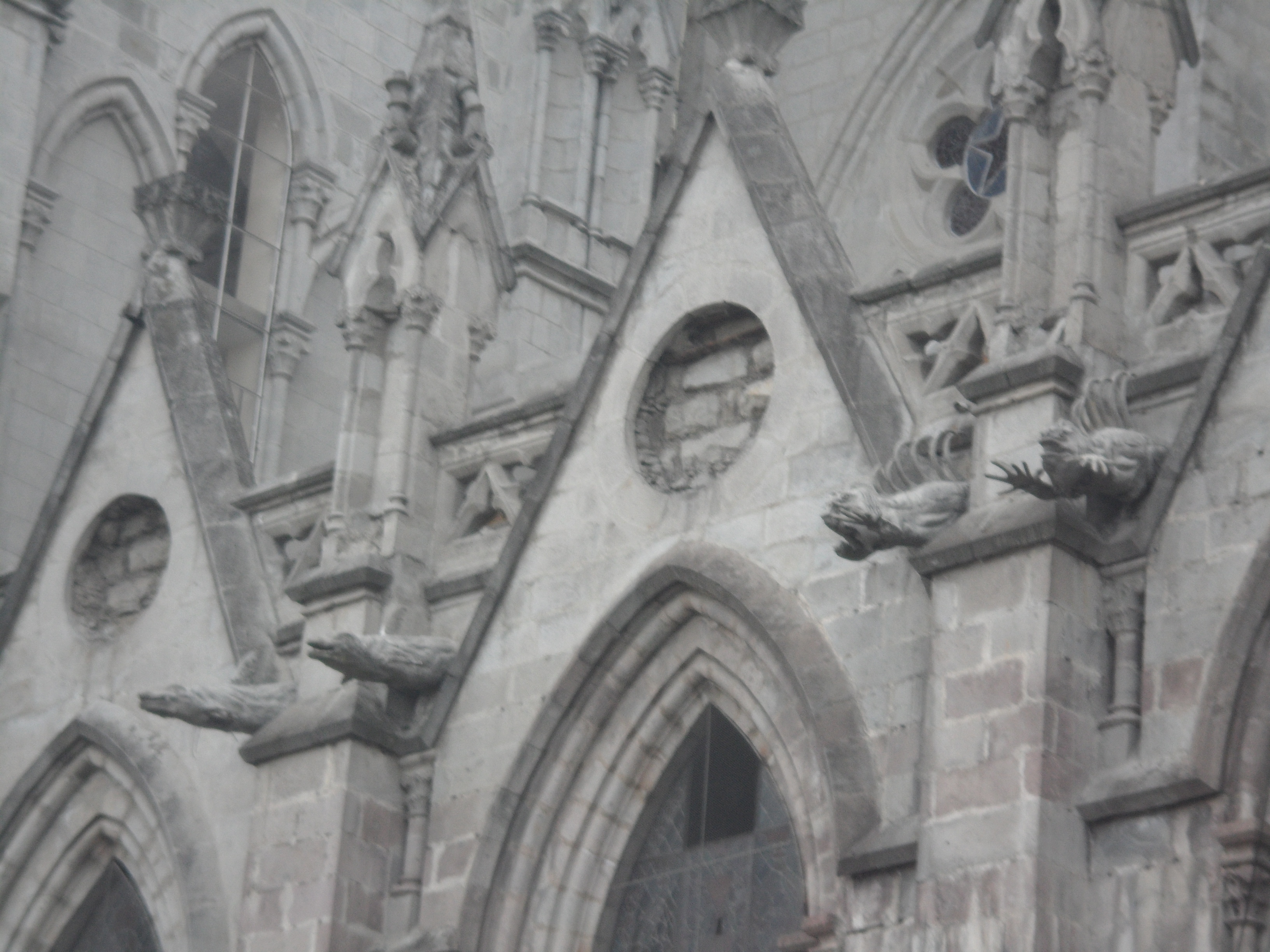
Christian then took us on an amazing, whirlwind tour of Quito’s old town. This was the first time we really explored the city, and it was absolutely breathtaking!! I knew the city was beautiful, but I absolutely did not expect it to be so wonderful. Adam was like a kid in a candy shop photo bombing every plaza, church and statue in the city center. Obviously his favourite city architecturally, and I agree. The city had a very European feel to it. The architecture was intricate, and much of it dated as far back at the mid 18th Century. A couple of the churches took up to 160 years to complete, and on the inside were completely covered in gold adornments of detailed design. The main church of the city, which took 120 years to complete under the order of Ecuador’s president, was the most impressive by far. It had an almost gothic feel to it with large pointed turrets that stood high above the city. It looked like a building that should sit in the old center of Edinburgh or Bruges. The building was so detailed in it’s design; it was difficult to choose where to focus. However, what made the building so unique was that, instead of gargoyles as figurines on the side of the building, there were statues of animals that are specifically local to the Galapagos Islands! Big iguanas, sea turtles, birds, the church was covered in these local touches that made it so perfect!

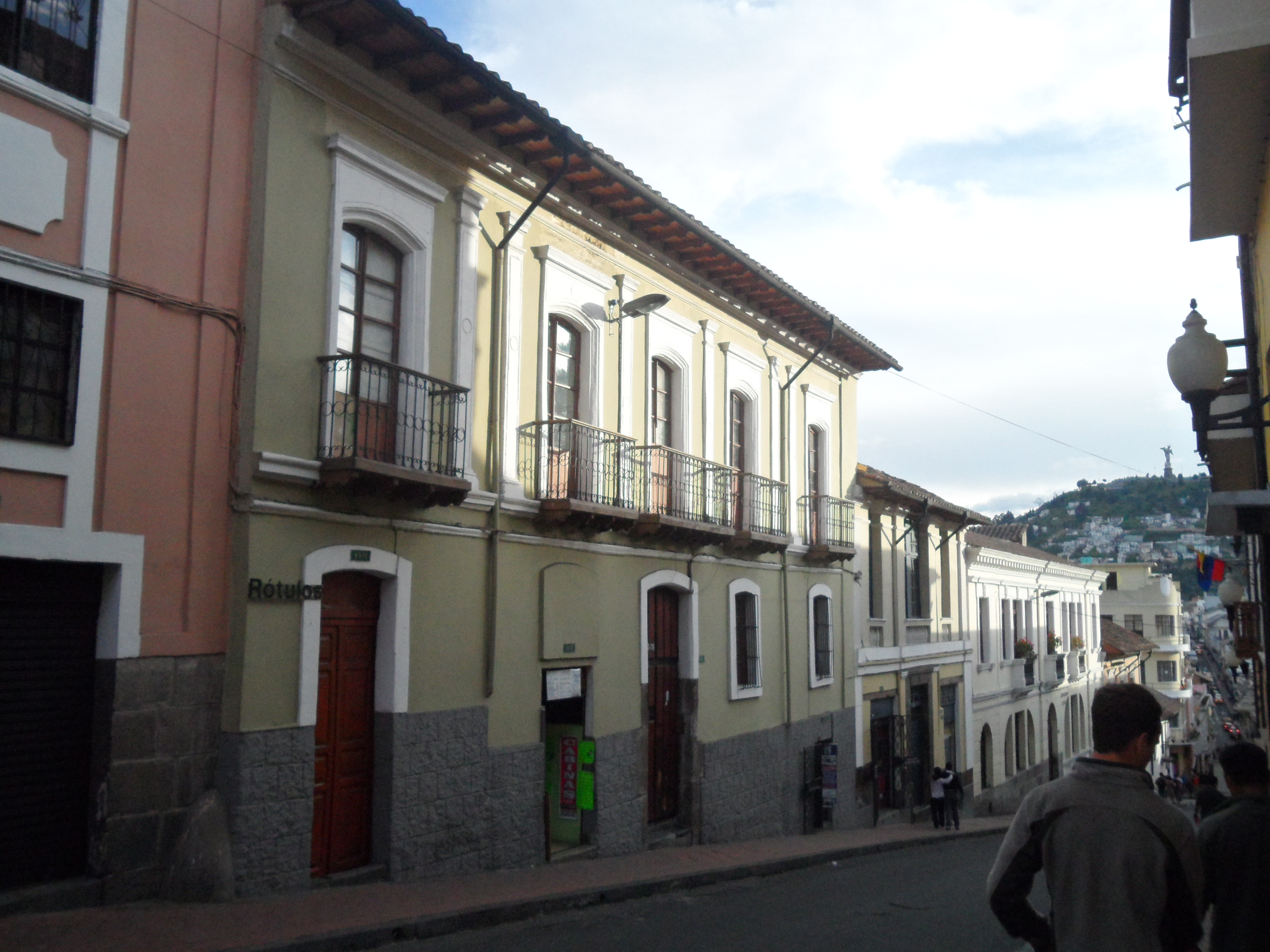
Not only were the plazas and the churches so amazing (as like most places here in South America) but the streets themselves were colourful and fun! Many of the buildings were perfectly painted in pastel colours with white trim. Almost every home had a second floor balcony with a quaint little gate around an area just a few square feet total. Apparently, years ago, it was common for young men to woo their lady-interests by serenading them from the streets below! The women would then walk out the door, on to the little balcony, and the two could talk. It is a very Shakespearean idea, and the balconies all looked like they were out of a Romeo and Juliet production! How cute!

I was a little surprised at how much history and legend each area of the city had. Canada, and in particular the West coast, just doesn’t have the same history. It is newly settled in the big scheme of things, and so churches dating back several hundred years are non-existent. I assumed South America was more recently influenced by European culture as well, yet, cities like Quito have the same amount of history as the best of the European cities!! (and it doesn’t come with the European prices, what a bonus). For those of you interested in seeing beautiful, European architecture but can’t afford the Euro, I highly recommend Quito!

We ended up back at the hostel around 6:45 and refreshed ourselves from the long day. Then we recruited half our hostel and went out on our own mini pub crawl. We started at a lively Irish pub across the street from our hostel, and ended up at an adorable little salsa club with entirely locals. The place was so small, with a little bar and red brick walls. There were only a handful of people in the place, but we all grabbed partners and got out on the floor to learn salsa! There was a couple dancing when we arrived that was out of this world! Clearly professionals in the dance, they were fascinating to watch! Diane even got a chance to dance with the man and his leading was so perfect she said she felt like the best dancer on earth. And she looked like it too! It definitely makes a difference when at least one person in the pair knows what they’re doing!
  So after another long night out, we were up early for check out. We decided last minute where we were going to go, and after a hearty breakfast, we set out for a small town called Riobomba a few hours South of Quito!

Otavalo and Cotacachi: Ecuadorean Market Towns

Ecuador is obviously different from Colombia in many ways. The landscape immediately changed after the border from mountainous terrain to rolling hills. The climate is a lot drier, and thus browner, and there’s less sprawling coffee plantations and more farmland. Sheep, cattle, llamas, pigs, all sorts of wildlife with more flat land and sparser forests. Women stand in lines tilling the fields by hand or carrying bundles of sticks along the side of the road.
  Even though the currency of Ecuador is the US dollar, the dress is much less influenced by North American apparel. Many locals wear the traditional clothing of brightly coloured ponchos or capes, dark pants (long thick skirts for the women) and fedora hats. The women carry their children in swaddled blankets on their backs, and are almost always adorned with thick necklaces of gold and silver chains.

At nearly every stop the bus made, people selling cheap food or trinkets climbed on to sell their goods. Homemade potato chips, apples, chicken, nuts, water, icecream, you name it. The venders walk up and down the isle calling out the names of their goods in rapid succession. “helado helado helado helado!!” “papas papas papas!!!” “un dollar por seis; veinte cinco centavos!” The men or women stay on for a stop or two, then tell the driver to stop so they can jump onto another bus. You will never find yourself hungry on an Ecuadorean bus, that’s for sure!

On our first day in Quito we did very little. We grabbed lunch at a bar in the main square, checked out a park and ventured back to our hostel to wait for Diane to join us! Now that Hilary had gone home to Toronto, Diane agreed to join us for our trip around Ecuador and we were very excited! The three of us went for delicious Mexican food for dinner, then called it a night early to get ready for a long day trip to Otavalo in the morning.

Otavalo is a market town about 2 hours North of Quito. It is a wonderful little town with a plethora of street venders selling food and a beautiful craft market full of traditional Ecuadorean wares. The three of us got up early to start our day. We watched a very entertaining Jackie Chan movie in Spanish on the bus ride out and arrived in Otavalo by the early afternoon. Buses in Ecuador are incredibly cheap: about $1 for every hour of the trip. Such a far cry from Brazil, which are between 8 and 10 times the price!! So we were all happy to reach the town for the cost of a toonie!

The market was quiet on the Monday that we went, but had some great deals! There were tonnes of intricate, hand-carved silver pendants and earrings, wood carvings of native animals, hand held pipes, thick alpaca sweaters, brightly coloured paintings, and traditional blankets and scarves. We had a great time walking from stall to stall bargaining for the best price and checking out the handicrafts. In the end, Diane and I both bought sweaters and Adam got an alpaca blanket that was gorgeous! When we’d properly explored the market, we ventured back to the bus station to catch a bus to Cotacachi. I never would have known that this place existed had it not been for Cathy, who told me about the leather bags she had bought from there. Only 40 minutes and 20 cents from Otavalo, Cotacachi is even more quaint and beautiful! From what we saw, it was only several blocks squared: the bus station went only 2 places, there was one plaza with a church… and a million leather shops! The place smelled amazing, with real leather scents coming out of the stores. Jackets, purses, wallets, shoes! Each place had handmade leather wares for super cheap and many of the shop owners made their products right there in the store. We spent a good hour at least walking up and down two city blocks checking out all the leather in each store along the way. We got some great deals in the end and then made our three hour trek back to Otavalo and finally Quito. We had cheap eats at a local Ecuadorean restaurant of rice, chicken and lentils for $2.75 then back to our hostel for a few beers and games of pool.  Not a bad first day in Ecuador!

Cali: A Salsa Dancing Haven

We decided to go to Cali solely to dance! In the Southern part of Colombia, Cali is supposed to have South America’s best Salsa clubs, and according to Lonely Planet, “you can dance until sunrise, every night of the week, no questions asked”.  Sounds fun to me!


We ended up meeting up with my god brother’s friend Nick, who just happened to be traveling through Colombia at the same time as us. Although I haven’t seen him in about 13 years, for some reason, while traveling, it seems acceptable to greet people from home like they’re your long lost friend! Nick’s been on the road for a little over 6 months; he quit his job, sold his worldly possessions and decided to take his motorcycle around the world for 3 or 4 years. Even after a few short months he had amazing stories to share with us. Turns out, motorcycling around the world is more common than I had imagined. Spence, another guy at our hostel, was actually doing the exact same thing! The two of them were going opposite directions around the world, but figured they’d meet up again in a couple years somewhere around the Middle East. What an unbelievable journey for them both!


We took it pretty easy during the day in Cali. We walked the length of the infamous Sexta street, where all the bars come alive at night for parties. Being Friday, even during the late afternoon you could see the bars and restaurants filling up quickly. Cali itself is a fairly large city, but the areas we explored still had a familiar feel to it. The place was exciting and in parts very pretty, and I much preferred it to Bogota and Manizales. On top of that, the city was at a significantly lower altitude, which meant I could finally wear shorts again!! 
After dinner, we found a bottle of Aguardiente (the traditional Colombian liquor that tastes similar to sambooka, with a sweet anise flavouring to it). We had no idea what it would taste like, but decided to mix it with a Canadian dry ginger ale, and after one sip, it was instantly my favourite drink (Unfortunately not so much for Adam, who loathes sambooka to begin with). So we rounded up a United Nations group from our hostel, and headed out on the town.


Sexta street was nuts, all the bars and clubs were packed by the time we arrived at 10:30. We found one we liked the look of, sat out on the patio and ordered towers of beer while we shared stories with our new friends. A couple bars later, and before we knew it, it was 3 am. Most of us carried on to a salsa club on the other side of town to dance away the rest of the morning. The place was packed right until closing (at 6am, just as the sun was rising). It was half indoor and half outdoor terrace, which was a perfect way of keeping the temperature down. We danced for ages, with locals just grabbing us out of nowhere to drag us onto the dance floor. Some couples were good, others were just dancing to their own beat, but no one stood out as an excellent salsa dancer by any means. One of the couples in our hostel (who did not join us that night) had said they found very little “professional” salsa dancing in South America. The two of them traveled the world attending salsa conventions and were by all standards experts at the dance! They came to Cali, hoping to find the worlds best salsa dancing, and were a little disappointed. Fortunately for me, who knows only the basic steps, it was exciting just to get out on the dance floor and listen to the music! By the time the club closed, I was exhausted. Time to head to bed, because check out was in 4 and a half hours.


The next evening we were booked for a 20 hour bus ride to Quito. 
 Great.  After practically no sleep, I was once again a mess for our travel day. I spent most of the day napping on the couch and back and forth from our favourite breakfast bakery for omelets and banana smoothies. 
We got on the bus at 7:30 and prepared ourselves for another looooong overnight journey. The bus was cramped and had awkward leg rests that made it impossible to stretch your legs out. After watching yet another Jason Statham movie on the bus – that’s 3 for 3 with our buses in Colombia. They love him here – we tried to sleep. It was an awkward, freezing cold, half-sleep for both of us all night. We stopped at a million stations throughout the trip for people to get on and off and the roads were less than ideal for our journey. 11 hours later we arrived in Ipiales, a city right near the border of Colombia and Ecuador. We got off the bus and stepped into the freezing cold. Both of us had every layer possible on and my teeth were still chattering. We grabbed a cab and couldn’t even afford to pay in Colombian money, now that we were down to our last $1.50 in the currency. Luckily the cab driver accepted US dollars and we made it to the border. The border was quick and had no lines which was great. Then back into another cab to get to the bus station in the other town. When we dragged ourselves out of the second cab we were greeted by two, short Ecuadorean men with huge smiles. “Quito! Quito! Quito!” they yelled in rapid concession at us. We managed a nod, then they opened the trunk of the cab, grabbed all our bags and trucked off towards a bus! It took us a moment to figure out what happened in our sleepy daze before we ran to catch up with them. They put our bags on the bus, beckoned for us to sit down and we were on our way in no time. It was a simple bus, with no bathroom, and full of people getting on and off, but we made it safely to Quito several hours later and exhausted out of our minds!


Manizales: The Colombian Coffee Region


The 5 hour bus ride from Medellin to Manizales, although treacherously windy, is absolutely breathtaking! Colombia has by far the most beautiful landscape that I’ve seen in South America yet. Huge mountains and deep valleys of luscious green foliage make for an unreal road trip trough the countryside. Low hanging misty clouds filled some of the valleys, which made the mountains look as if they were floating in the sky when you looked over the cliff edge. The roads wind from mountain peak to mountain peak and back and forth along the steep summits. It makes for wonderful sights and stomach lurching rides. The bus drivers drive like they are formula one racecar drivers. They pass semis, bikes and cars at alarming speeds around blind corners and have no problem throwing bags and passengers in all directions in the back. I spent a lot of time looking out the front window trying not to get carsick. The only thing I could do was throw in my headphones and stare out at my impending doom: putting all my faith in our driver and crossing my fingers every time we rounded a bend.

The city of Manizales was a lot larger than I had expected. It is right in the heart of the coffee triangle of Colombia and sprawls across the side of a mountain for kilometers. Just to get to the centro from the bus station, we took a long gondola ride up over the city to the top of the massive hill. The view of the city is wonderful from such a height, and although the city itself isn’t beautiful to look at, the valley that it nestles into is a wonderful backdrop. 
We weren’t sure what Manizales really had to offer, so we decided to walk lengthwise along the top of the mountain from our hostel to the city center and back (a good 2 hour walk). Just as our guidebook had suggested, there wasn’t much to see. No beautiful plazas or ornate churches, very few lookout points, and overall just another city in my eyes. So we decided instead to go on a coffee crawl from one cafe to the next to find the best coffee in the area. Why not when you’re in one of the greatest coffee regions in the world! 
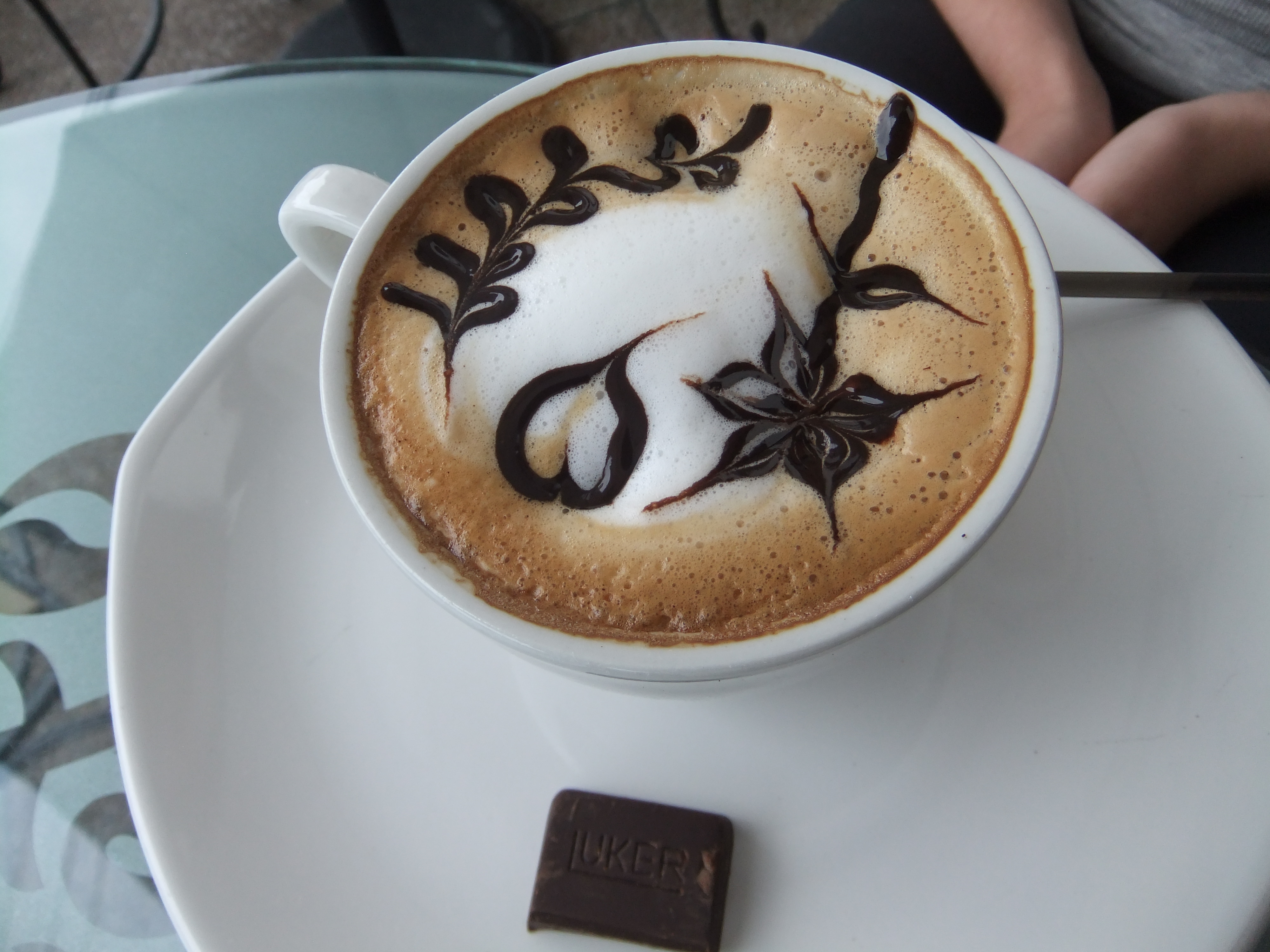
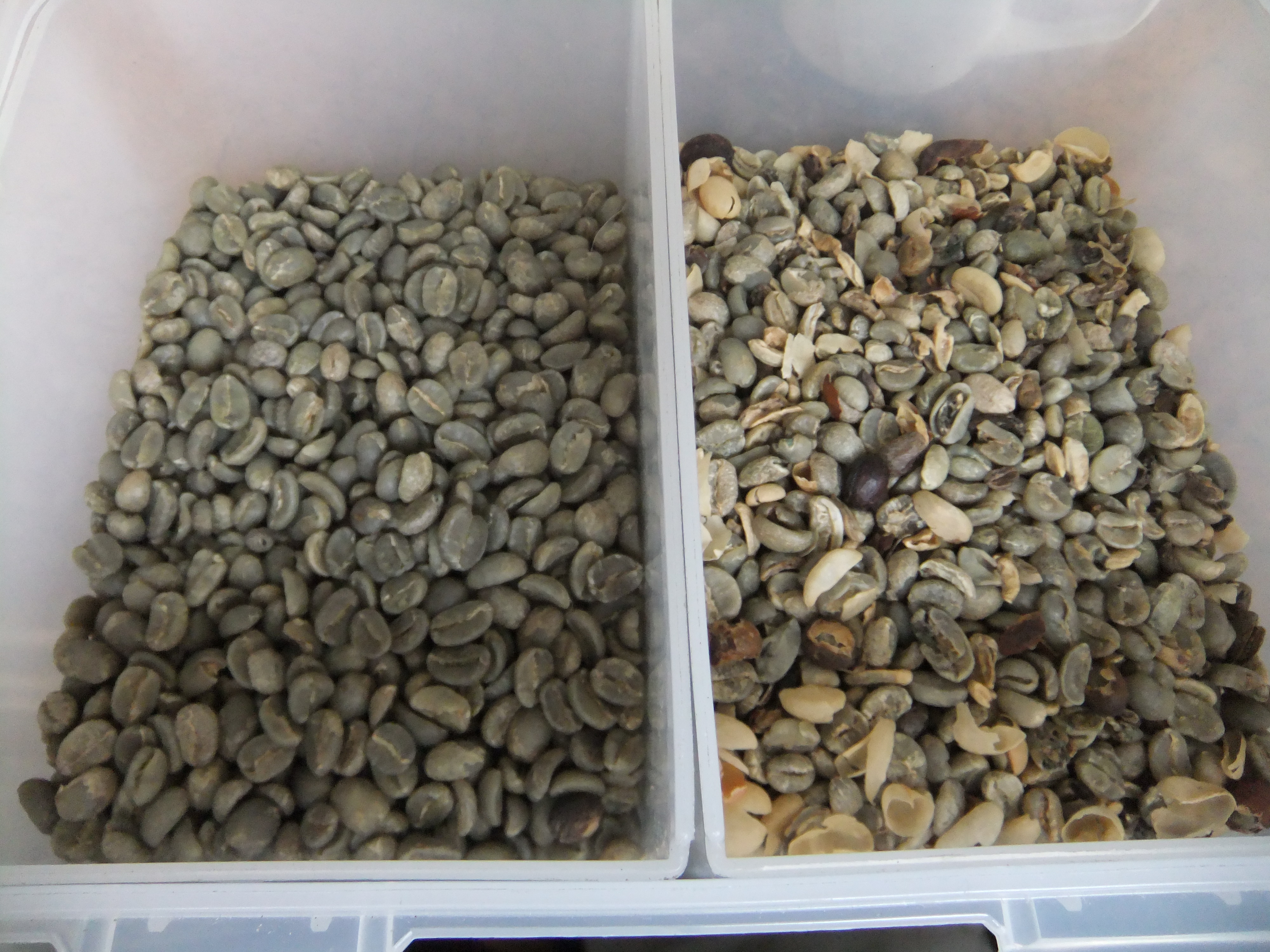
Colombia has just recently begun to serve high quality coffees within its country. Historically, Colombia would export close to 80% of its good coffee and keep the lower grade beans for itself. Luckily for us, however, many of the coffee shops in Manizales now offer delicious coffees for a reasonable price! We especially found this in our second cafe, where the servers were obvious connoisseurs of coffee themselves and described all the flavors and aromas to us before letting us smell the beans, then drink the coffee. The coffee was served with a small piece of dark chocolate, which was supposed to be eaten before each sip to bring out the best of the flavors. It was delicious! Definitely the best of our afternoon’s coffee crawl!

By the end of the afternoon I was buzzing with caffeine jitters. I am definitely not as skilled at coffee drinking as Adam, who had even more coffee than I did during the day and felt fine. But it was a great way to explore the city and an awesome introduction to the region.


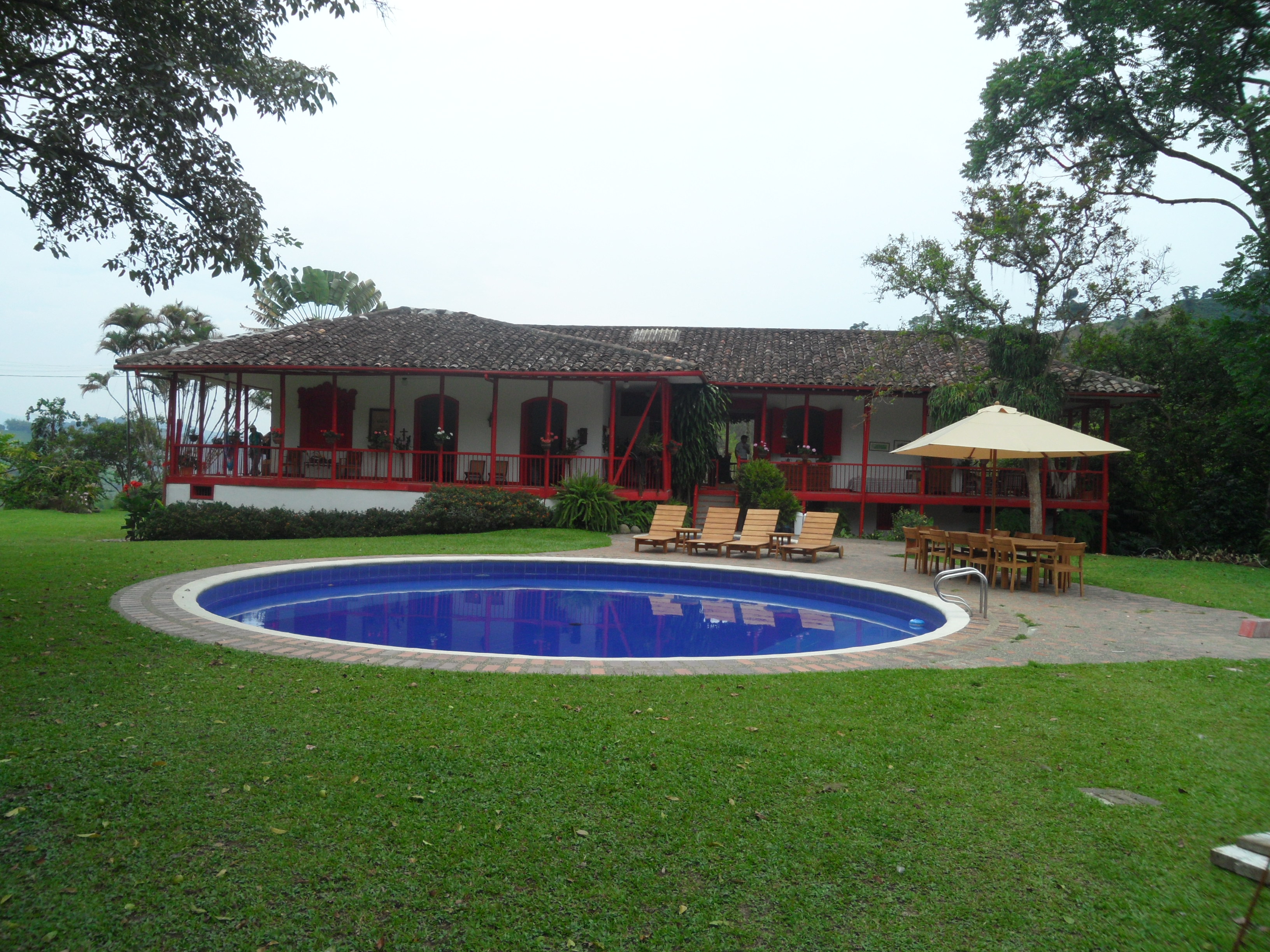
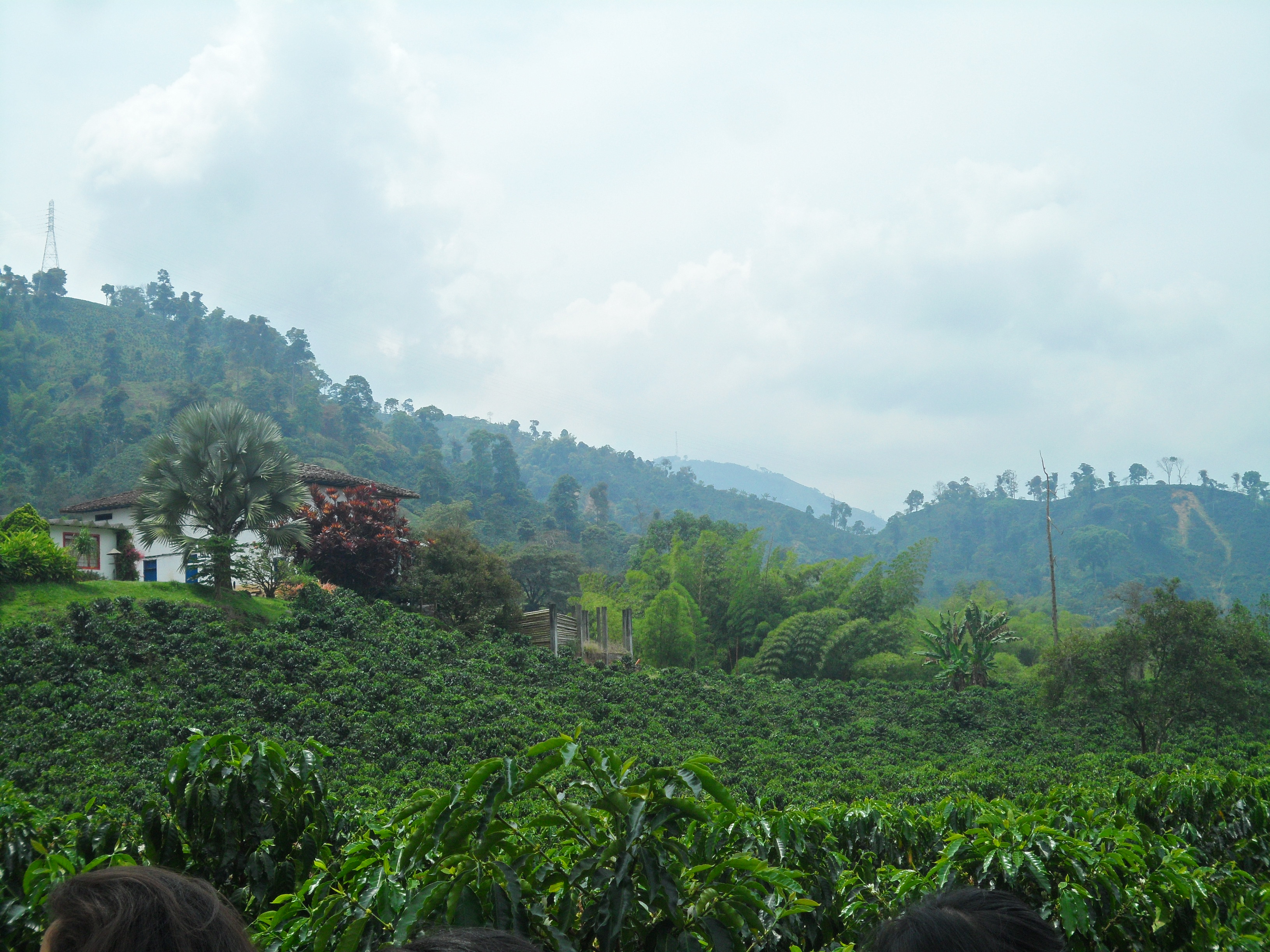
The next morning, we set out early to a tour of a coffee plantation! Just 20 minutes outside of Manizales, and down a long windy dirt road, we arrived at the plantation. Immediately, we were given small cups of strong espresso coffee. The plantation kept reminding us to “drink as much coffee as possible” while on the tour, and the beverage was readily available at any given time.

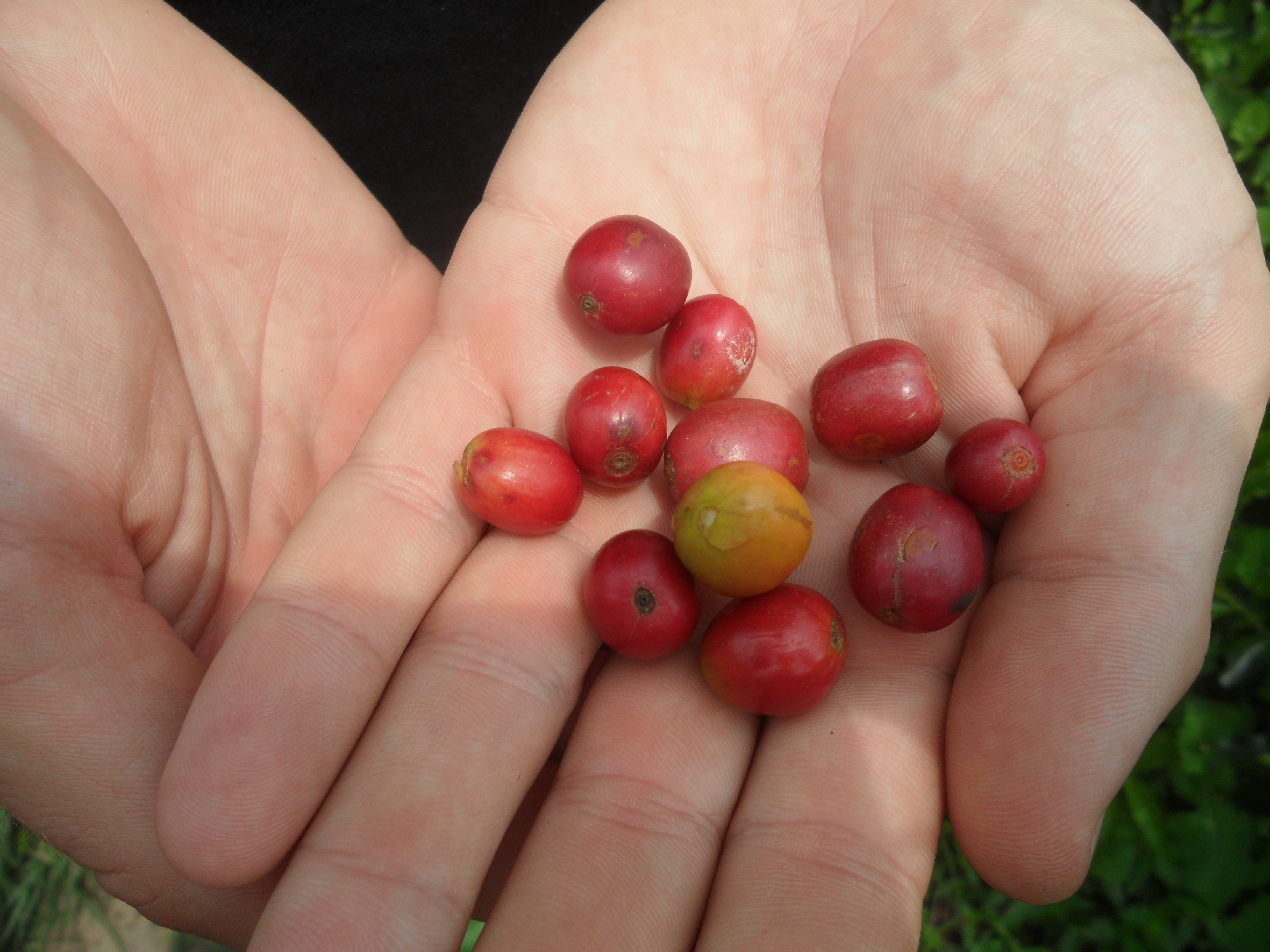
Our guide started out by explaining the history of coffee and the logistics of coffee plantations in Colombia. Colombia differs from many regions that make coffee because of its close proximity to the equator and mountain range. The cloud system that moves up and down the Andes, actually gives Colombia two full rainy seasons (unlike most places in the world) and so, the area can produce twice as much coffee in one year than most places. The downside to this, however, is that the beans on the plant all grow at different times. Some beans are ripe in May, while others on the same plant are ripe two weeks, or two months later. This, combined with the steep mountain terrain that the coffee region exists on, means that all the coffee beans have to be picked by hand by many laborers. Every 2 weeks the coffee pickers will go out into the field to pick the beans; this is an extraordinary 20+ times a year that the beans are harvested. The beans then go through a large drying process; they are shucked from their original shells, searched through by hand for the perfect bean selection, and eventually packed into large sacks and shipped out of the country. The roasting process of the beans fascinated me. The temperature of the beans has to be so exact, just like the heat of the water and how long you should pour each espresso. The equation is so precise, it is amazing that the batches can come out tasting the same time and time again!

We had a wonderful half-day tour of the plantation, walking through the fields, picking our own beans to roast, and seeing first hand each step of the coffee making process. One of the cooler things I’ve done on the trip, the coffee plantation made me appreciate the great tasting coffees we so often take for granted in Canada. Once the tour was over, we sat down to an amazing Colombian soup dish of potatoes, vegetables, capers, avocado and chicken. It was delicious, although I can’t remember what the name of it was for the life of me. Then we made the trek back to the hostel and finally off to Cali!

Medellin: The Search for Pablo Escobar

In the 1980’s and 90’s, Medellin was considered one of the most dangerous cities in South America. It was home to drug lords such as Pablo Escobar, and its reputation was synonymous with big time drug cartels and violent crimes. Today however, Medellin has cleaned up its act, and is an incredibly welcoming city, with a busy downtown core and neighborhoods with character! The Poblado district, where we stayed, was one of the nicer neighbourhoods we’ve explored on this trip, in fact. The area was full of well kept, charming parks and loads of restaurants serving international and local cuisine.


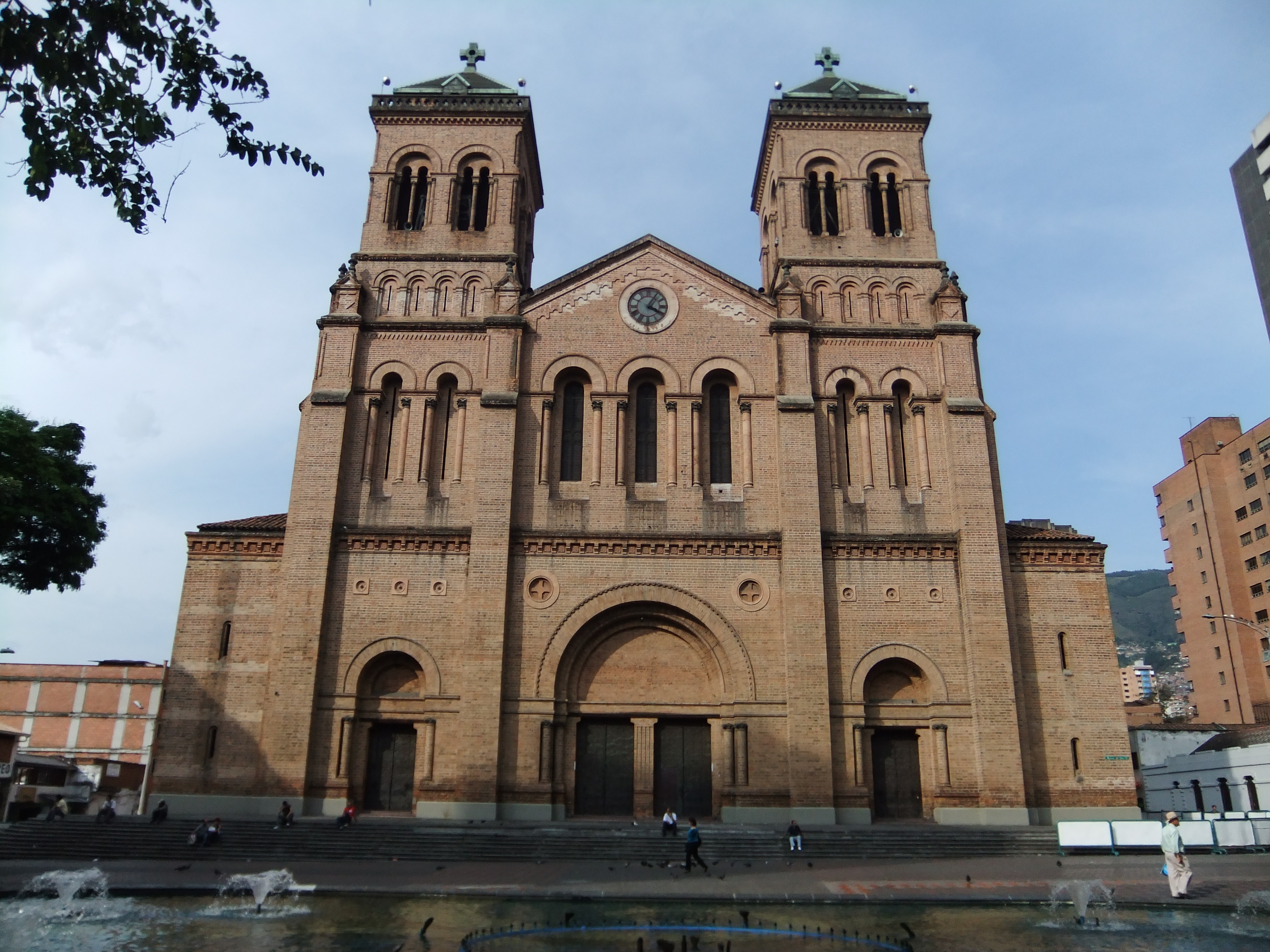
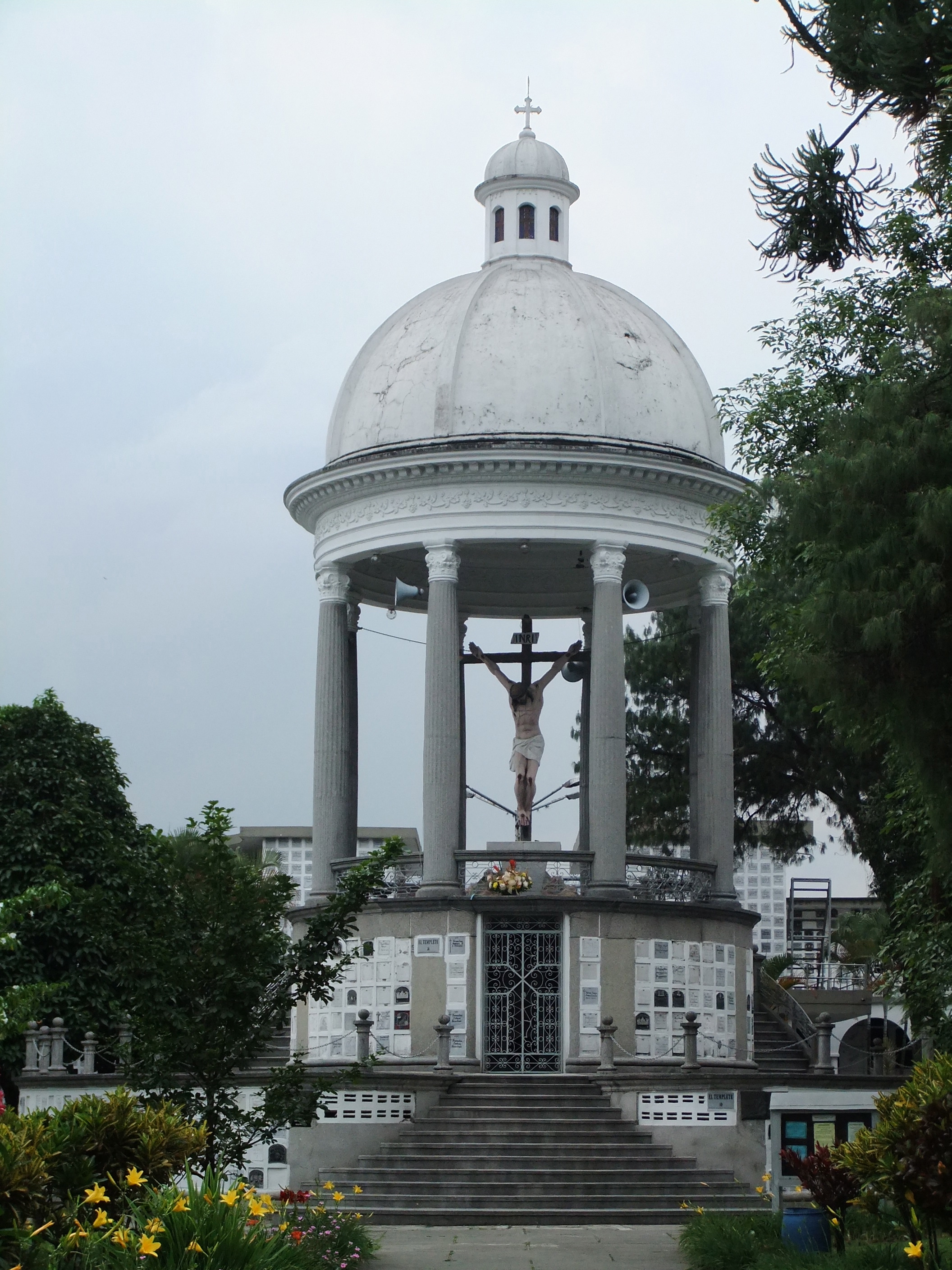
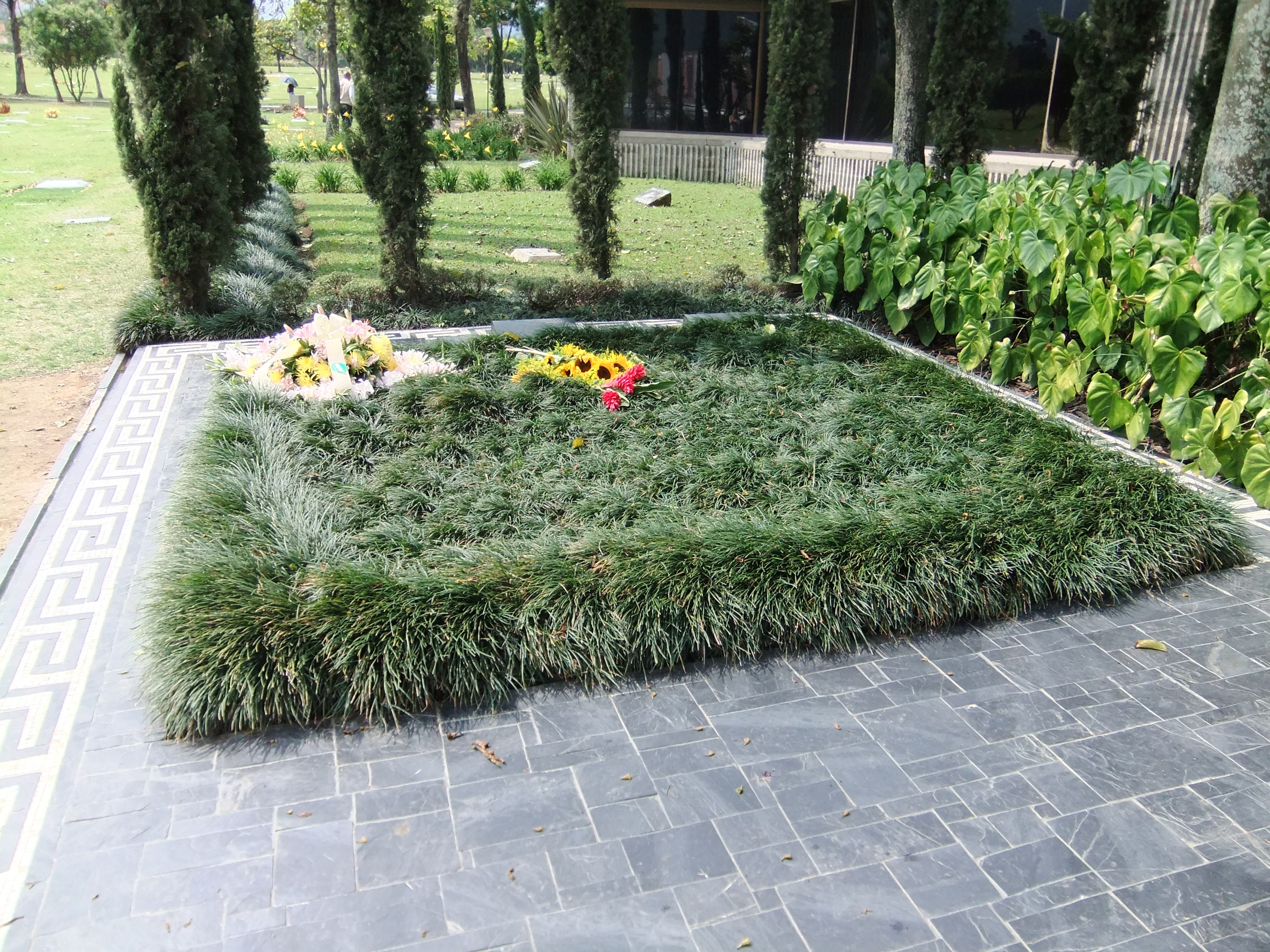
On our one and only full day in Medellin we decided to explore as much as possible; we started with checking out Pablo Escobar’s grave. We took the metro to the designated stop and immediately realized that finding the cemetery would not be easy. The station was right in the middle of a busy neighborhood and no cemetery-esque areas were visible. Luckily we had all afternoon, so we just started to walk through the streets. After a while, we admitted we were lost and asked a little old lady where the “cementerio” was. She pointed up and down blocks, told us to turn left and then right and we’d find it. So we carried on. After stopping 4 times to ask directions, and each time getting a completely different answer, we found it! A huge white building with a statue of Jesus on the cross was right in the center of the place.  From there, thousands of plaques with cremated remains spread outwards in a giant maze. It was going to be a daunting task finding the right grave.

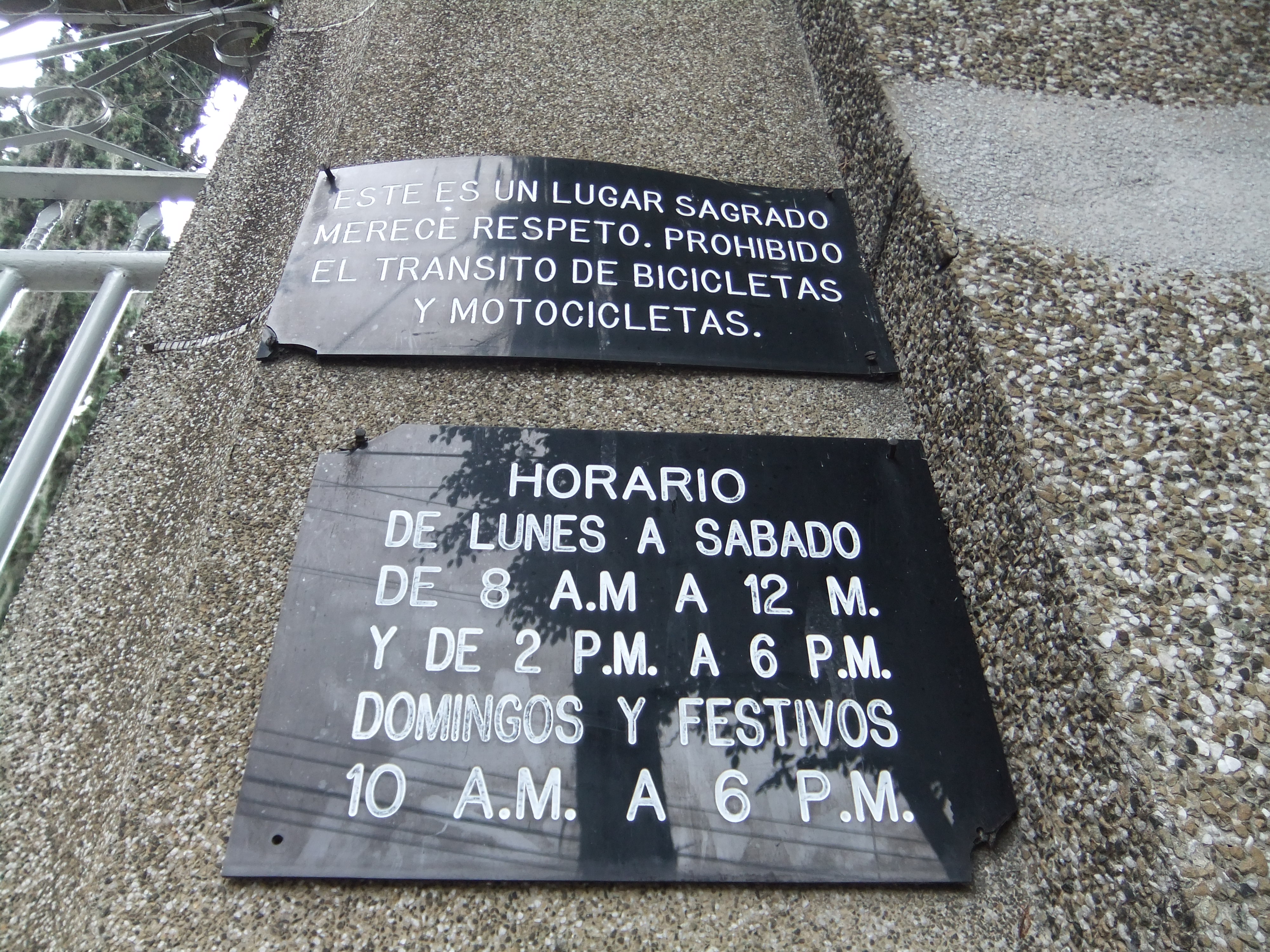
Unfortunately, as we went to open the gate, we found a big lock on the outside. Next to the gate was a sign that read: “closed from 12:00 to 14:00”. We looked at Adam’s watch… It was 12:04. Fantastic. So we grabbed a couple drinks at a local bar and waited out the two-hour siesta break.

As soon as the cemetery opened we were in the gates! The place was a little overwhelming with the number of names, and there was no touristy indication that Pablo Escobar’s grave was the center of attention. So we walked and read, walked and read and after way too long searching, we came across two guys that worked there. We asked them if they could help us find Pablo Escobar. They looked at us like we were crazy, then the younger guy perked up. “Pablo!!” he laughed hysterically, “you are in the wrong cemetery my friends! You are looking for the big one. It’s huge, with a big building and big monument!” Seriously? We’d been sitting around for over 2 hours waiting for this cemetery to open and all for nothing?  So even with directions we decided to take a cab; we specifically asked for Pablo Escobar INSTEAD of cemetery, and the driver took us right there. So much simpler for a 2 dollar cab ride!

Our sad faces when we realize we’re at the wrong cemetery.


The taxi driver pointed over to a large building across the cemetery and sent us on our way. We felt so stupid. The place was huge! And the building that he pointed to had a tonne of cars, a bus and people milling around. Obviously it would be a tourist destination, and not a desolate old cemetery in the middle of the city! So we walked toward the building determined to take a photo and get on with our day of sightseeing (now that we were so far behind on our day).

Stoked to have finally found it!

So we walked into the building like the biggest tourists ever: cameras out, backpacks on, ready to throw elbows through the crowd to get a picture and get out. We smiled at a security guard on the way in the building and he looked at us strangely before smiling back. Then we moved our way through a group of people into a room that everyone was staring into. When we walked into the room, we walked STRAIGHT into the middle of an open casket funeral that was going on. The dead man’s wife was wailing over the casket and about 90% of the people in the room were crying: then there was Adam and I. The only gringos in the whole area, who just pushed through a grieving family with our cameras out, determined to snap some shots. I went so red, and the ridiculousness of what just happened made me want to laugh out loud: although I’m sure that would have made things worse. So we hightailed it right back out of the funeral and back to the front door with the security guard. “Pablo Escobar?” we asked. He just shook his head, smiled a bit at us, and then led us to a very modest sized family grave on the backside of the building. How MORTIFYING! 
It took us a total of three minutes to take a photo, check it off our tourist list and head back towards the metro…3 and a half hours later. Fail.


The downtown core of Medellin, our next destination, had a great ambience. Street venders lined the main street for block after block selling their goods: pirated dvd’s, music, clothing, trinkets and street food among many others. We walked the main drag for a good stretch before coming across a beautiful plaza. The city itself is so much more beautiful than Bogotá, and the vibe is both livelier and warmer. Later in the evening, we asked a man for directions to a restaurant. When he realized that he’d given us the wrong directions to the place he left his shop, and ran down 5 blocks to find us and let us know the right way. It’s unfortunate that Colombia, and in particular Medellin, has such a bad reputation, because the people are so lovely and accommodating. All throughout the country we were surprised by how friendly and helpful all the locals were to us! I suppose that’s why Colombia’s new tourist tagline is “The most dangerous part of Colombia, is not wanting to leave”. And I believe it!

Bogota and The Salt Cathedral

Our flight to Bogotá left at 3:58am from Manaus, had a 45 min layover in Panama City, and finally arrived in Colombia just after 9am local time. I’m pretty sure we were sleepwalking to our hostel from the lack of sleep we’d had. Short naps, no longer than 30 min on each flight, 3 hours the evening before, 2 hours Thursday, and 6 DAYS in an uncomfortable hammock before that. All we wanted to do when we arrived in Bogotá was go to bed! When we arrived about 10am, it was still 2 hours to check in. We passed the time staring at a wall until we were finally allowed to crash in our room for a couple more hours.

We took it pretty easy our first day. Hung out drinking coffee at a local cafe, then walked around the city, checking out its bustling streets (with lots of crazy homeless people). One huge difference in Bogotá was its temperature. It was absolutely freezing (If the freezing temperature was 10 degrees Celsius)! The city is at such a high altitude, that even the sunshine during the day is several degrees cooler than we have been acclimatized to. Both of us bought a pair of jeans, and I spent two days wearing three layers of shirts.

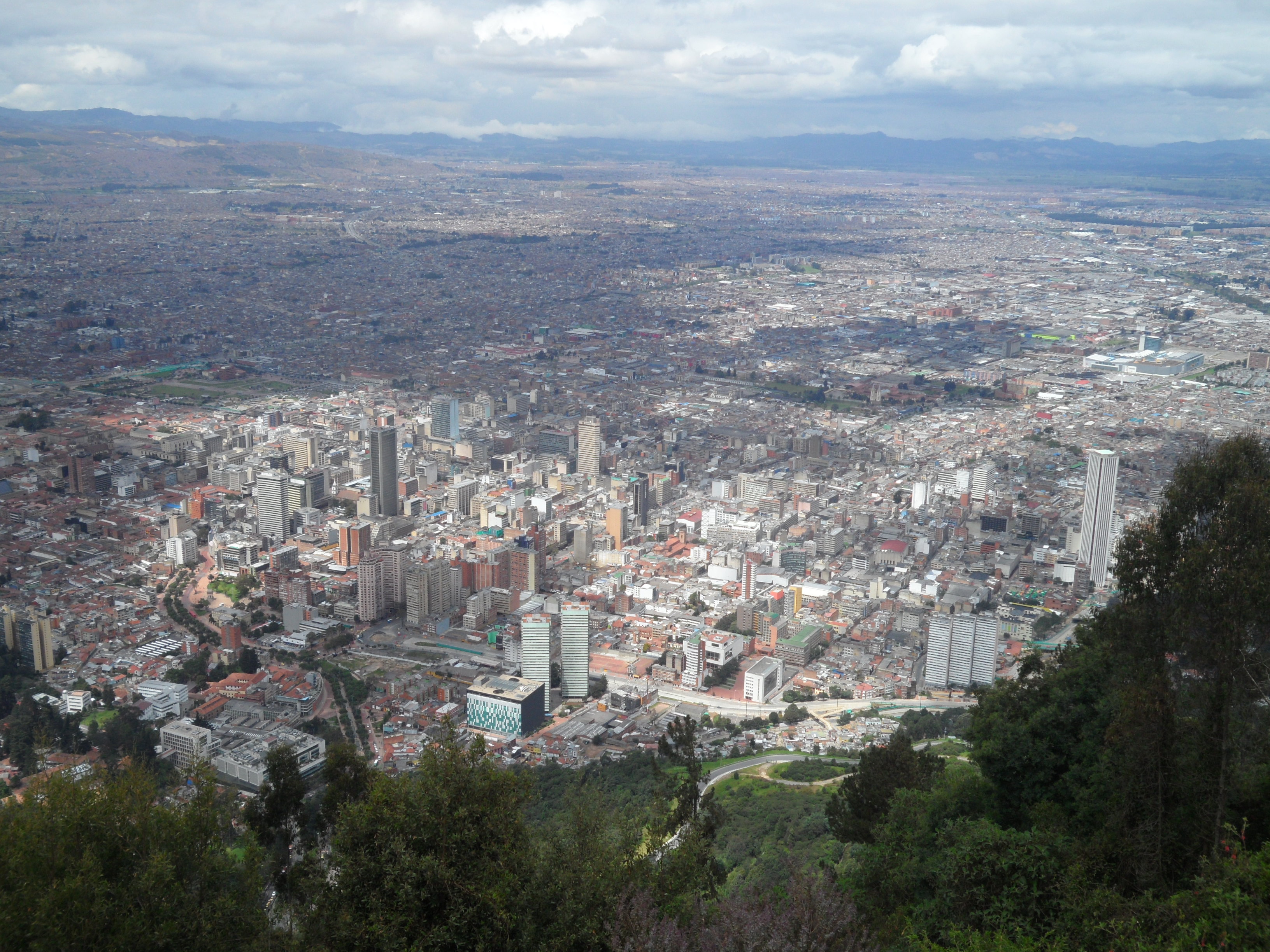
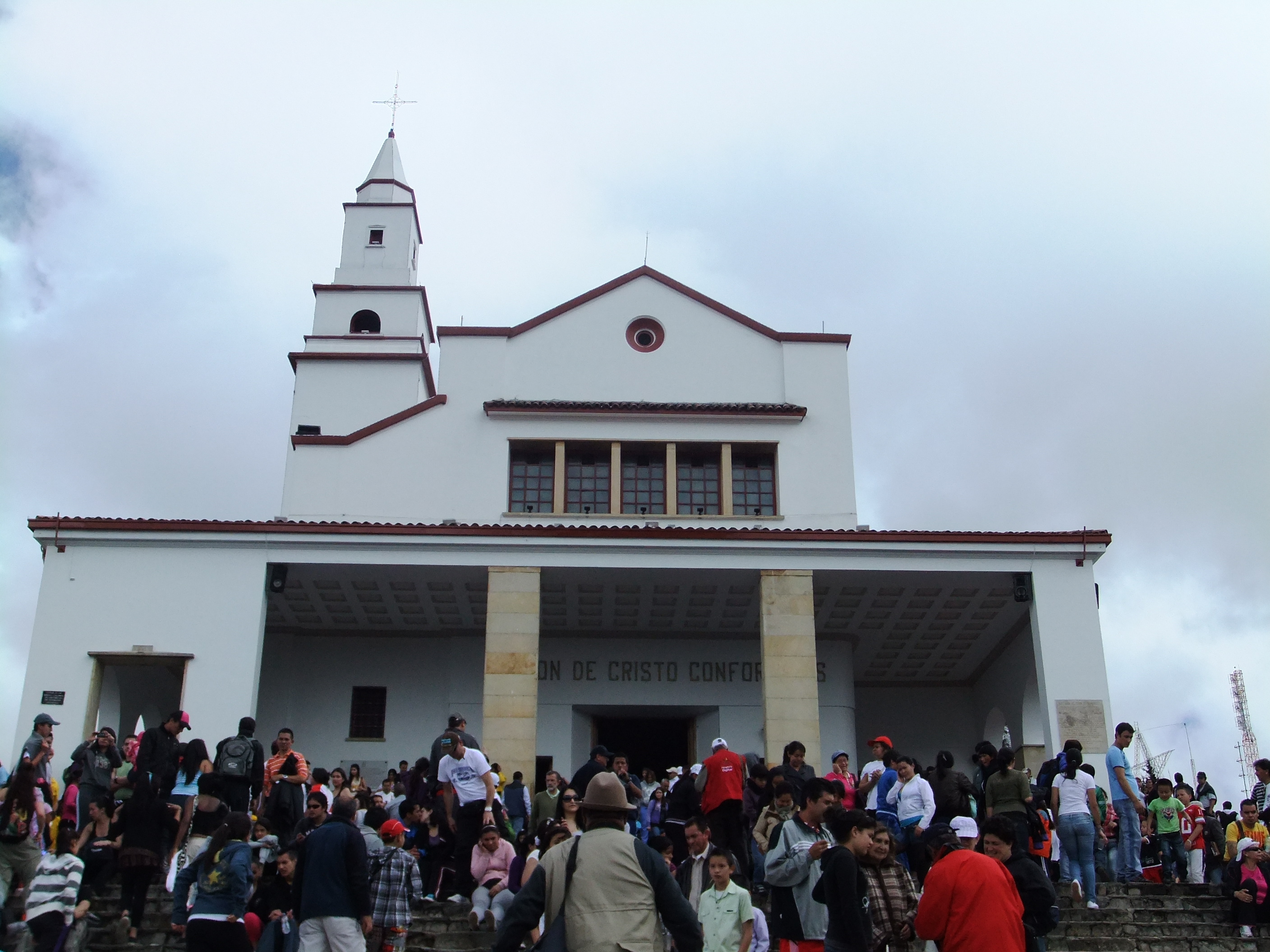
After a good night’s sleep it was time to do some sightseeing. We went up the cable cars to the Cerro de Monserrate, which is a lookout over the whole of Bogotá. The city is mostly just urban sprawl for as far as the eye can see, but the mountains on the other side are gorgeous! At the top of the lookout there is a church, which was packed with people on the Sunday that we went. There are also a bunch of souvenir stores and a plethora of eateries for a snack or a full-fledged Colombian lunch!

Instead of spending our afternoon in museums, we decided to check out the Catedral de Sal in a city just outside Bogotá. A local Colombian we met in Sao Paulo a month earlier recommended the “salt cathedral” to us.  He had said it was one of his favourite things in Colombia. So we made the two-hour trek to Zapateria to check it out. Surprisingly, we figured out the bus system in Bogotá (which is a hundred times more difficult on Sundays) and ended up in Zapateria within a short couple hours. 
The city was absolutely beautiful. It sported large brown brick churches, bustling cobblestone plazas and had a rustic, small-town feel. Zapateria is nestled in a little valley, with gorgeous green mountains towering over it – an idyllic little getaway from Bogota’s much less aesthetic surroundings.

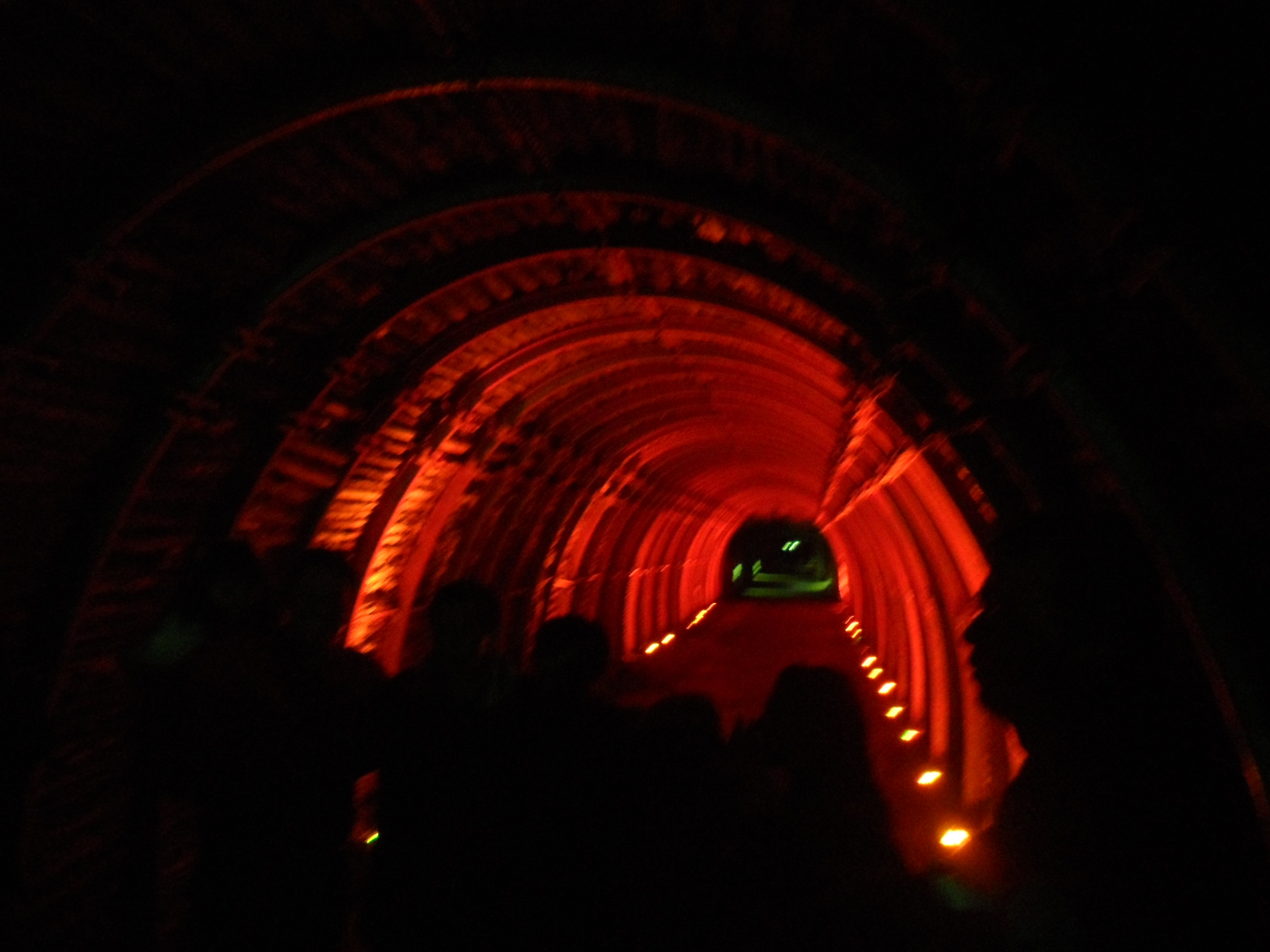
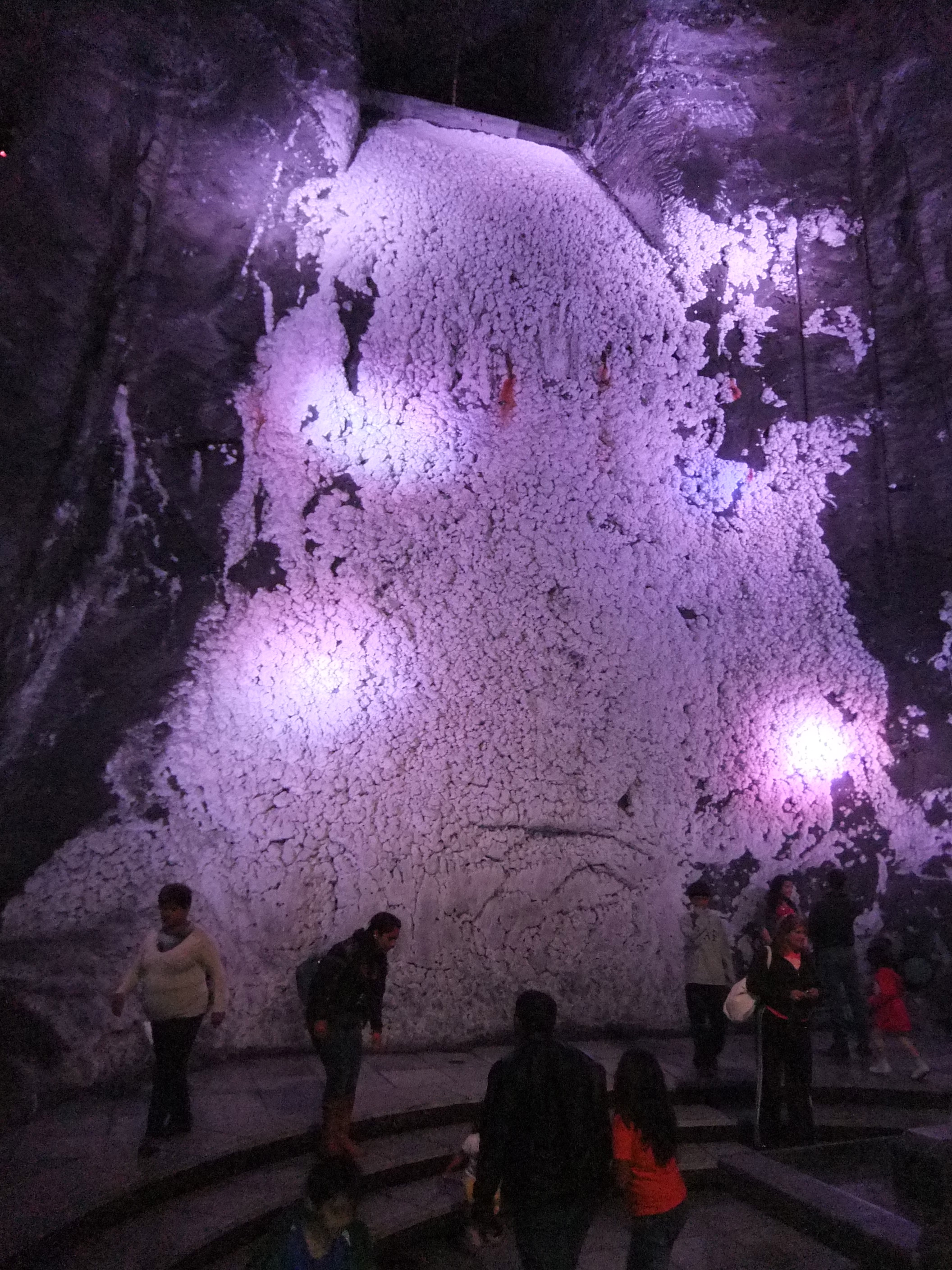
The Catedral de Sal is an underground system of tunnels that have been designed into a church that stretches over a huge space. The walls of the tunnels are covered in salt deposits that have built up over the years, thus the name “the salt cathedral”. Our tour group was entirely in Spanish, and with the speed that our guide was talking, combined with his loud, inaudible microphone, it was almost impossible to understand what was going on. I picked up some dates – like 80 years and 6 years, but have no idea what they referred to. So Adam and I ditched the tour and explored the place on our own.

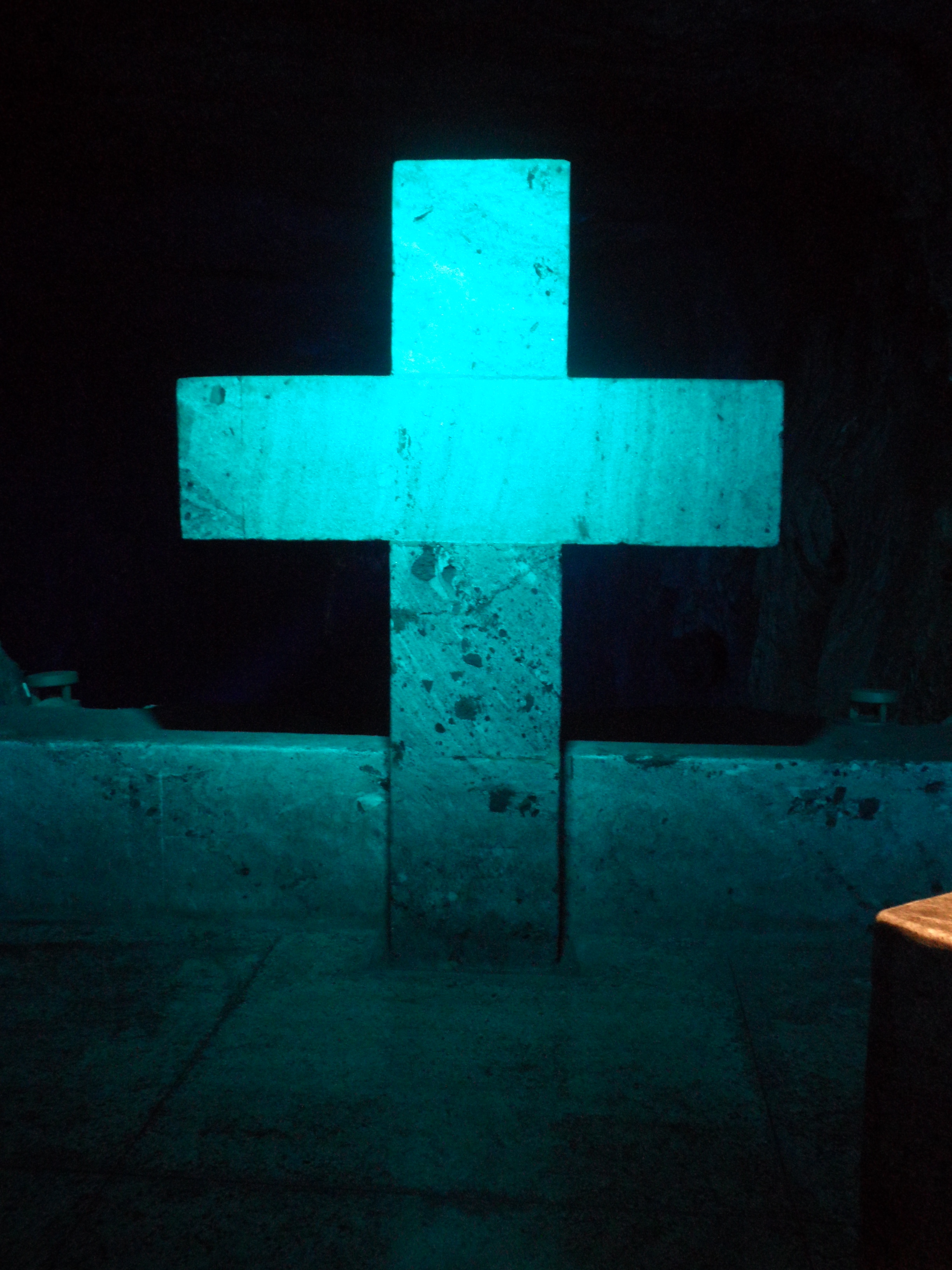
The cathedral was a huge labyrinth of passageways that led to large, stone-carved crosses and statues of religious icons.  These “points of interest” were spectacularly lit up in changing colours of glowing light. Bright red one second, then the statue transforms into a softer green or electric blue. The place was so surreal; one moment everything is shrouded in the darkness of the cave, then all of a sudden, larger than life carvings glow into focus.

Most of the crosses that we’re scattered about the cathedral were about 6 to 10 ft high, but as you wound your way down to the main cavern, there was a huge display with an altar, a few larger than life statues and a cross that stood about 60ft high. Pews were lined up and the place very well could be used as a functioning church: although without our guide there to explain, I really have no idea. We spent at least an hour exploring the strange underground cathedral before finally climbing back up to the daylight and finding our way home.

The next morning we set out on a 12-hour bus ride to Medellin. Just getting out of the city to the bus station was an ordeal. Our taxi took 20 minutes to make it only 6 blocks along the city center. The streets were completely crowded with buses. Big city buses, tour buses, mini buses (which seems to be the favoured mode of transportation around Bogotá), but all of them were empty! The place was one huge gridlock traffic jam with hundreds of empty buses. I never saw one bus with more than 3 people on it. It was a strange sensation to say the least.

When we finally did catch our bus to Medellin, we were placed in special “gringo seats”. These were seats that were about 6 inches closer to the chairs in front than any other seats on the bus. Immediately the young guy in front of me reclined his seat back to its full potential, crushing my legs and essentially leaving his head in my lap. I had to spend the bus ride with my legs in Adams leg space, and his in the isle, because even with an upright seat it was impossible to have your legs in front of you. After 10 hours of this man stretching and pushing back on the seat, I thought I was going to murder him. I just wanted to rip off his little green hat and throw it off the bus!! It didn’t help that we lurched through windy mountain passes the entire 12 hours and I was in a motion sickness haze for the better part of the day. Luckily, the man arrived alive, and I am not wanted by the police for murder… But let me tell you, it was close!