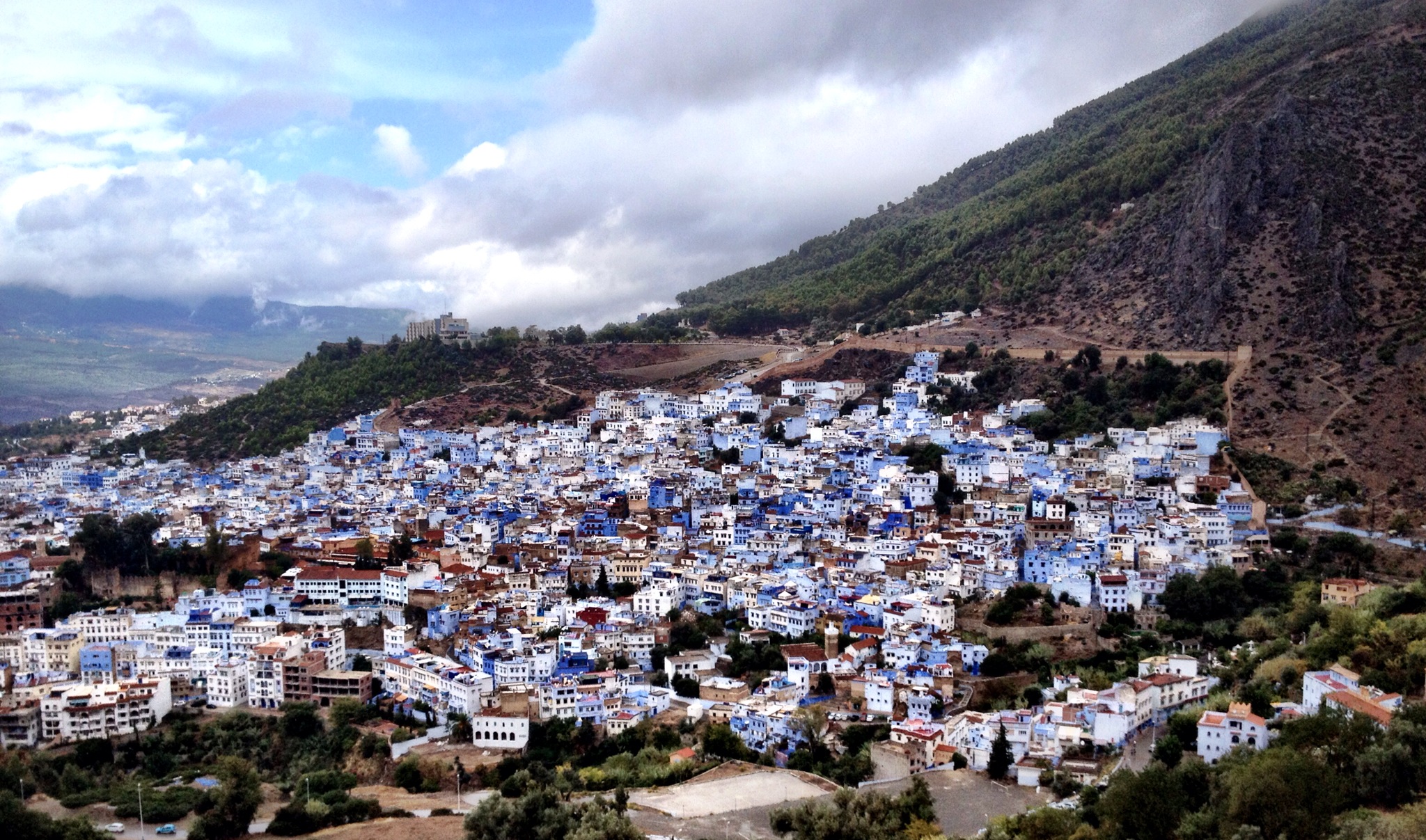
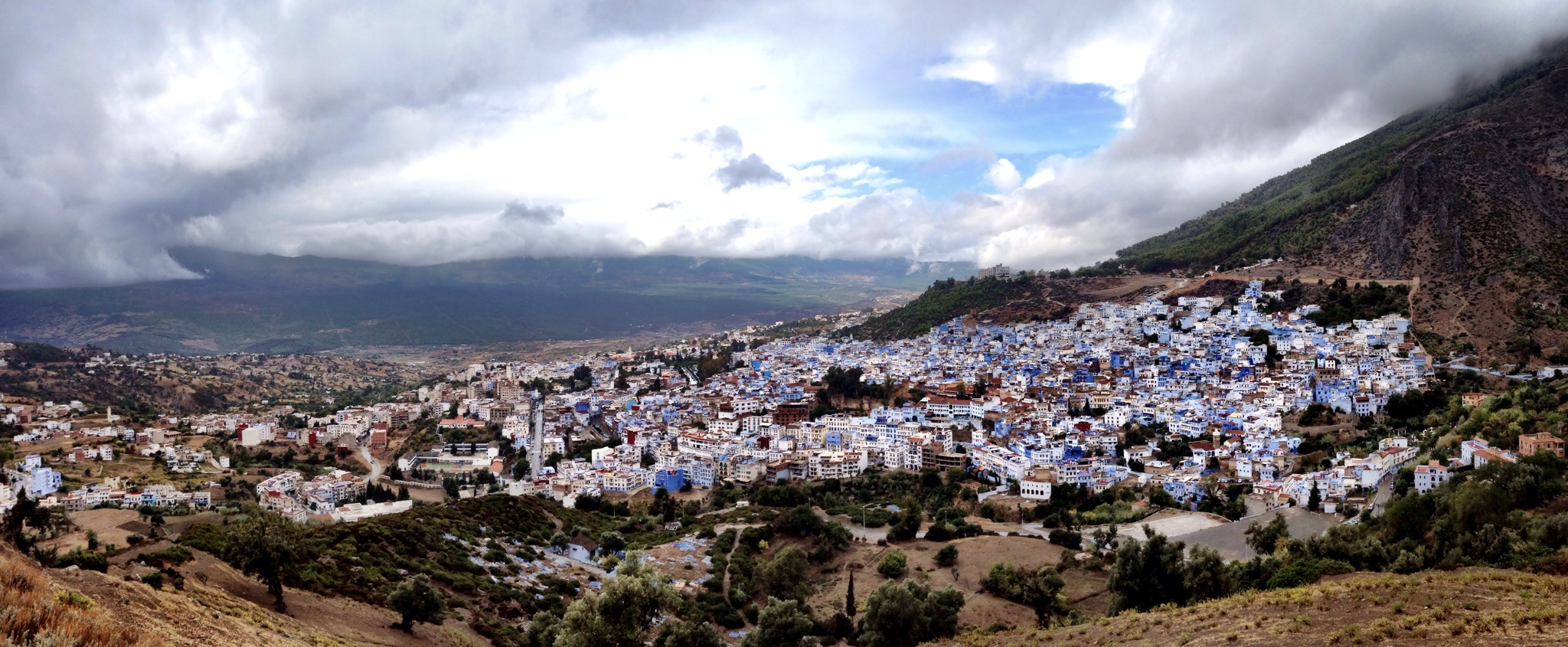
I can see why travellers get stuck in Chefchauoen. It’s a small haven of tranquility in an otherwise chaotic country. Chefchauoen is a tiny blue oasis, nestled in the Rif mountain range, and after only two days there, I already felt at ease in the city.
Nearly everyone I’ve spoken to in Morocco has raved about Chef.
“I meant to only stay for one night, but I’ve been here for a week”: a phrase I heard more often than not as I met backpackers in the windy alleys of the Medina.
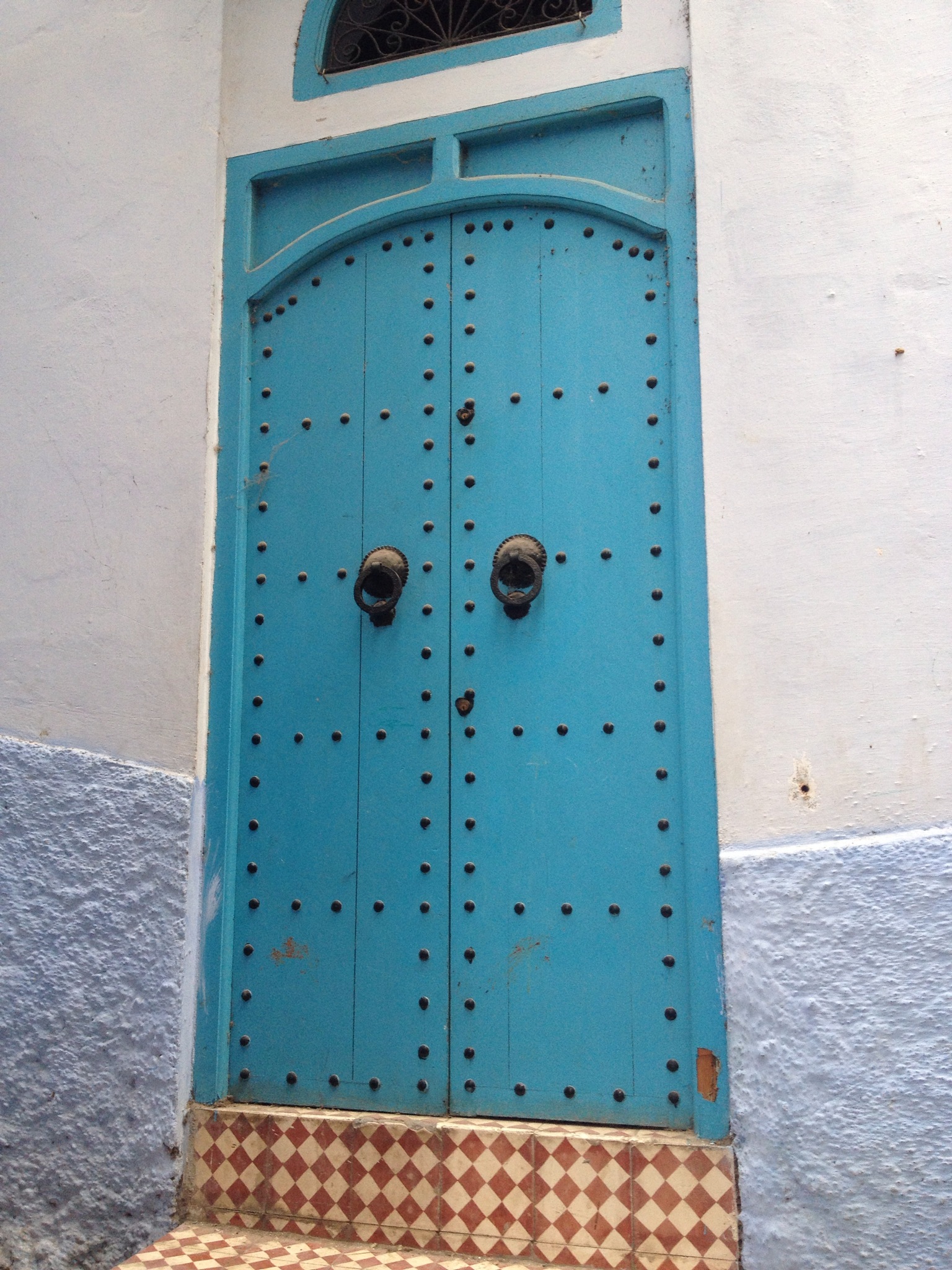
Almost all the streets and buildings in Chefchauoen are painted blue. The Jewish people that settled here wanted to reflect the blue colour of the sky, believing it would bring them closer to God. However, I’ve heard many wild theories as to why the town was blue, among them, “to keep the mosquitoes away” and “so they could film the Smurf movie”. But whatever the reason, it sure makes for a photogenic hill town.
Although picturesque, I’d be kidding myself if I said that was the main draw for backpackers. Chefchauoen, apart from being beautiful, also happens to have a massive quantity of easily available Kif (marijuana). It is equal parts beauty, relaxation and accessible marijuana that causes backpackers to venture into the Rif mountains.
I spent my time in Chefchauoen getting lost in the Medina, hiking the surrounding hills for some great panoramic views, and eating as much Tagine as possible.
The locals in Chefchauoen were lovely. Everyone was willing to point you in the right direction, offer shelter from the rain, and suggest the best things to taste in a restaurant. On my last evening I stopped in at a recommended restaurant called Bab Ssour. A Moroccan woman from Rabat invited me to sit with her. I had told her I was new in Morocco but so far had loved everything about it, primarily the food. She was so excited to hear about my trip, and my love of the local cuisine, that she asked if she could choose my dinner for the evening. Excited to try something new, I eagerly accepted.
Before I knew it I had the most delicious plates in front of me. The waiter said she had made the perfect choices! I was served some warm bread, a blended bean soup and a grilled meat with salsa for a main course. It was all incredible!
It took me ages to eat everything. I even shared my meal with a woman from the Netherlands who stared enviously at my bean soup.
When the meal was over the waiter said he wanted to bring me some special tea from Chefchauoen.
“It is a very special tea in my city, please, can I bring you some?”
The mint tea here is out of this world. Apart from being a little too sweet at some places, I’ve usually had some with every meal here. Trying a special Chefchauoen tea sounded perfect. Also, it would have been rude for me to refuse the tea from him.
So my waiter brought out the tea, along with the owner of the restaurant Saeed.
Saeed was so proud of his restaurant and so happy to hear I was enjoying my time in Morocco. He poured the tea for me, talked about my plans in Morocco, and then he carried on meeting the rest of the guests in the restaurant.
The tea was amazing. Slightly minty, but with a hint of eucalyptus as well.
“What tea is this?” I asked my waiter.
“Oh very very special. From the plants that grow in the hills here. Very relaxing tea! Very very good!”
And he was right, I was completely relaxed and ready for bed by the time I left the place…
Only retrospectively did I stop and consider what kind of local plant might be found in a very, very special tea in the marijuana capital of Morocco. Could have been eucalyptus, but then again, maybe not. Either way, it tasted incredible! If I’d had the time, I would have joined the others and stayed in Chefchauoen for weeks, but it was time for me to move onward… Next stop: the capital city of Rabat.
Tag Archives: Travel
The Long Road to Africa
I woke up Friday morning with a bang. Literally. A thunderstorm had rolled into Seville and the crash of thunder at 7am shook the hostel walls, waking everyone up. Rain was bucketing down and the wind pushed the window shutters wide open. After a late night chatting with new friends in the common room the night before, it took all my strength to drag my butt out of bed to close the window. Turns out rain had been pouring into the room for some time, and completely soaked all our bags that were lying under the window sill. Yup, it was going to be a long day.
I opted for paying the extra 4€ to take a taxi to the bus station, instead of fighting public transportation in the storm. I prayed there were still seats open on the bus to Algeciras. The online sites for bus bookings in Spain for some reason don’t accept Canadian credit cards. Which means all my onwards bus trips have involved crossing my fingers for free space. So far I’ve been fairly lucky, and only had to wait 4 hours for one bus onward to Granada. Luckily again, there was still space on this one too!
It was a treacherous 3 and a half hours drive South in the middle of the storm. Fork lightning crashed down a couple hundred meters from the bus, people were screaming from the thunder bangs, and I was fairly certain I was going to see a wind turbine explode as we drove through a field full of giant metal windmills in an electrical storm.
All I could think was, “there’s no way the ferries will be running to Morocco today. Not in this storm”. Then surprisingly enough, just north of the coastline, we popped out into the sunshine again!
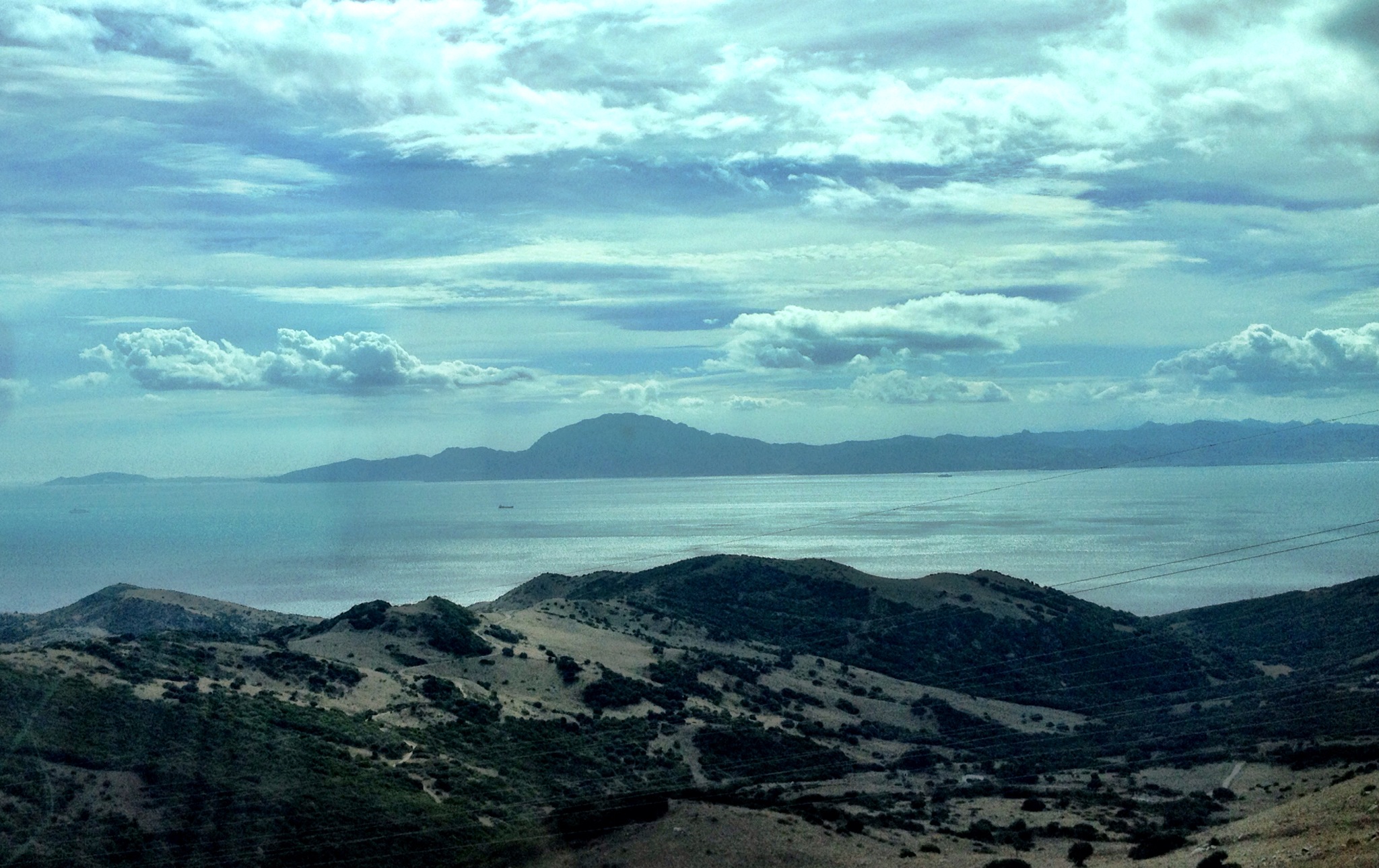
The coast was gorgeous! It was surreal to be able to look across the straight of Gibraltar to see the coast of Africa on the other side.
I had decided to cross the straight from Algeciras to Tangier. Not only did my hostel recommend it, but my guidebook had said it was both the cheapest and most popular route across the straight… Not exactly so.
Had I read the fine print, there’s no way I would have gone the route I did. Sure it was cheap. That’s the only thing this route had going for it. 20€ and I could safely cross to Africa… But not exactly Tangier.
When our bus to Algeciras made a pitstop in Tarifa, and 90% of the bus got off, I should have known. The ferry from Tarifa, although 15€ more expensive, takes 35 minutes, and takes you to the edge of the Tangier Medina. Algeciras, which is a further 30 minutes on the bus from Tarifa, has a ferry that takes between 1.5 and 2.5 hours, and it takes you to Tangier-Med, which is a port in the middle of nowhere, 45 minutes from Tangier city. By the time I had realized this, it was too late. Looks like this journey just got significantly longer…
I managed to dodge the Algeciras touts that told me, not only did they not sell tickets at the port, but the ferry would cost 40€ and leave at 4:00 pm. My instincts told me he was crazy, and when I arrived at the port I was pleased to learn it would be 20€ and was leaving right away!
Well it was scheduled to leave right away. Our 2:00 ferry didn’t actually leave port until 3:15, but at least I was onboard. And the views of the coastline and the town of Gibraltar were enough to keep me occupied.
The route definitely wasn’t popular either. The ferry was large enough to hold hundreds upon hundreds of people… There were 6 of us that walked on the ferry. A few more drove cars on, but the ship was pretty much empty.
We arrived after nearly 2 hours into the deserted Tangier-med port. I was completely without a plan as we landed on the coast of North Africa. Originally, I wanted to head straight to Chefchauoen, but the hostel was fully booked and the last bus left at 12:30 in the afternoon. I had no money, no place to stay, no idea where to go. And yet I had the most amazing first impression of Morocco…
A local man informed us that exchange rates were much better in Tangier, and that we would only be ripped off getting money from Tangier-med. Since I and another couple I met on the ferry only had euros on us, the man paid for us all to take the 45 minute bus to Tangier. He refused to accept any money, and when we arrived, he pointed us in the right direction to a proper bank.
My card wouldn’t work at the atm, and since Friday is a holy day, the bank was closed. Luckily the couple from the UK switched me $20 worth of cash before we went our separate ways.
With $20 in my pocket and no plans, I almost felt a little anxious about what to do before the sun set. But I saw an Internet cafe across the street and looked up a hostel in the area I could book. The man that ran the VERY local Internet cafe was amazingly sweet. Arabic keyboards are more than just a little confusing, and yet he patiently walked me through how to make symbols like “@” or “.” as I needed them. When I was leaving he asked me “Your first time in Morocco?”
“Yes,” I replied
“Okay, let me tell you something…” He started. I thought he was going to warn me of the dangers, or tell me not to travel alone in the Medinas. Instead he said “you know Argan?”
I thought for a second…
“The oil?”
“Yes!” He said with a smile, “make sure you buy some before you leave Morocco. Put it in your hair and it will make it beautiful! It is the best for all the ladies in Morocco!”
I laughed and promised that I would. He then told me to make sure I didn’t pay more than 10 dirham to get to the medina where my hostel was and sent me on my way.
I was so thankful for a kind face after the unease of not knowing where I was. People in Europe were constantly asking me if I was nervous about travelling Morocco on my own as a woman. I wasn’t really, until everyone kept suggesting I should be. So far, everything seemed fine!
I paid only 10 dirham to get to the center of the medina, where many travellers were charged up to 100 dirham to go the same distance.
When I arrived at the medina I tried to translate the directions to the hostel. Medinas are confusing at best. Tiny side streets, very few signs, a chaos of people and vendors and animals all around. Some men encouraging people to eat at their restaurant gladly helped point me in the right direction, but even then I was all turned around.
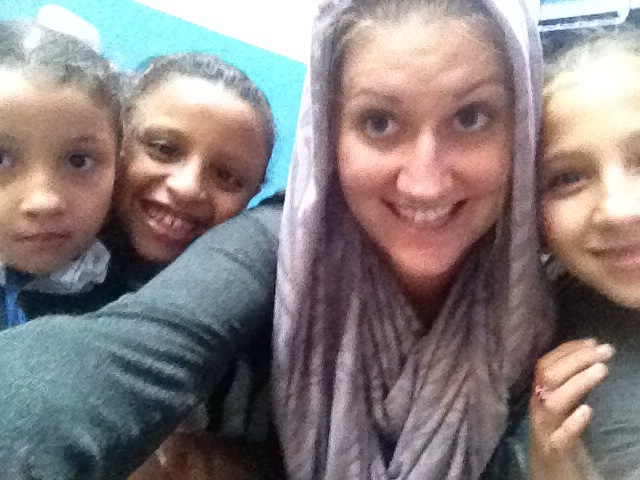
Exhausted from the day and totally lost, I sat down in a park to take another look at the directions. As I sat down on the edge of a wall, three little girls that were playing nearby came and sat down near me. They whispered to each other and giggled, then inched their bums closer to me. Before I knew it they were practically sitting on my lap.
“Bonjour!” Said one little girl. They were about five or six years old, one of them younger than the other two.
“Oh, bonjour!” I said back.
They laughed, then broke into fluent French, talking rapidly at me.
I stared blankly.
“Espanol?” They asked me.
“Si, hablo Espanol” I said back.
More excited giggling from their side. As they asked me what my name was.
We did the intros, and chatted for a few minutes. Two of them were sisters and the other one their neighborhood friend. They said they wanted to talk to me because I was “muy guapa”. I laughed and thanked them. After we had run out of things I could talk about in basic Spanish I thought I might as well ask them if they had heard of the street Battouta.
At the sound of the word their eyes went wide.
“Battouta!!!! Battouta!!” They looked at each other and screamed in giddy excitement. I told them I needed to go to Al Andalusi hostel.
More screams.
They were pointing all over, jumping up and down. From what I understood in their excited shouting was that they lived nearby. They ran off to their mother, who was on the phone nearby and pointed wildly. Their mother smiled and waved them off. They ran back to me, grabbed my arm and dragged me off the wall yelling “Battouta! Battouta!”
Two of them held my hand and dragged me through the medina corridors. They paused to talk to their friends, and was slightly distracted by a vendor selling chocolate, but within a few minutes, down a side street I never would have found on my own, they pointed at a door that read. “Al Andalusi Hostal”. I had made it! I couldn’t believe they’d found it for me. I offered them a couple dirhams and said “go buy yourself a chocolate bar on me! You three are my first friends in Morocco and I want to thank you for helping me.” They smiled but refused the money. So I left them to finally check in to my hostel, finishing a long, 12 hour journey from Seville.
The hostel was beautiful, right in the middle of the medina with beautiful rooftop views of the city and the Straight of Gibraltar. The staff at the hostel were wonderful, and were so happy to hear about the little girls helping me. Thomas, one of the guys that ran the place, said he would buy them something special one day soon from me, since he saw them almost every morning in the street.
I quickly met some fellow Travellers from Australia and we all went out for a delicious meatball Tagine dinner and some mint tea. I was in heaven!
I could not have asked for a more pleasant welcome to a country. I have a feeling it’s going to be a wonderful couple weeks here…
Seville
After my two-day love affair with Granada, Seville had big shoes to fill. Luckily, I found that the city had a wonderful sense of importance to it. This was the major hub of ancient times, a city with a rich history of war and trade and wealth: a gateway to Africa and the Americas and, as a result, Seville has some elaborate architecture and some outrageous historic anecdotes. It would be tedious for me to explain each one in full since none of them tie together, so instead, here is just a selection of photos to show you how larger than life this city once was (and still is).
Also, the Alcazar (or ancient royal palace) is half shut down at the moment for more Game of Thrones filming… So lots more giddy excitement from me in the city…
Granada: Gypsies and Game of Thrones
As I said before, Granada quickly became one of my favourite cities. The free tapas definitely had a pull, but the city offers so much more than just free food and cheap beer (as if that wasn’t enough). Luke and I spent nearly 7 hours hiking around the town of Granada and we never ran out of things to see. Our hostel was in the middle of an Arabic market, right next to the winding corridors of the Jewish Quarter. The walls sported intricate mural graffiti from a local artist that reminded me of the decorated side streets of Valparaiso or Melbourne.
Granada is nestled in a little valley, which means most sightseeing involves some rigorous uphill walking. After wandering the lower streets of the city, we meandered uphill towards the Alhambra.
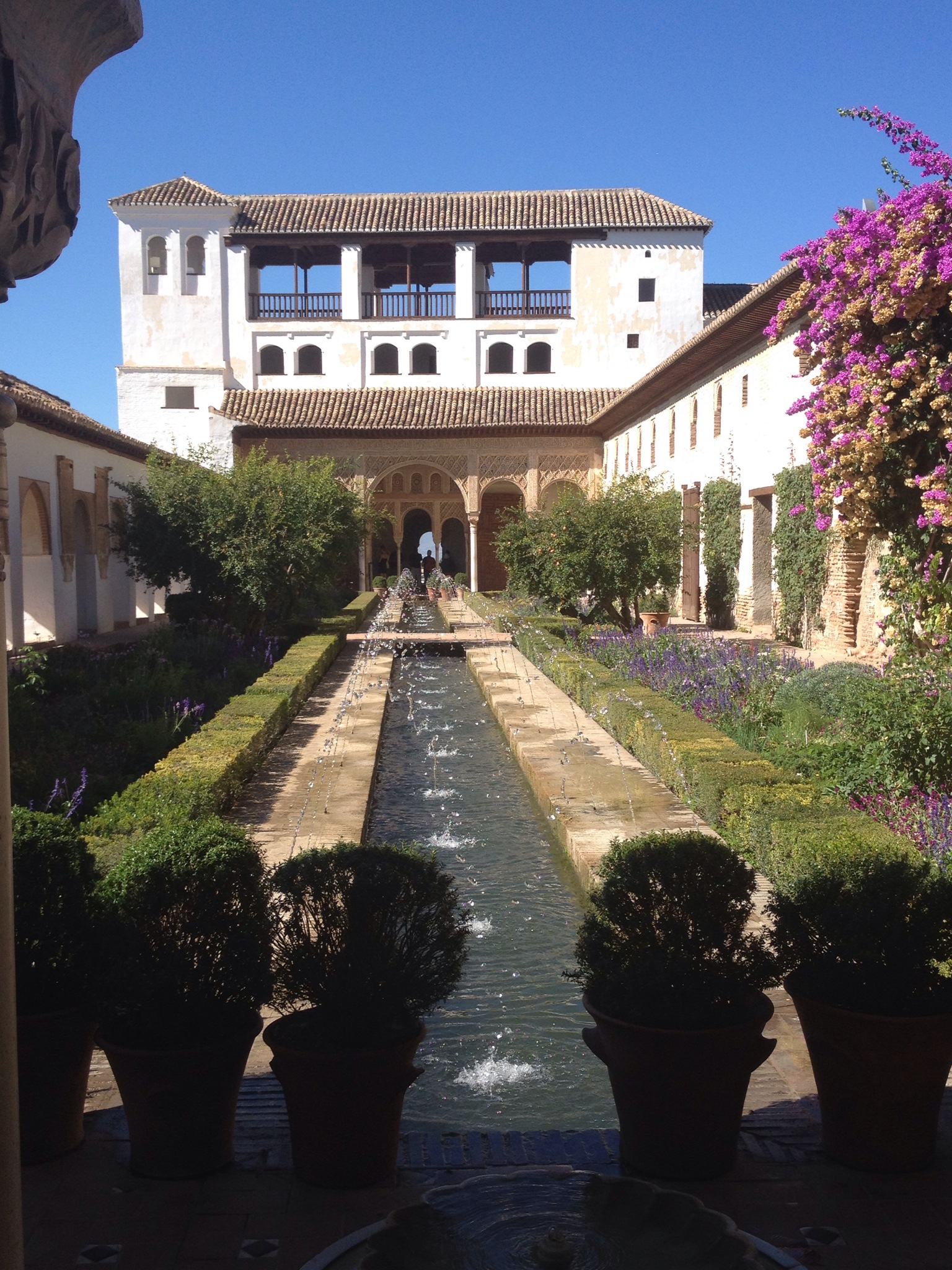
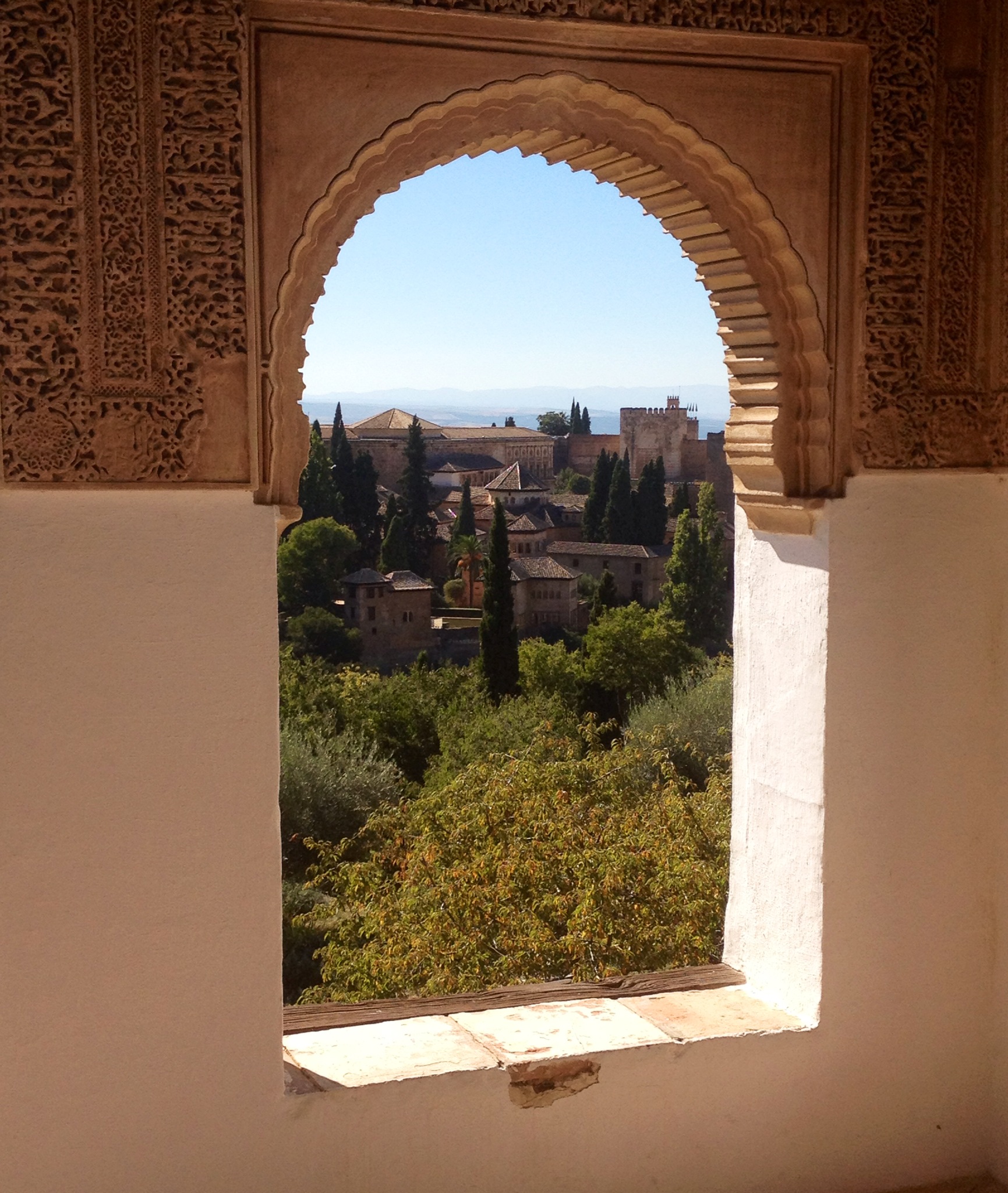
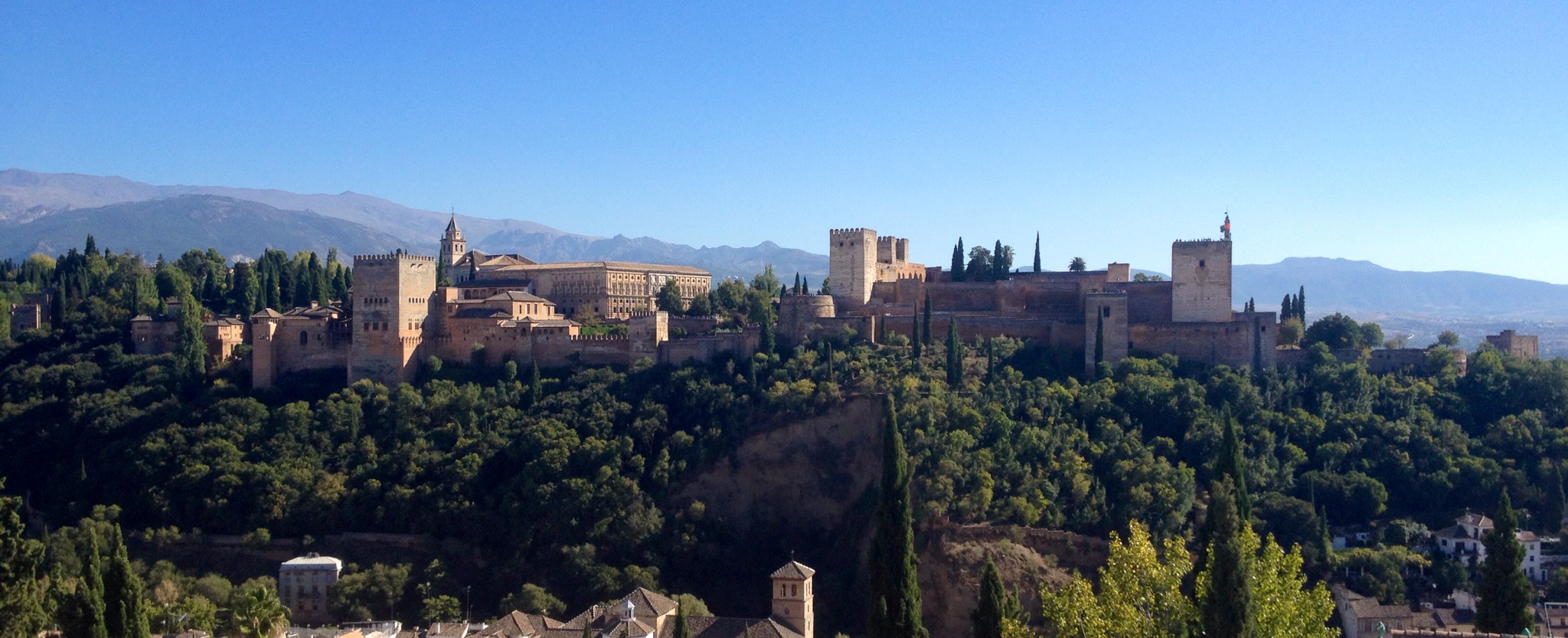
The Alhambra is the main sight in Granada. Not only it is the most popular tourist attraction, but it can also be seen from almost anywhere in the city. It’s an ancient fortress and palace, clinging to the side of a cliff top. Originally built by Arabs in the 800’s, the Alhambra is a stunning sight. The palaces within the fortress have walls of intricately carved marble and areas with stained glass ceilings. And for those that are Game of Thrones fans like I am, filming for the next season is taking place here and at the Alcazar in Seville. This will be Dorne! (A fact I couldn’t quite get over as I explored the area in childish excitement). There are so many royal gardens and forts and lookouts that the Alhambra takes nearly four hours to walk around completely. We managed to see the major sights faster than most tour groups and finished the highlights in just over two hours. With only one full day to see Granada, we wanted to make sure we saw more than just where the royals lived. We wanted to climb the hill to the church of San Miguel, where we were supposed to find both stunning views of the city, and Gypsies living in caves…
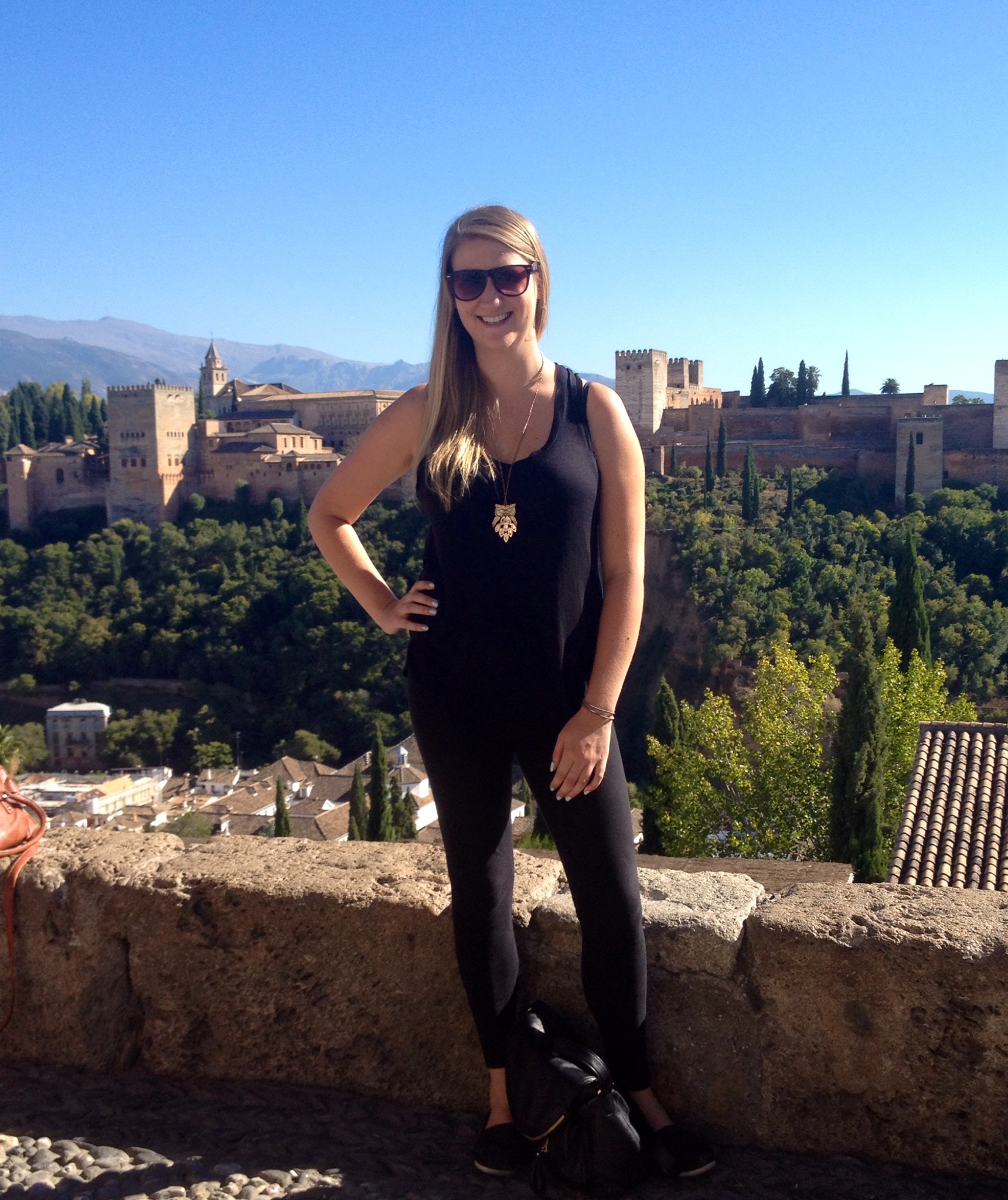
The hike up to San Miguel was more than we had anticipated. It’s definitely an uphill battle when you are climbing in the high heat of the afternoon in all black. But the sights along the way made it all worth it: tiny streets with whitewashed buildings and plazas full of locals, the mirador of San Nicholas with postcard views of the Alhambra, and finally the beautiful and towering church of San Miguel itself. And our guidebook was right: the views were incredible. From the top of the mountain you could see all of Granada in it’s glory, and particularly the immense size of the Cathedral that sits right in it’s center. We sat on a wall surrounding the church and gazed over the hill we had just climbed until we sufficiently caught our breaths. Granada really was amazing.
On our way down we joined up with a young guy from California to explore the gypsy caves. These are natural caves, found in the side of the mountain, that the Gypsy people have turned into homes. While some are very primitive, others have doors and furniture and even wifi! Some budget travelers prefer to squat in the caves with the gypsies instead of paying for a bed in a hostel. Although a great story and a money saver, I suppose you run the high risk of being robbed, or in the case of a man we met that lived there, being bit by a two foot long centipede while taking a siesta.
While some of these caves are homes, others are communal areas where gypsies will put on private Flamenco shows for money. We only explored the “residential” part of the caves… If you could call it that. As the three of us wound our way downhill through bushes and dirt paths, it was less a magical gypsy land and more like the slums of Granada. At one point we were fairly certain of being attacked by a wild dog that gave us a stare down and growled at us the whole way past him. We were very relieved to reach “normal” civilization without getting either robbed or rabies. But all part of the fun of exploring!
On our walk home we meandered along the riverside into the center of town. Probably one of the most picturesque views of Granada I’d seen. It was leisurely and quiet, with some cafés and churches along one side of the path, and the winding river on the other. We arrived back at the hostel almost 7 hours after we had left it and were absolutely famished. At least we’d earned our fair share of tapas for the evening!
A Bullfight at Las Ventas
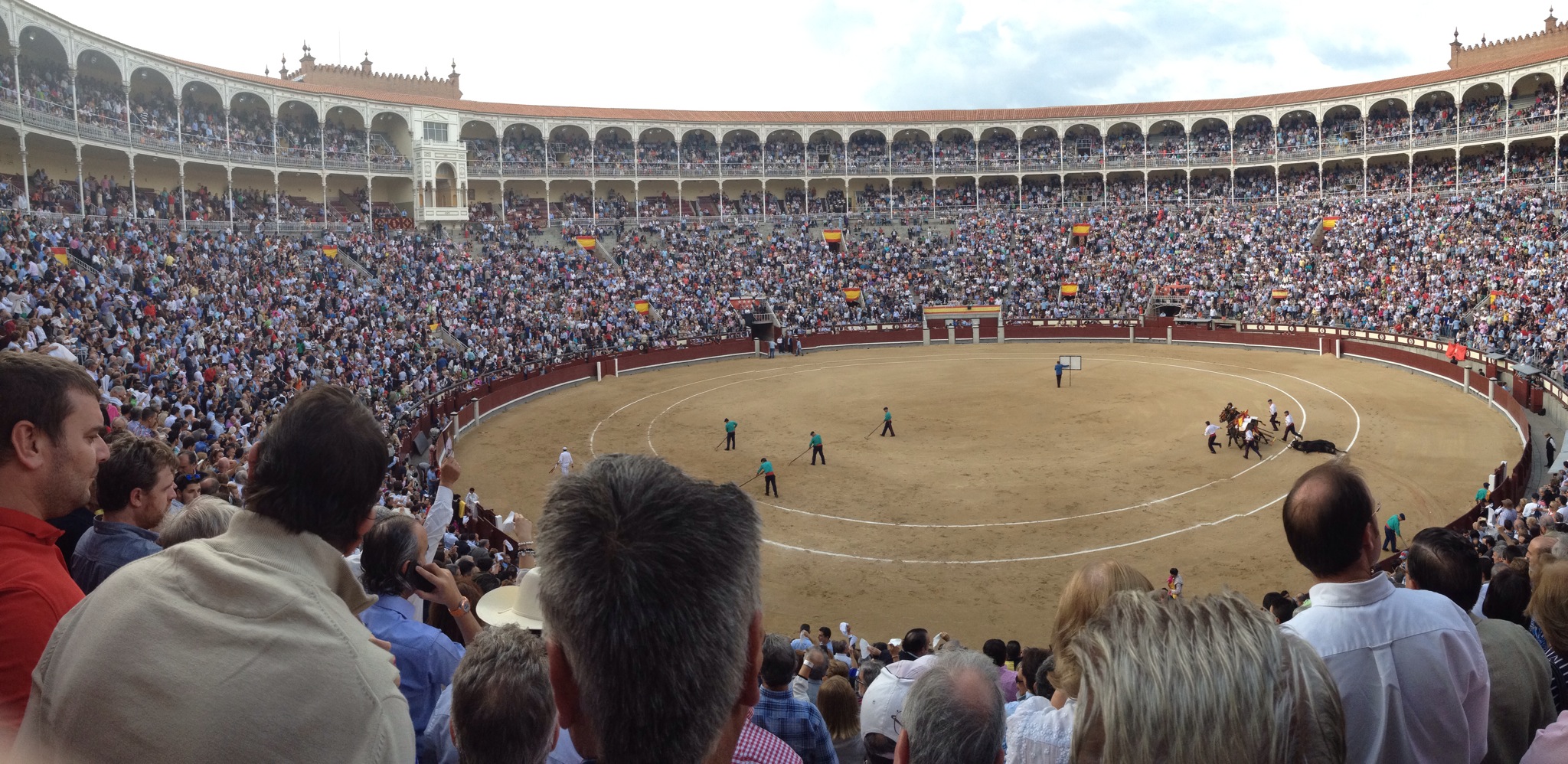
Las Ventas. One of the last remaining places on Earth where a person can witness the “Wonderful Nightmare” of a Spanish corrida (bullfight). A blood sport that is as close as possible to witnessing a Gladiator battle a wild beast in the Roman Colloseum over 2000 years ago. Bullfighting is a proud tradition to many Spaniards. It’s a sport that displays both bravery and power: a courageous display of man versus animal.
It’s true that bullfighting is waning in popularity in Spain. Even Barcelona went as far as to ban corridas altogether in 2012. But it’s not all over for the matadors: some 40,000 bulls still die each year from bullfights in Spain, and the spectators at Las Ventas, one of the largest bullrings in the world, are hardcore fans of the bloodshed. At Las Ventas, bullfighting is an outing. It’s a night at the opera, a reason to get dressed up or, believe it or not, a family event…
Although extremely controversial worldwide, protesters may find solace in the fact that bullfighting brings a lot of help to the local communities in Spain. The majority of money raised at the bullfights are given to charity and used for feeding the poor and homeless. The dead bull is eaten, it’s skin is used for clothing: no part is left unused. It’s a long standing tradition with arguments on either side I suppose… I’ll let you decide what you will.
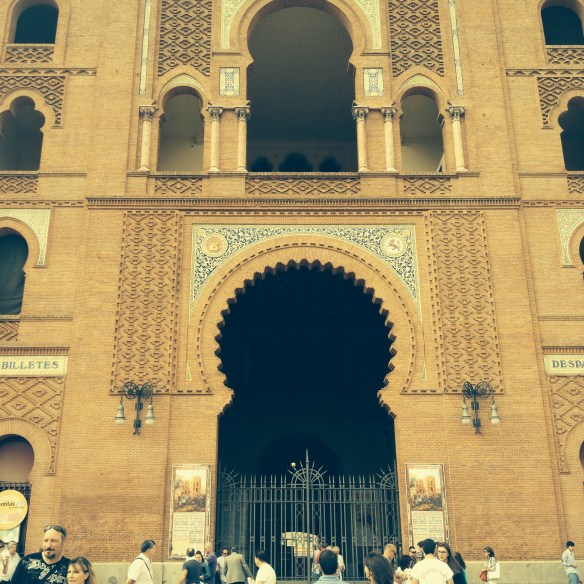
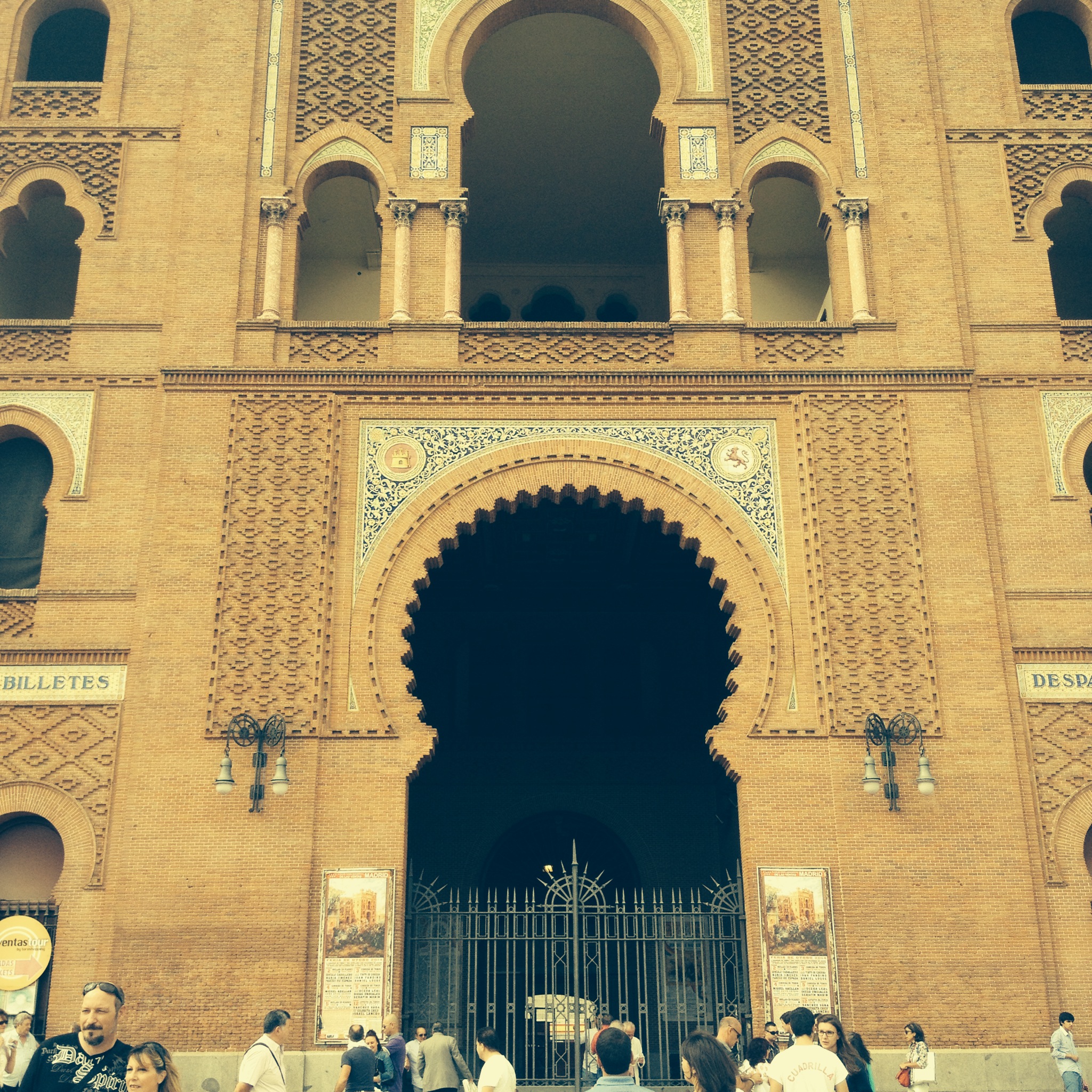
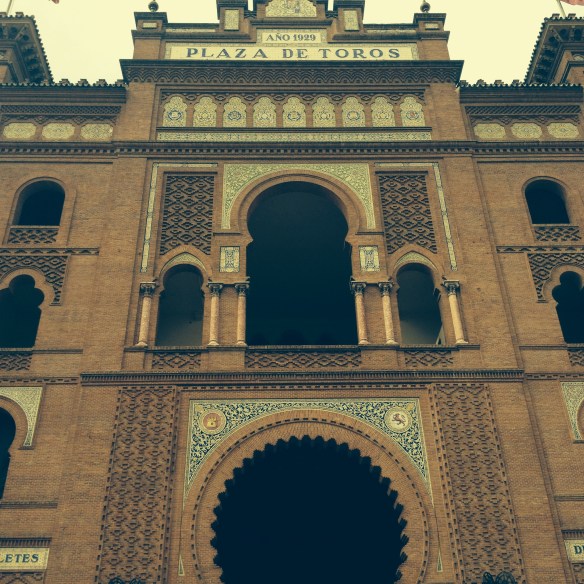
The Las Ventas bullring is stunning: a massive brick stadium, beautifully crafted with the rounded archways of Muslim architect so often seen here in Madrid. The wooden doors that lead into the stadium are an imposing 20 or 30 feet high, intricately carved and sporting equally impressive cast iron hinges. The whole building is awe-inspiring and disturbingly beautiful considering it’s purpose.
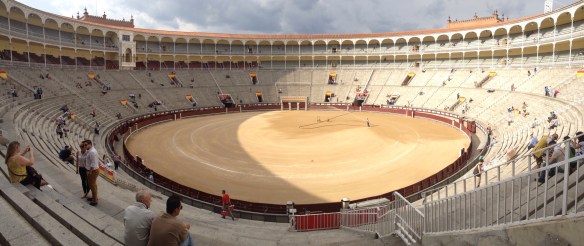
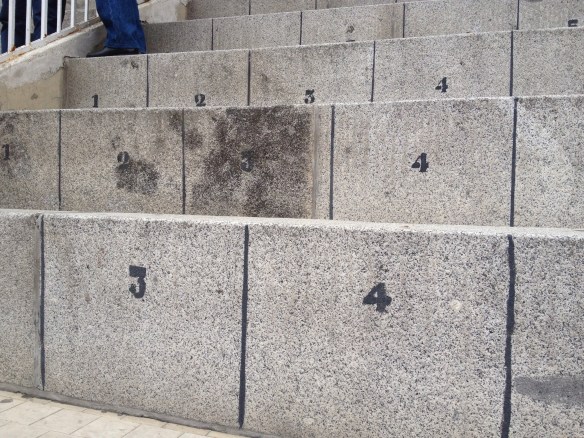
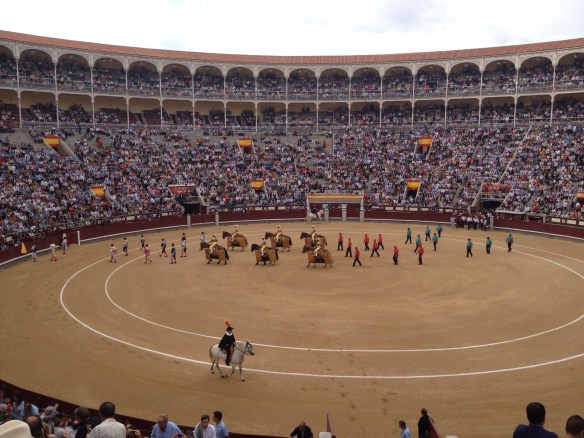
Inside the open-aired, circular stadium it is medieval. It’s like walking back in time 1000 years to a more primitive era: an ancient setting for an ancient sport. The stadium seats are long, rounded benches of concrete. They are so tightly crammed together that while sitting, a persons knees are pressed up against the back of the person in front. The benches are labelled with painted numbers, sprayed on the concrete to determine each seating space in the row. These are also so close together that, once the stadium has filled, there is no getting out from where you are placed. The arena floor is a large, sand covered circle. When we arrived, a man was spraying every inch of it down with water: perhaps to stop the sand from spraying into the matador’s eyes during the fight, or maybe for better footing, I’m not exactly sure. Either way, the stadium had a feeling of anticipation. Even before the crowds arrived, dressed in their finest, toting small children, and chatting amongst themselves in rapid Spanish, the arena had an aura of mixed excitement and death…
Now as a side note: I’m not a supporter of animal cruelty. I’ve had mixed feelings about telling people that I wanted to attend a bullfight in Spain. My announcement has received about 50/50 excited and slightly envious support and absolute appalling gasps, shaming my decision. I myself didn’t know how I would react at the fight either; I could just as easily love it as hate it. But my main reason for traveling is to experience new culture, in all it’s glory, the good, the bad and the ugly. So I booked myself a ticket.
I knew basically what a bullfight was about. I knew I was going to see a man stab a sword through a bull’s neck and I knew I was going to watch that animal die. But retrospectively, I think I had slightly different expectations about how it was all going to go down.
In my mind, I had seen the bull as an enemy: a feral beast, out for blood, ready to kill. Similarly, I saw the matador as a lone wolf. Half predator, half prey, standing alone in the middle of a sandy ring awaiting the beast. I could imagine his fear. I could feel his rushing blood and beating heart. I understood how the onlooking crowds would view him as a hero, the epitome of brave, the savior of us all. This was to be a one on one battle of wits. Equal chances for bull or man to die in front of thousands of cheering onlookers. Anything was possible. This was the bullfight I expected. In reality, it was much different.
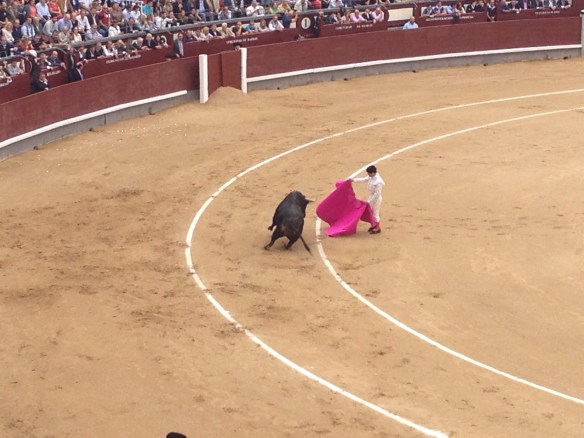
As soon as the bull entered the ring I knew I was going to hate every moment of bullfighting. This was not a wild enemy of man. This bull was a terrified animal. As it entered through the stadium door, it took one look at the thousands of onlookers and, in fear, tried to run back through the doors it had just come out. Upon finding them now closed, it edged a few steps inward and stood still, unsure of what to do. There was a moment of pause. A peone (a matador’s footman) stood off at one side of the ring with a large pink cape, waving it at the bull, provoking it to charge. The bull was uninterested. It didn’t want to fight the man. It wanted to get out of the ring. As the man moved slowly closer, yelling and waving, finally the bull rushed towards the peone. The man darted backwards, running like a coward behind a wall as the bull came toward him. Then a second peone appeared a little further away, leading the bull to another area of the arena. He too ducked behind a wall, confusing the bull until a third man appeared, taunting the animal with yells and waving capes. After a few minutes of this an armoured horse came out with a picadore (horseman) holding a speared lance in one hand. The bull fearfully backed away from the horse until the three peones cornered him into one side of the ring. The horse sided up along the confused bull, and the horseman jabbed the spear into the animal’s neck. The bull reared in pain, and tried to attack the horse. The horse however, was so heavily armoured that the attempt was frivolous. The bull, now bleeding from the neck, was then lead around the ring by the peones once again, before the horse came out for a second stabbing. Nothing about this was a fair fight. This was a ganging up on a confused animal, with four men, an armoured horse and a long lance. When this part of the fight was over, the next stage was the banderillos. Banderillos are flag men that run towards the bull with spears. When the bull puts it’s head down to charge, the men throw the spears into it’s neck. The floppy and colorful spears hang off the bull’s neck while the next banderillo makes his move. Then the peones come back to tire the bull out once more. When the bull is sufficiently tired, has four or five spears hanging out of its neck, and is losing blood at a rapid pace, it is then, and only then that the matador enters the ring.
The crowds go wild for the matador. Dressed in his traditional attire, a pure white suit with sparkling silver adornments, I thought he looked more like a Spanish Elvis impersonator than a gladiator. The matador strutted around the ring, bowing to the applauding crowd and walking in such a fashion that I actually forgot about the horror and laughed at how silly he looked. He displayed his bravado like a male peacock in a mating ritual as the bull heaved at the side of the ring, trying to catch his breath and find a way to escape the sounds.
Then the fight began.
The matador taunted the bull, who charged at his cape, perhaps out of anger, perhaps out of instinct, or perhaps for survival. Blood ran down his neck and sides, spears hung off his flanks, and the matador stood, waving his pink cape and holding his sword. I admit, the bull still had enough strength to manage a few close calls. At one or two points when the matador got really cocky and faced away from the animal as he plunged at him, I secretly hoped to see the bulls horns gorge the leg of the matador and drag his body in a defiant victory lap around the ring. But this never happened…
With each duck and turn the matador made, the crowds went wild! I’m not sure if there was some points system that was going on, or if close calls evoked more of a reaction, but people were literally at the edge of their seats in excited anticipation. It was a show, and to be fair, the matador took full advantage of the prolonged drama. He danced and dipped, he sliced at the side of the bull, and faked an almost kill for quite a while. But when the time was right, you could feel it. This was going to be the end. This drawn out torture of the confused and scared bull was finally about to be over. The crowd almost hushed as the bull took a final rush towards the smug matador. The matador took a step to the right and plunged his sword into the bull’s neck. So deep that the hilt of the sword was the only thing left to be seen.
But that wasn’t the end. The bull was still standing. It had no fight left, but it was still standing. The peones ran out and joined the matador in the ring, then edged the weary bull towards the side of the arena. The bull stood there for some time, staring at the four men in front of him. The crowds were yelling. Kelsey, Peter and I were staring in utter horror, wondering what was going to happen next. I’m sure it was only a couple minutes, but this stare down seemed to last for an hour. It was hard to see what the bull was doing from where we sat. At one point we thought it fell over, but then we saw it stagger towards the matador one more time. Then the matador was handed a second sword…
The matador held the second sword out in front of him and inched toward the bull, moving the blade closer to it’s head. Just as I thought he was going to push the sword into his neck again, he instead used the tip of his new sword to grab the hilt of the previous one. He then slowly pulled the first sword out of the bull’s neck. The bull teetered on his feet, took another step forward and then finally collapsed on the sand. The crowds were ecstatic. Everyone got to their feet and frantically waved white flags above their heads. Thousands upon thousands of white flags covered the stands in the arena. It was like watching the crowds go wild after a winning goal in a playoff hockey game. The matador bowed. More men and two more horses rushed onto the arena as people yelled their congratulations to the matador on his brave kill. The bulls body was hooked up to long chains attached to the horses, and then unceremoniously dragged across the length of the arena and back out the doors it whence came. And that was that.
Kelsi, Peter and I looked at each other and collectively decided that that was it for us. There’s no way we could watch another five bullfights in the following hours this went on. Along with the South African family sitting behind us, we pushed our way through the throngs of people to escape the stadium. The place was madness, and it took us several minutes to fight our way to the door. Meanwhile, the arena floor was raked, the bloody sand was covered up and the place was restored to normal. As we were walking out the doors I turned around to take a final look at the arena. The last thing I saw before I finally turned around for good was the second bull, thrust into the arena from the same door that the bloody corpse has just been dragged out. It looked around with a startled expression… And the crowds went wild.
Tapas in Spain
Everyday, multiple people ask me what I’m doing in Spain. Why, of all the places in the world, am I here? Although my answers have varied slightly – to practice the language, to fill an empty gap on my travel map, because I love the laid back lifestyle – more often than not it boils down to one common answer: to eat.
There’s nothing I love more in the world of food than tapas (well, other than cheese of course). Maybe it has something to do with the fact that I have an irrational fear of making decisions, or maybe I just prefer the social aspect of it all. But ultimately, I adore the idea of sharing many small dishes instead of eating one large one alone.
When I arrived in Madrid I was ecstatic to start eating. My first evening I ventured to a 10€ all-you-can-eat tapas at a restaurant called El Tigre. It was overwhelming. The restaurant managed to cram over 100 people inside it’s tiny walls. It was a standing only venue, with waiters carrying platters of tapas and trays full of 1/2 litre beers and sangria stacked three tiers high. I felt like a failure as a server after watching these men carry upwards of 24 beers at once through the crowded bar. The tapas, however, were great. So much bread and cheese and meat I thought I’d died and gone to heaven. But after 15 minutes of eating such a carb loaded feast, I found myself craving even the smallest of vegetables. But the platters kept coming, and every time I ordered another drink I was handed another platter of tapas: more than enough to fill a table of people.
I was worried this was what all tapas were going to be like here in Spain. Although fairly decent food, I was sure to get scurvy within the week if I kept eating like that!
When Kelsey and Peter arrived in Madrid it was more of the same. We spent the evening floating from one tapa bar to the next getting little snacks here and wine there: calamari, croquettes, chorizo. The food at these more refined restaurants was much better prepared than the quantity over quality of Le Tigre. I was happy to have found a variety of dishes, and ones that didn’t include a chunk of bread with each bite. If this was what Spanish food was like, then I’m in! And then I hit Granada…
Within hours, Granada became one of my favourite cities of all time. And tapas are its finest feature!
I sat next to an Aussie guy named Luke on the bus down to Granada. It just so happened we were staying in the same hostel and the same room when we made it to the city: a sign of insta-friends. After a six hour journey down from Madrid, we were starving. We were recommended a nearby tapas bar to go for dinner and a drink. When we got there we noticed that the menu had no prices on it. In my experience, if you have to ask the price, it’s too expensive. In Madrid, 3.50€-5.00€ was a decent starting price for tapas. Then again, you could run across a place that was closer to 8€ and end up with a crazy bill after a few dishes each. We just about gave up on the restaurant when the waiter came out and I decided to ask what the cost was.
“Cuanto Cuestan?”
He stared at me for a second confused. I figured he just didn’t understand my still shotty Spanish and was about to ask again when he smiled and said “Libre!”
Free. They were free? As long as you bought a drink (and that did not have to be an alcoholic drink) you got your tapas for free! Well in that case, we decided to sit down for a beer!
With the price of beer being 2.50€ and the food for free, we were doing way better than any place I’d been in Madrid!
Turns out, nearly every restaurant in Granada is like this. You can’t drink in the city without having some sort of food! And the food is outstanding. It puts every meal I had in Madrid to shame. On my last evening in Granada, I went out on a tapas crawl with a crew from the hostel. We went to three restaurants, each more delicious than the last. We picked away at pineapple pork skewers and coconut chicken with polenta. We had falafels and mini Moroccan tagines full of delicious meat. We tried grilled cod and baby shwarmas. We spent 4 hours wandering from bar to bar, enjoying glasses of wine, catching up on all our travels, and talking about food. It was exactly how I want to eat every meal I ever have from now until forever!
This is why I’m in Spain. If I am to be truly honest with myself, I’m here for no other reason than to eat!
(Also, I sadly have zero photos of my tapas in Granada. I was just so excited when they arrived, that I had eaten them before thinking about photos!)
No Wine in Wineglass Bay
Okay… I have to admit. This post is SO beyond due. I’m terrible at keeping on track with my blog posts, and the more fun I’m having on a trip, the less I want to spend time writing. But better late than never I suppose!
During my Australia trip I managed to hop down to Tasmania for a week to visit my old pal Mark. Remember Mark? I met Mark and Ollie two years ago while traveling through the Bolivian Salt flats with Adam (see previous posts from Bolivia). Well, two years ago Ollie bragged than Mark cooked up “THE BEST” lamb in the world.
“Well you should make some for us!” Adam and I exclaimed.
“Well you’ll have to make it all the way to Tasmania and then I will!”
So that’s what I did…
Little did Mark know, I made the trip half way around the world just to try his lamb recipe. And I have to admit… It’s the best I’d ever had! (Well done Mark).
My trip to Tasmania was awesome, and I have enough stories to fill another 20 posts if I had the time to write them all. One of my most memorable however, was our trip to Wineglass Bay…
So here you go!
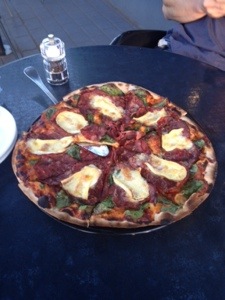
It was a two hour drive from Hobart to Coal’s Bay Saturday evening. Mark and I stopped for a wallaby salami and brie pizza on the way up (and on the way back it was so good) and arrived an hour or so after dark.
“You’re probably going to see lots of road kill on the drive up” Mark explained to me as we started our road trip. He wasn’t lying.
As we approached dusk, it seemed every couple hundred meters there was another flattened animal on the road. Wallaby’s, possums, a rabbit maybe… It was hard to tell with some. Sadly, we added to the stats only 20 minutes from Coal’s Bay, as we squished an unsuspecting possum around a sharp bend!
“There was no escaping it!” I said as Mark gave a sad face after hitting it full on. We decided the next day it was our sacrificial rain possum. We managed to pick the absolute best day of the trip to hike on. Couldn’t have been coincidence with my weather luck this trip… Had to be the sacrificial possum!
We stayed at Mark’s friend Cat’s cabin up in Coal’s bay. The little getaway was aptly named “Utopia” and it was just that! An adorable little home right on the edge of the water tucked away in a quiet bay. The place had a fireplace, multiple rooms to sleep in, comfy couches and a backyard with a picnic area! Pretty amazing.
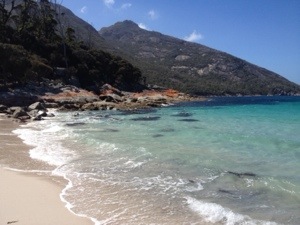
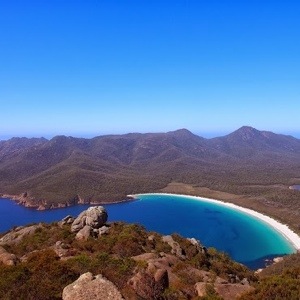
We had an early night to get some rest before a long day of hiking. Just around the corner from Coal’s Bay, in Freycinet National Park, was the stunning Wineglass Bay! I had seen photos of it months earlier and instantly it was on my list. A secluded stretch of white sand and sparkling turquoise waters, bring it on!
“So do you know why they call it Wineglass Bay?” Mark asked me the night before.
Multiple answers ran through my head: because the waters sparkle like champagne? Because the bay is shaped like a wineglass? Because there’s vineyards all over the mountain and they serve free wine? Because there’s an exquisite wine bar on the beach that you can relax at after a long day of hiking?
“No, why?”
“Because they used to herd whales into the bay and slaughter them there. The bay would then fill with blood, making it look like it was full if red wine”
…I sat there with my mouth open in horror.
“What?! That’s the reason?!”
“Yup, sorry to disappoint.”
“So there’s no wine?!”
Perhaps I should have looked up ANY kind of facts on this trip. But then I would look like I was “planning” on my otherwise totally fly-by-the-seat-of-your-pants trip, and we couldn’t have that. Still, I was not thrilled that there was no wine in Wineglass Bay!
Luckily however, the day was beautiful, so no amount of whale murdering was going to get me down on the views. A day of hiking, here we go!
Mark insisted that we not only hike the 3 hour return saddle to the bay and back, but we also hike the totally separate 3 hour Mt. Amos trek as well. I’m not a huge hiker, and 6 hours seemed slightly daunting at first. But how bad could it be?
We started with Mt. Amos. The first 15 minutes were a wonderful leisurely stroll through the woods. We saw a couple lizards, I could chat while we walked, and our gradual incline was exactly how I liked to hike!
Then we came upon our first sign: “Warning. The rest of this hike is very steep and has rough terrain. Do not attempt in wet or slippery conditions.”
Great.
Nothing is easy.
And the sign didn’t lie! The path got MUCH steeper from then on in. In fact, “path” might not be the right word. More like “marked off direction”. There was no path; there were just steep rocks that you had to scramble over and climb up. Way up. To the top of the mountain! But an hour and ten minutes later we pulled ourselves over the last boulder and made it to the top.
“We did it!!” I cheered.
Retrospectively it wasn’t as bad as I thought it was going to be. It was tough, and uphill, and I love to complain while I hike, but the views were worth hiking twice the distance! (And by that, I mean I would have given Mark my camera and he could have hiked it for me)
Wineglass Bay is stunning, and Mt. Amos has by far the best views of it. As many times as I said “damn you!” to Mark, I’m glad he made me hike it.
We stopped for some photos, a little snack, and then a half hour later started our slow decent (mostly sliding down on our bums) back to the bottom.
It’s frustrating really, that you have to come right back to the starting point from one hike before heading out on the next. Why couldn’t we just walk straight down from Mt. Amos to the bay?! Now we have to hike halfway back up the mountain to get over the saddle and once again down towards the bottom!
But the second three hour hike was much easier. The path was cut out and graveled, the ascent gradual, and we ended up right at the water!
The tropical looking waters of Wineglass were a little deceiving. The day was scorching, I was drenched in sweat, and the most incredible thing would be to jump in the ocean for a swim. But one toe in the water sealed that deal…
I’m not one for cold water to begin with, but this was freezing! No wonder only two people out of the hoards we saw down there were brave enough to take a dip. A shame really, no wine AND no swimming! What kind of a place is this?!
But it was hard to complain when we sat in the shade with a picnic lunch with some curious wallabies watching the sparkling waters in the bay. I kept thinking “this is so peaceful… Why the hell do I have to now hike BACK out of it?!”
“Hey Mark, wanna bring the car around for me?” I joked.
I guess the thing that makes Wineglass Bay so enviable is that it’s difficult to get to. It is a sparkling blue and white oasis, tucked away in an otherwise uninhabited national park. The people are sparse, the views are second to none, and the trek well worth it. The only thing that could make it better would have been a glass of wine!
Sydney or Melbourne?
It seems to be the age old question here in Australia: Sydney or Melbourne? Which is better? The people I’ve come across in the past two months have fairly strong opinions.
“We don’t like Melbourne very much. We’ll go to watch sport, but other than that, there’s nothing to see!”
Or “Sure, Sydney’s alright I guess, if you’re into that showy, over-the-top tourist stuff. But Melbourne’s real. Melbourne’s the place to be”
After having spent a week in both cities, I understand what everyone means. The two cities have a completely unique feel to them. They both have their ups and downs, and they are both easy to fall in love with. But I’m not so easily sold on one.
Despite the weather, my week in Sydney was incredible. Could have been the people I was with, could have been the hostel I stayed at, but most likely it was the vibrancy of the city.
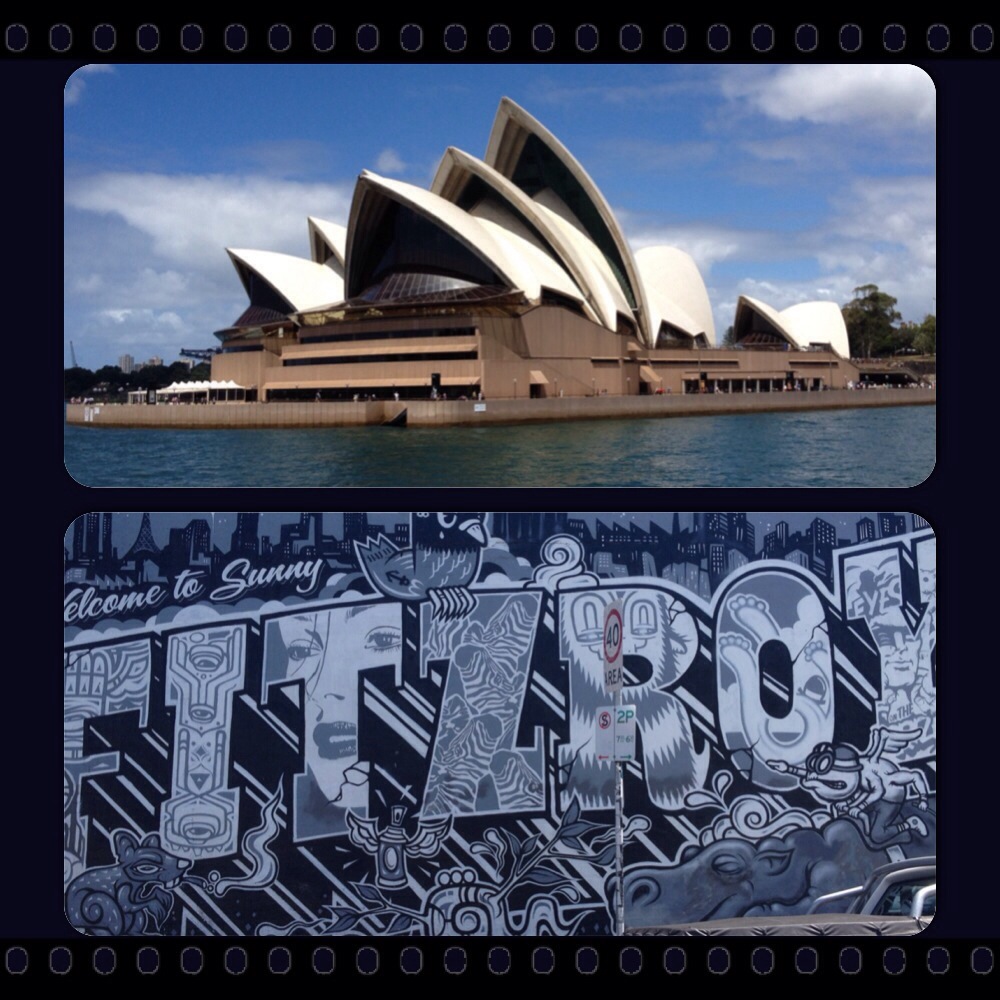
Sure Sydney has loads of tourists. But they’re there for a reason. Standing in front of the Sydney Opera House, looking across the Harbour at the bridge is one of those “wow” traveling moments. It’s how I imagine people must feel when arriving by ship into the Harbour of New York City: the Statue of Liberty and cloud high sky rises waiting to greet you. The Sydney Harbour is so iconic and so recognizable that it feels almost surreal to be wandering around the thick of it all.
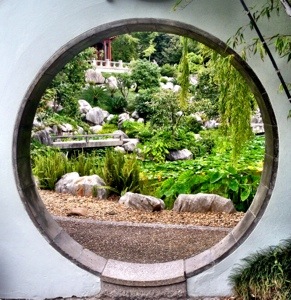
Sydney has an oversized sense of beauty to it: Hyde park with it’s towering monuments and impeccably kept rows of trees; the bustling Darling Harbour and The Royal Botanical gardens, so large you could be lost in there for days. The city is very put together. China town runs down two streets in organized chaos. Well kept shop fronts, modern looking patio seats and a gated off Chinese Garden that sits in the city center like an oasis. Areas like The Rocks have perfectly preserved buildings and cobble stone streets that overlook the main harbour. And the city’s suburbs have equally as much character: the more popular Manly and Kiribili were wonderful to stroll around, and even the more obscure Cronulla, which I was lucky enough to get to couch surf in, had a quiet charm to it.
Yep, Sydney is beautiful, and full of life, and bustling at all times of the day and night! Every corner is another photo opportunity: another monument, famous icon, or picturesque roadway.
Melbourne is the opposite. Melbourne is the less showy, more arts oriented of the two cities. There’s no “holy crap” moment, or photos at every turn, but Melbourne has one of the most unique city vibes I’ve ever experienced.
You are more likely to find a person dressed in combat boots and a burlap sack than a row of men in business suits. Melbourne is geared towards the young, edgy and overly hipster crowd. The city’s essence is found in its alleyways. Cafe’s, restaurants, busking musicians, craft markets, street grafitti: these are the heart of Melbourne. A place is almost not worth visiting if it’s on a main road. But turn the corner into the laneway and you’ll discover the newest, most hip place in town.
At first, I found a loss of WHAT to do in Melbourne. After the initial city tours and basic exploring, there were few places I felt the need to see. It was then that I realized you don’t sight-see in Melbourne, you just exist. You take in the culture, find a cafe, read a book. It’s a lifestyle, not a destination.
For a decision anxious person like myself, Melbourne is slightly overwhelming. Where should I eat? Which cafe should I sit at? The options are endless. So very, very endless…
Moments ago I saw a sign that read “The top 90 lunch spots in Melbourne!”
Ninety.
Lunch spots.
There are so many places to eat lunch, that someone narrowed them down to the top NINETY…
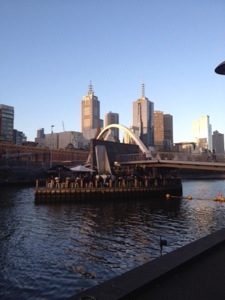
The most incredible thing is, they are all so unique. Take any one of the crazy restaurants or pubs in Melbourne, put it in Vancouver, and it will instantly be the new, cool, edgy hangout. In one night, Panos and I visited a funky bar floating on the river (Ponyfish), a mad scientist bar that served drinks in syringes (Croft Institute), an outside pub with stacked wooden palates as seats (Section 8) and a night club with retro songs by artists like James Brown and the most eclectic grouping of people on Earth (Cherry Bar). Rooftop oases like “the Rooftop Bar” or “Naked For Satan” sprawl across the city. Back alley cafe’s that I couldn’t even begin to name are found every couple meters! The city is crawling with hole-in-the-wall joints just waiting to be discovered.
And then the grafitti.
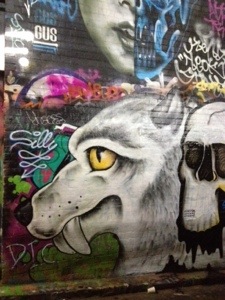
All over the city, the alleyway walls are covered from pavement to rooftop with elaborate artwork in all genres. From simple name tags, to intricate portraits of human faces, you’ll see it all on the streets of Melbourne. To be fair, it’s a unique way of dealing with street art. The mayor has given permission in areas for artists to display their artwork. Some areas are commissioned for specific artists, and other areas are open to the world. Every couple weeks an alley can have an entirely different look to it. An artist could spend weeks painting a portrait, just to have some kid scrawl his name across the top of it three days later.
But however you feel about Melbourne’s eclectic and somewhat messy street art, it seems as though it’s here to stay.
To me, choosing between Melbourne and Sydney is like comparing apples and oranges. The two cities are so different, it’s hard to say if one is really “better” than the other. Nevertheless, that hasn’t stopped the long rivalry between the two! When Sydney built the largest IMAX in the world, Melbourne built one larger. When Sydney found out, they renovated to make sure they were number one again!
But all that upmanship aside, I’m glad to have spent time in both, and I’m already looking forward to coming back!
The Blue Mountains
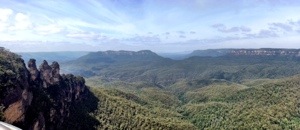
The day I visited the Blue Mountains was perfect! Sunshine, warmth, hardly a cloud in the sky: a rare occasion for me on this trip. The two hour train to Katoomba went by in a flash and before I knew it I was wandering down the street towards Echo Point.
There are a million tour buses at Katoomba station: organized groups, private tours or hop on/off buses. Unfortunately, by the time I reached Sydney my budget had worn thin and the 30 minute walk didn’t seem so bad!
Approaching Echo Point was spectacular. Of course, there were thousands of tourists all milling about, but it didn’t take away from the breathtaking backdrop of the blue mountains.
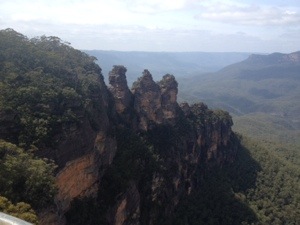
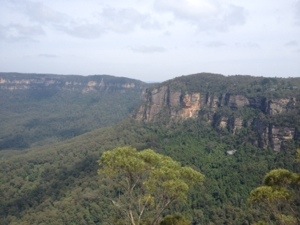
Echo point lookout sits in the middle of Blue Mountain National park, on the edge of a massive gorge. To the right, there are sharp cliffs; straight ahead, you can look out over the hazy blue-green mountains; and to the left, are the famous “Three Sisters!”
The Three Sisters are three rock outcroppings that stand straight up out of the mountain, side by side. It doesn’t sound like much, but set against such a beautiful backdrop in the Sunshine, they are wonderful to see.
After some mandatory photos, I set off to find some hiking trails. The waterfalls were a two-hour hike one direction, but I figured I’d start with a 15 minute walk to the Three Sisters first.
For such an easy walk, there weren’t many people on the trail. 15 minutes there and back?! How could you not check them out a little closer?
A few minutes in I spotted the first one. It was covered by some trees, so I kept walking to get a better view. Still closer, the trees blocked me from any kind of a good shot, so I kept following the path down some stairs.
I walked lower and lower, expecting to stop at some sort of a lower viewing platform where I could look back up at the sisters. But I just seemed to be going further down…
The only person around me was a young Asian guy about 5 steps behind me. After descending what felt like 200 steps I turned to him
“You’re carrying me back up, right?” I asked
He froze, shocked.
“Uhhh…no,” he stammered “I don’t think so” then he looked up and saw that I was clearly joking.
“Okay fine” I said “What’s your name, where are you from?”
“Daniel. From Korea.” Then he added “Totally South though! Totally South, don’t worry!”
I laughed, “Ya, I hear the North doesn’t get out much.”
He thought that was hilarious and we became instant friends. Turns out Daniel was in Australia on a working visa and was in the middle of his three month of mandatory farm work up in Darwin. He had the most Australian job I could think of.
“I work at a crocodile farm. Second largest in the world! I feed them chicken heads and make them very very fat and then I kill them and give them to my friends in the butchers!”
No way. That is crazy!
Apparently chicken heads are disgusting (and I don’t doubt it) but Daniel won for most random Australian job I’d heard of on my trip. So we chatted more about it as we continued down the stairs together.
It wasn’t long before we came across a young girl from Brazil sitting on the side of the stairs.
“900! Can you believe it?”
“900 what?” We asked
“900 stairs to the bottom! My boyfriend is counting them, but he went ahead.”
What? I thought this was a 15 minute round trip walk! What had I gotten myself in to?
Turns out I passed the 15 minute turn around point, and in my frustration to get a good picture, had missed the sign that said “very steep steps. Advanced hikers only. 900 stairs”
Great. We had already gone down 500 of them.
So the three of us continued slowly down, in hopes that there was some other way out. When we neared the bottom, we ran into the Brazilian girl’s boyfriend.
“The bottom is just there. The only other way out is a half hour walk from here then a tram that costs $17 to go up”
We all looked at each other… Nope. Too poor for that. Hiking back up the 900 steps it was!
It was a long haul. And it made me realize how out of shape I am these days. My legs felt like jelly by the time the four of us clambered to the top.
“905!!!” Yelled the Brazilian guy “they lied to us! There’s 905!”
“I want my money back!” I announced. Too bad we’d done it on our own free will…
After that Daniel and I hiked the stunning trail to the waterfall. Unfortunately I was pressed for time and had to catch an early train back into Sydney so I could make it south to Cronulla for the night. But I walked 3/4 of the way to the falls before saying goodbye to my hilarious new friend and walking back toward Echo Point alone.
I grabbed a quick lunch, hiked the 30 minutes back to the station and headed towards the city. And even though my legs felt like death, it was a perfect Blue Mountain excursion!
Coff’s Harbour
It seemed as though my timing was all wrong in Coff’s Harbour. The sites, the places, the cravings… Nothing seemed to go as I wanted.
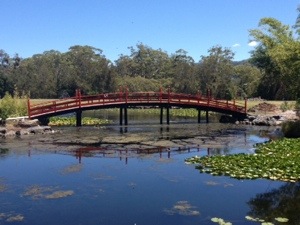
The evening I arrived I just wanted a quiet walk in the botanical gardens before grabbing some sushi that I’d been craving for days. Sadly, the gardens were closed for a private movie showing that evening, and because I’d gone out of my way to see the gardens, the only sushi joint in town had closed 15 minutes earlier. Fail. The following day was the same. Sushi closed on Sundays, botanical gardens closed 3 minutes before arriving… And not just sushi and gardens, but buses, cafe’s, and the entire city center seemed to close just moments before I wanted it. But luckily that didn’t stop me from enjoying my relaxing couple days in the town.
The Aussitel backpackers I was staying at was adorable. It was not too big, had fun social events and quiet movie nights, and offered everything from kayaks, surf boards and paddle boards for free! The first morning I went out with a small group to a town just outside of Coff’s called Sawtell. We hiked the cliffs around the beach, played around in the water and wandered through the bustling metropolis of Sawtell city center (aka. One block of cafe’s and a convenience store).
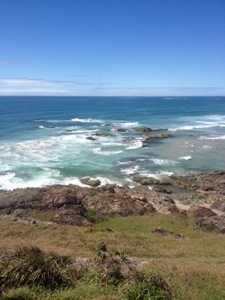
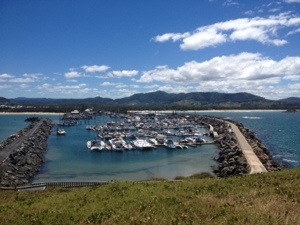
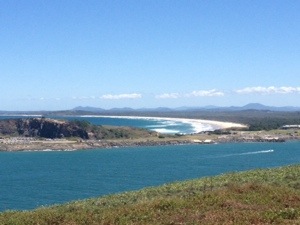
For the afternoon I went sightseeing. Coff’s Harbour has some beautiful walks. The river walk that takes you from the ocean to the town center, past the botanical gardens is shady and beautiful. The coastal walk along the beaches makes for wonderful sea views, and hiking to mutton bird island and the jetty makes for great views looking back on the mainland! I must have walked around for 15km before finally crashing on the beach to relax. I found a shady spot to ease my recent sunburn and pretended to read a book as I people watched.
After the craziness of my final couple days in Byron Bay, Coff’s was a much needed vacation!
On my third morning in town, I finally got to see the gardens! They were WAY bigger than I had anticipated, and it took me nearly 2 hours to stroll up and down the pathways. Each section of the park had a specific theme: endangered plants, New South Wales locals, the sensory garden, and flora from around the world. They had a North America section, an Asia section, a South American and an African. It was a little bit of a throw back walking through a forest that reminded me so much of the jungle in Brazil and the forests of Botswana. But it was neat to be reminded of how much I’ve seen over the past few years.
By the end of day three I’d pretty much seen everything I could in Coff’s Harbour. I’d stayed one day longer than I’d intended because of a glitch in the greyhound system, and had nothing left to explore. A quiet morning watching the Olympics at the hostel was followed by a journey south to Port Macquarie! Coff’s Harbour: Check!